Speakers recording in a reverberant room
If you record at home on your own, key things to consider include clear voice capture, the distance from the microphone and a recording space with as few reflective surfaces as possible.


If room reverb is your biggest concern, start with a directional USB microphone that you can speak into from close range, and improve your recording space at the same time. RØDE points out that recording from too far away makes reverb and background noise more noticeable; no microphone can automatically make a reverberant room sound dry. For changing character voices, you’ll also want a controllable level, direct monitoring and test recordings with both quiet and powerful takes.
If you record at home on your own, key things to consider include clear voice capture, the distance from the microphone and a recording space with as few reflective surfaces as possible.
For roles that range from a whisper to a loud exclamation, test recordings and immediate checks of levels, plosives and individual takes can help.
If you want to record without a separate audio interface, check that the connections, monitoring options and mount suit your computer and workspace.
A good fit if: you speak on your own, can stay close to the microphone and are mainly concerned about room noise or other background sounds. Examples include the Shure MV6, Audio-Technica AT2040USB and Samson Q2U.
The trade-off: distance and positioning still matter. In COMPUTER BILD’s test, background noise was still audible with the Shure MV6.
A good fit if: you prioritise sound detail and can set up a quiet recording space with limited reflections and a consistent speaking distance. The RØDE NT-USB Mini is a compact USB example.
The trade-off: RØDE recommends using more sensitive condenser microphones in rooms with better acoustics. COMPUTER BILD noted noticeable popping noises with the NT-USB Mini.
A good fit if: you want to record directly via USB now, while keeping the option of using an audio interface later. According to their manufacturers, the Shure MV7+, RØDE PodMic USB and Samson Q2U have both USB and XLR connections.
The trade-off: an extra connection won’t eliminate room reverb. Also check what’s included with the exact version: accessories are listed for the Samson Q2U, while the version of the Shure MV7+ considered here has a stand as an option you can select.
| Buying consideration | What to look for | Who it matters most to |
|---|---|---|
| Room reverb and background noise | Check the polar pattern and mounting options for a stable close-mic position; make a test recording in the space where you’ll actually record. | When I record alone in a reverberant room, I want to stay close to the microphone and capture my voice clearly. Around 40% of consumers put room reverb first. |
| Changing vocal volume | Check for level controls and a headphone socket; test quiet and powerful roles, as well as plosives. | When changing roles, I want to check quiet passages and loud exclamations before recording longer takes. Around 30% of consumers prioritise control over changing vocal volumes. |
| USB recording and monitoring | Check compatibility with your computer and recording app, the cables you need and whether there’s a headphone output. | If I want to get started without a separate interface, I need a suitable USB connection and a way to monitor my recording directly. Around 20% of consumers prioritise a straightforward USB setup. |
| What’s included and mounting options | Check whether the specific version comes with a stand or boom arm, cable and pop shield; consider your available desk space and mounting options. | Before buying, I want to know whether the version I’ve chosen will suit my workspace and what extra accessories I’ll need to position the microphone close to me. Around 10% of consumers prioritise a complete set of accessories. |
Directional pickup and DSP features describe what a microphone can do, but they don’t guarantee the same result in every room. In COMPUTER BILD’s test, background noise was still audible with the Shure MV6.
Make a voice recording in the position you plan to use. First, check your distance from the microphone and your recording space; RØDE suggests soft materials such as curtains or carpets as ways to reduce reflections.
Finding a quieter recording space or taking simple steps to reduce reflections may require extra effort.
COMPUTER BILD’s USB microphone list assesses models in general; it doesn’t automatically tell you how well they’ll suit character voices in an untreated room. Weaknesses such as audible background noise or popping sounds could be crucial in this situation.
Use descriptions of specific weaknesses as a guide to what to check, then decide based on your roles, your room and your own test recordings.
The RØDE PodMic and PodMic USB are different connection versions. The Shure MV6 and MV6 Gen 2 are different models, too.
Check the full model name and connections of the version you’ve selected before ordering.
The RØDE PodMic without USB requires additional recording equipment to connect directly to a computer.
The MV6 is a dynamic USB model for one voice; the MV7+ offers USB and XLR.
The PodMic USB is a dynamic USB/XLR option; the NT-USB Mini is a compact USB condenser alternative.
The Q2U is aimed at buyers looking for a dynamic USB/XLR microphone with accessories.
The AT2040USB is a directional dynamic USB alternative for speech.
The UM 6.0 ADVANCED is a USB desktop microphone with switchable cardioid and omnidirectional polar patterns.
This selection includes dynamic USB and USB/XLR microphones for voice recording, as well as a USB condenser microphone.
 No image available
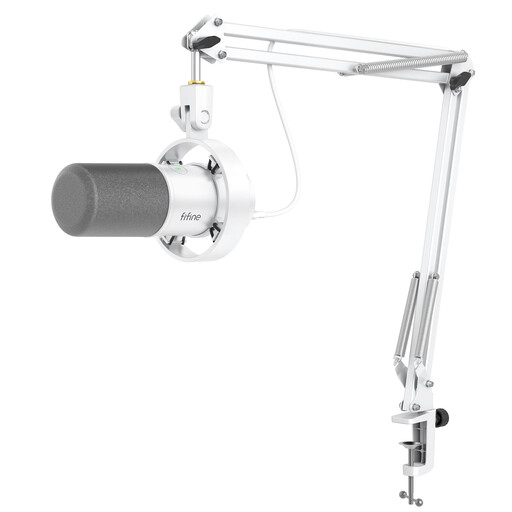
This dynamic USB/XLR version comes with a boom arm and is suited to a single voice recorded at close range; test its position with a recording in your room.
Features listed in the title: boom arm, mute button, volume control and headphone socket. According to the product details, the desk clamp is designed for desks less than 2 inches thick; an XLR cable is not included.
 No image available
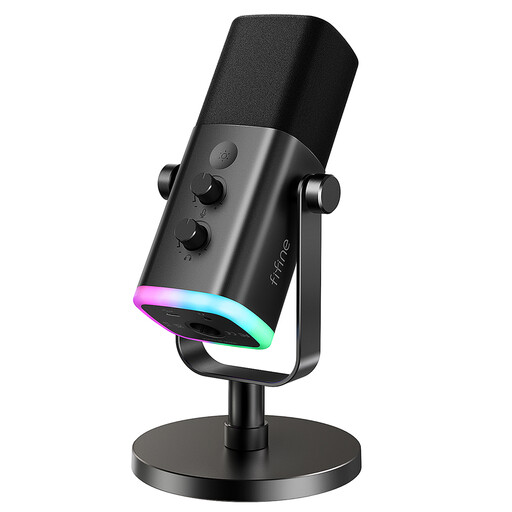
This dynamic USB/XLR microphone is described as suitable for voice recording; you can try positioning it close to you when using it in a reverberant room.
Features listed in the title: RGB lighting, mute button, headphone socket and desktop stand. A boom arm and XLR cable are not included.
 No image available
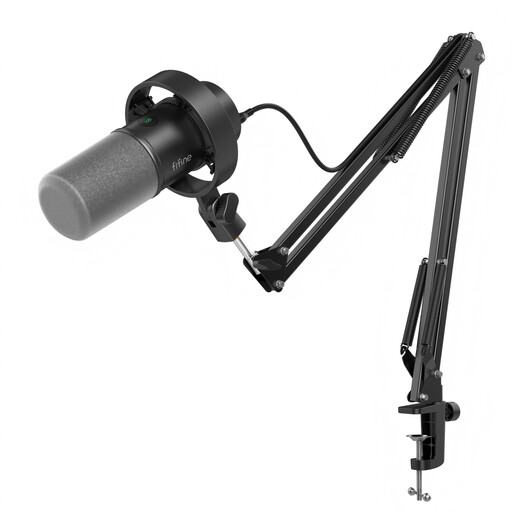
This dynamic USB/XLR model is also described as suitable for voice-over recording and can be positioned close to you using the boom arm.
Features listed in the title: boom arm, mute button, headphone socket and gain control. An XLR cable is not included.
 No image available
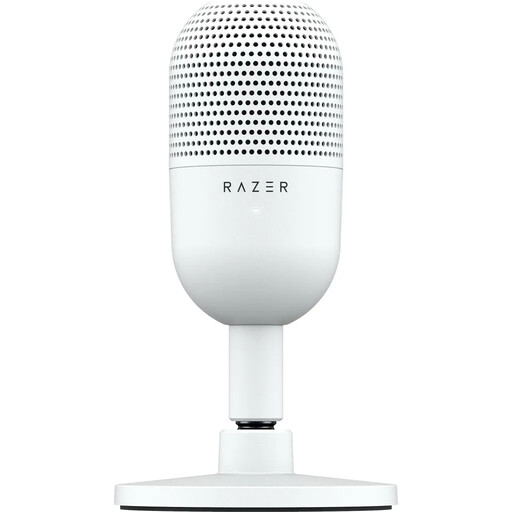
This USB microphone is described as suitable for voice recording; test its directional pickup pattern in your intended recording space before recording longer takes.
Features listed in the title: compact design and Tip-to-Mute function.
 No image available
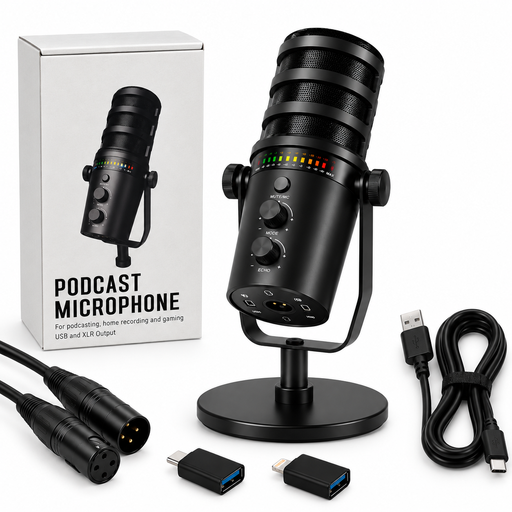
This dynamic USB/XLR microphone is described as suitable for speech and recording. A test recording can help you adjust the microphone position and level for your character voices.
Features listed in the title: RGB, gain control, echo, mute function and desktop stand.
No. Speak from an appropriate distance and check your recording space: RØDE points out that recording from too far away makes reverb and background noise more noticeable. Soft materials such as curtains or carpets can help reduce reflections.
Point the side you speak into towards your mouth, then make test recordings with both quiet and powerful roles. Listen back through the headphone output, if the specific model has one, and adjust the position and input level before recording longer takes.
Compare the cables, stand, adapters and pop shield included with the version you’ve chosen. When buying goods from a trader in the EU, you’re generally entitled to a statutory minimum guarantee of two years from receipt. This is separate from any voluntary manufacturer’s warranty.
As waste electrical and electronic equipment, it must not go in household rubbish; it should be collected separately. The German Environment Agency advises disposing of old electrical equipment separately. Use a suitable local collection point or authorised take-back point.