Interviewers recording a quiet solo voice
You can position the microphone close to the interviewee and point it towards them, and want to monitor quieter passages as you record.


For a quiet solo voice, a directional microphone with headphone monitoring is a sensible starting point, provided the interviewee can sit close to it and keep their position as consistent as possible. A USB condenser microphone may also work in a quiet room. For people sitting opposite each other, or for recording without a laptop, consider switchable polar patterns or a recorder that can also function as a USB microphone. The key is to make a test recording from the actual seat: manufacturers’ claims about gain control or noise processing don’t tell you how clearly dialect details will come across in your room.
You can position the microphone close to the interviewee and point it towards them, and want to monitor quieter passages as you record.
You’re recording a question and answer from opposite sides of a table, and need to decide whether one shared recording will do or whether you want to monitor the voices separately.
You change recording locations or don’t want to use a laptop for every conversation. A USB microphone and a standalone recorder serve different purposes.
First, decide whether you’re recording one voice or a conversation around a table, and whether you’ll have a laptop available. Then you can assess the microphone’s directionality, distance and monitoring options for your room.
| What you need | What to check before buying | Who this matters most to |
|---|---|---|
| Quiet voice with background noise | Check whether you can position the microphone close to one person and listen back to the recording through headphones. | If I need to record quiet words in a noisy environment, I want to monitor the voice directly and keep the distance consistent. Around 33 % of consumers are primarily concerned with recording a quiet solo voice despite background noise. |
| Solo voice in a quiet room | Check how the microphone should be positioned towards the speaker, and test how moving it further away affects the amount of room sound you can hear. | In a quiet room, I want to capture a single voice clearly without quiet word endings becoming difficult to make out as more room sound comes through. Around 27 % of consumers prioritise recording a quiet solo voice in a quiet setting. |
| Two voices at a table | Decide whether one shared track will do or whether you need separate tracks; check the polar pattern and seating arrangement. | If two people are sitting opposite each other and speak at different volumes, I want to know whether one shared recording will be enough or whether I can edit each voice separately. Around 20 % of consumers are primarily interested in recording two people talking at the same table. |
| Recording without a laptop | Check standalone recording, power requirements and the storage media needed separately from USB compatibility. | If I want to record in different locations without a permanent laptop setup, I need a suitable standalone recording option. Around 20 % of consumers prioritise recording on the go without a laptop. |
As the distance increases, room and background noise can become more noticeable alongside a quiet voice.
Assess the microphone and distance together by making a test recording where you’ll be conducting the interview. For certain speech recordings with the NT-USB Mini, RØDE recommends a distance of about 10–15 cm. This isn’t a general recommendation for interviews or other models.
According to the manufacturer, the omnidirectional mode on the CHERRY UM 6.0 ADVANCED picks up sound from every direction. This may be worth considering in a noisy environment.
At the table where you’ll be recording, compare a shared recording with the option of recording the voices from the front and back separately.
A USB microphone and a recorder with USB microphone functionality are different types of device.
Check which operating mode is intended for your recording device and which connections you’ll need.
Depending on how you plan to use it, you may also need storage media, a power supply or a suitable connection solution.
The MV6 is designed for close-up USB recording of a single voice; the MV7+ is a different model, with USB-C/XLR and additional adjustment options.
The NT-USB Mini is a compact USB condenser microphone for a simple single-voice recording setup.
The AT2020USB-X is a USB condenser microphone for focused single-voice recording with direct monitoring.
The UM 6.0 ADVANCED lets you choose between a forward-facing cardioid pattern and an omnidirectional pattern for table recordings.
The H2essential is a standalone recorder that can also be used as a USB microphone.
This selection includes directional desk microphones for one voice, a USB-C system with two transmitters, and a dynamic microphone set for table recordings.
 No image available
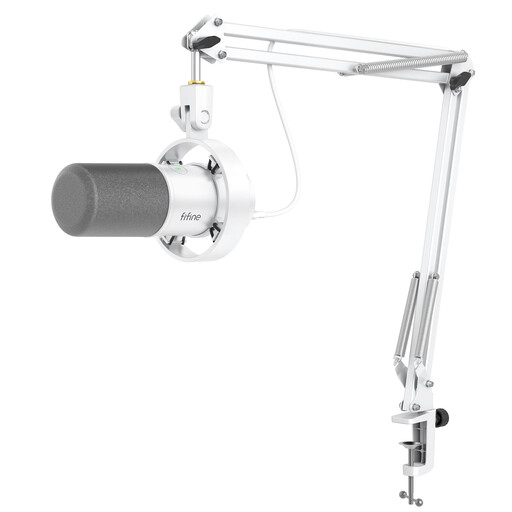
The adjustable boom arm lets you position the microphone towards one voice at your desk.
This dynamic microphone has a unidirectional polar pattern, as well as USB and XLR connections. USB operation includes headphone monitoring, a gain control and a mute function.
 No image available
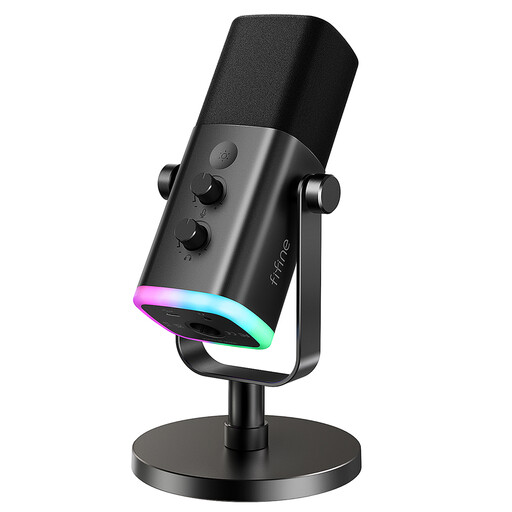
The desk stand suits a permanent setup where you can position the microphone towards one voice.
This dynamic microphone has a unidirectional polar pattern, as well as USB and XLR connections. USB operation includes headphone monitoring, volume control and a mute function.
 No image available
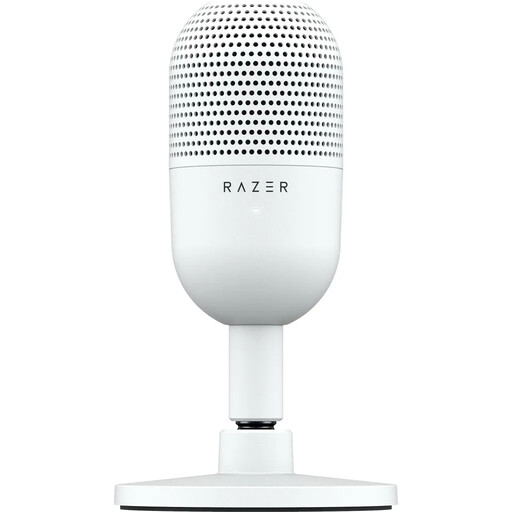
The compact microphone can be angled towards one voice at the table using its adjustable tilt stand.
The product description lists a supercardioid polar pattern, USB-C connection and a mute function with status indicator.
 No image available
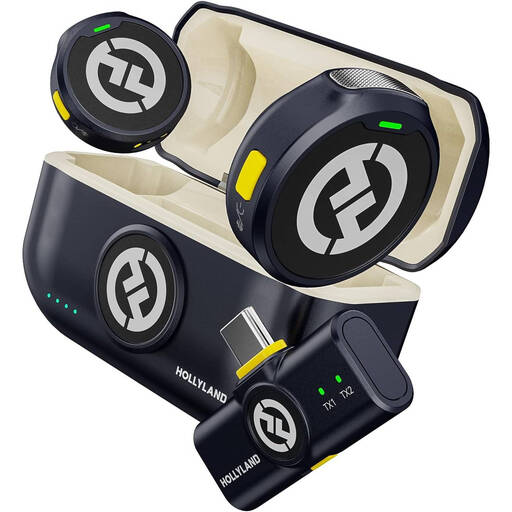
With two transmitters and a USB-C receiver, this system is designed for recording conversations with two people.
The product description lists switchable background noise cancellation, a volume control and a charging case.
 No image available
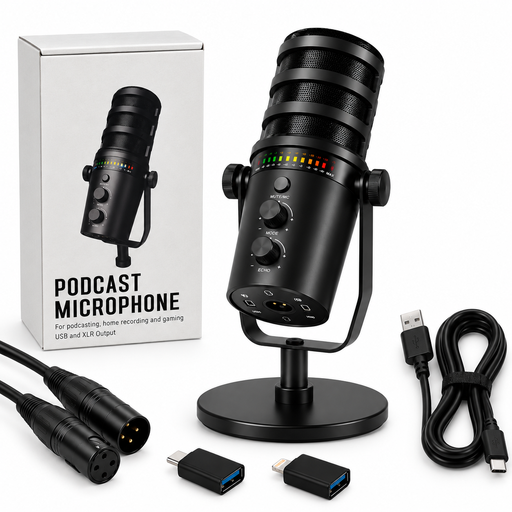
The listed cardioid pattern focuses the set on one voice at the table.
Features include a dynamic design, USB and XLR connections, a headphone socket, real-time monitoring and a gain control.
Under § 201 StGB, making an unauthorised recording of another person’s private spoken words is a criminal offence. Make sure you have permission to record before the conversation; buying a microphone doesn’t change that. The provision is published on the Federal Ministry of Justice and Federal Office of Justice’s Gesetze im Internet website.
Processing personal data requires a legal basis under Article 6 GDPR. The Federal Commissioner for Data Protection and Freedom of Information also points out that, as a general rule, people must be informed when their data is collected. The appropriate legal basis and whether any exceptions apply depend on the specific project.
Point the microphone towards the intended seat and listen to a short test recording through headphones, including some quieter passages. Check the recording mode you’ve selected and the actual seating arrangement, as monitoring features vary by model.
Check that the microphone’s connections and included accessories are compatible with your recording device. For example, RØDE lists a USB-C-to-USB-A cable and connection solutions for certain mobile devices with the NT-USB Mini. Audio-Technica lists a desk stand, cable and adapters for the AT2020USB-X.