If you can speak close to the microphone at a fairly consistent volume, a directional dynamic USB model is a sensible starting point for a noisy home. If you switch more dramatically between quiet and loud roles, a well-positioned USB condenser microphone may also be worth considering. For both types, test a quiet passage, a louder section and pauses in your reading to see how much room noise and distortion you can actually hear.
Who is this selection for?
Readers recording in noticeably noisy homes
If you record alone, what matters is how much conversation, fan noise or echo you can hear during quiet passages and pauses. RØDE recommends speaking close to the PodMic USB, while Shure points out that a microphone cannot improve a room’s acoustics.
Readers switching between very different roles
If you move between quiet and emphatic passages, check both volume levels in a test recording. Shure describes automatic level adjustment for the MV7+; Sennheiser lists a gain control and clipping indicator for the Profile USB.
Readers with limited desk space
If you need to keep your text in view, the microphone, mount and cable all need to work with your speaking position. RØDE describes mounting the PodMic USB on a stand or boom arm; Sennheiser lists a desk stand for the Profile USB.
What should you look for when buying?
When recording a dramatic reading in a noisy home, it’s worth checking noise during pauses, changes in volume, microphone positioning and direct audio monitoring separately.
| What matters |
What to check before buying |
Who will find this especially important? |
| Keeping your voice clear despite household noise |
Polar pattern and speaking direction; test it in the place where you’ll actually record. |
If I can hear conversations or fan noise during quiet passages, I want to check how my voice and the room noise sound where I’ll be recording. Around 36% of consumers put clear vocals despite household noise first. |
| Switching between quiet and loud roles |
Gain control or level indicator; test the quietest and loudest passages. |
If my reading moves between restrained and emphatic roles, I want to check both volume levels before making a longer recording. Around 29% of consumers prioritise handling these changes in level. |
| A stable microphone position |
Desk space and speaking distance; stand, arm and included accessories for the exact variant. |
If I don’t want to keep turning my head away from the microphone while reading, the setup needs to suit my desk and text. Around 21% of consumers prioritise finding the right microphone position. |
| Monitoring your audio as you record |
Headphone socket and volume control; a mix control if needed. |
If I want to catch pauses, plosives and changes in volume before a longer reading, I need a simple way to check the audio during a test. Around 14% of consumers put direct monitoring first. |
Common buying mistakes
-
Confusing noise processing with a quiet recording space
Shure describes digital noise processing for the MV7+. However, a microphone won’t change the acoustics of your room, so check what it picks up during quiet passages and pauses too.
Make a test recording with the usual household noise and listen back before starting a longer reading.
If you notice unwanted noise or level issues, you may need to record extra takes or change the microphone position.
-
Assuming the PodMic and PodMic USB are the same model
The manufacturer’s USB-C and XLR specifications apply specifically to the PodMic USB. Another variant may not provide the direct USB recording you’re looking for.
Check the full model name and the connection on the exact variant.
If the variant doesn’t have the right USB audio connection, you may need extra equipment to record on your computer.
-
Assuming a desk stand or microphone arm is included
RØDE describes the PodMic USB as suitable for mounting on a compatible stand or arm. Sennheiser lists a desk stand for the Profile USB sold on its own.
Compare what’s included with the exact variant against the setup your desk can accommodate.
Depending on the model and the position you want, you may need to buy a separate stand or arm.
Brands and model ranges to consider
Shure
The MV7+ combines USB-C and XLR with features designed for voice recording.
- Shure lists Auto Level, a real-time denoiser, digital plosive processing and headphone monitoring.
- These manufacturer specifications don’t guarantee that noise will disappear in your particular home.
RØDE
The dynamic PodMic USB offers USB-C, with an XLR connection as an alternative for voice recording.
- RØDE lists an internal shock mount, pop filter and headphone monitoring.
- The PodMic USB needs a compatible stand or arm for mounting; it’s not the same as the XLR-only PodMic.
Samson
The dynamic Q2U offers USB and, if needed, an XLR connection, along with an accessory bundle described by the manufacturer.
- Samson lists a desk stand, windscreen, cables and direct headphone monitoring.
- Check the manufacturer’s claim of reduced background noise against a test at your recording location.
Sennheiser
The Profile USB is a USB condenser microphone with a cardioid polar pattern and controls on the microphone itself.
- Sennheiser lists gain, mix and headphone controls; the version sold on its own comes with a desk stand.
- The microphone’s design alone can’t tell you how much room sound you’ll hear in your recording.
USB microphones at Joybuy
This selection includes dynamic USB microphones for close-up voice recording, alongside directional USB condenser microphones as an alternative if a suitable setup is more important.
 No image available
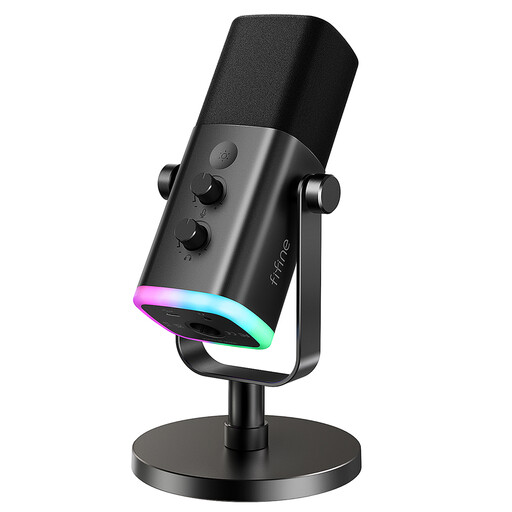
FIFINE AM8 USB/XLR Dynamic Microphone
Its dynamic, unidirectional design makes it an option for close-up voice recording; this doesn’t establish any specific level of noise reduction.
In USB mode, it has a gain control, mute button and headphone socket with volume control. The product title also lists a desk stand.
View at Joybuy
 No image available
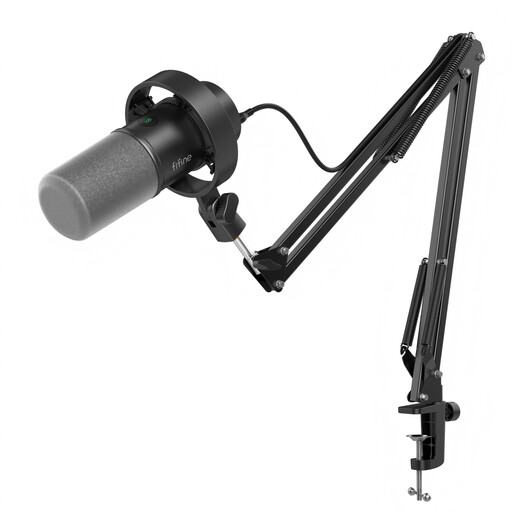
FIFINE K688CT USB/XLR Podcast Microphone Kit
As a dynamic, unidirectional USB microphone, it’s an option for close-up voice recording; this doesn’t guarantee that it will screen out household noise.
The description lists a gain control, mute button and headphone socket with volume control in USB mode. It says the kit includes a boom arm, clamp and shock mount.
View at Joybuy
 No image available
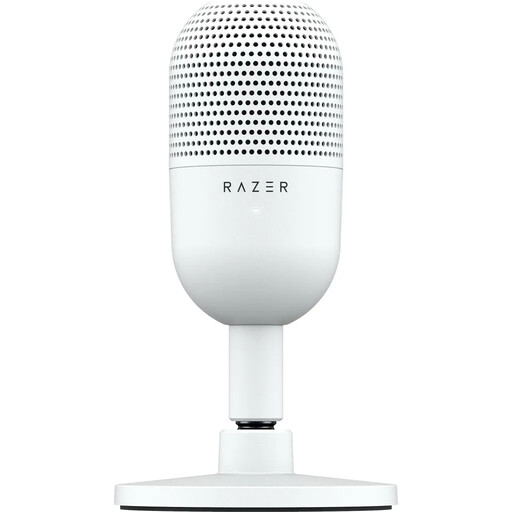
Razer Seiren V3 Mini White
This compact USB condenser microphone is an alternative if you’d like a desk stand and a directional capsule.
The description lists a supercardioid polar pattern, an integrated shock mount and a tilting desk stand. The product title mentions tap-to-mute.
View at Joybuy
 No image available
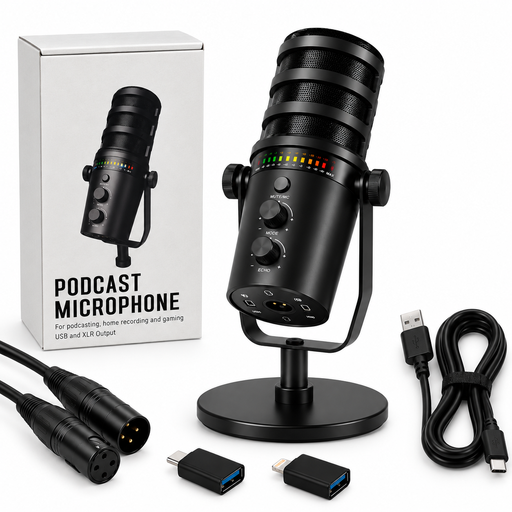
Dynamic USB/XLR microphone set
The dynamic design and USB-C output suit direct USB recording and a close-up speaking position; they don’t establish any specific reduction in room noise.
The description lists a cardioid polar pattern, gain control, mute button and 3.5 mm headphone output. It says a desk stand is included in the set.
View at Joybuy
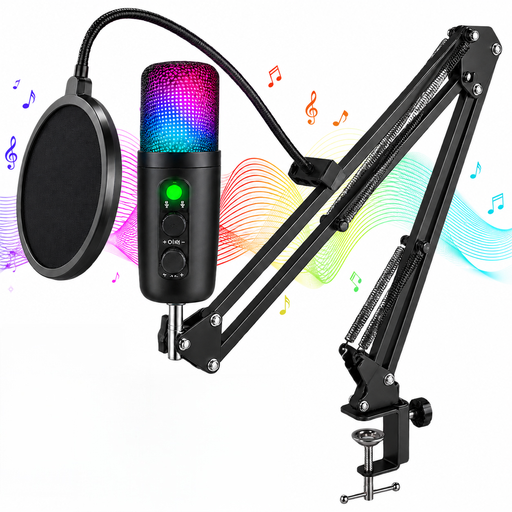 No image available
USB condenser microphone, 7-piece set
With a cardioid polar pattern, this USB condenser microphone is a directional option for voice recording; the capsule design alone can’t predict how much room sound you’ll hear at home.
The description lists USB-C, gain control, mute button and a headphone socket for real-time monitoring. The microphone, USB cable and Type-C adapter are listed as included in the set.
View at Joybuy
Frequently asked questions
What should I test before a longer dramatic reading?
Record a quiet passage, your loudest role and a pause from the place where you plan to record. Check your distance, speaking direction and input level; for the PodMic USB, RØDE gives around 5–10 cm as a model-specific starting point.
Do I need an audio interface for a USB microphone?
According to RØDE, you don’t need an external audio interface to connect the PodMic USB directly to a compatible computer via USB-C. For the alternative XLR signal, you’ll need analogue equipment such as an interface or mixer.
Will I need a separate stand or arm?
It depends on the exact model and what’s included. RØDE describes the PodMic USB as suitable for mounting on a compatible stand or arm; Sennheiser lists a desk stand for the Profile USB sold on its own.
Can I record other people’s conversations in the background?
Section 201 of the German Criminal Code (StGB) prohibits the unauthorised recording of another person’s non-public speech. Before recording, make sure you don’t capture conversations without permission; the provision does not impose a blanket ban on recording your own voice.
Can I publish my reading of someone else’s text?
Not simply because you recorded the text yourself. The German Patent and Trade Mark Office identifies literary texts as works that can generally be protected by copyright, and making them publicly available as a right of exploitation. Check the rights to the specific text and, where relevant, its translation. According to the DPMA, copyright protection in Germany generally ends 70 years after the author’s death.


