If you’re recording on your own and can stay close to the microphone, a directional dynamic USB microphone is a good place to start. Record a test with both your voice and the fan running: a condenser microphone may give you more freedom to move around, but it may also pick up more room ambience. Neither microphone type nor a noise reduction feature guarantees a recording free from fan noise.
Which setups are right for you?
Solo storytellers recording with a fan running
If you can speak close to the microphone and keep a steady position, the main thing is to make sure your voice remains clear above the constant background noise. Audio-Technica and Shure explain how to choose a microphone for recording with persistent background noise.
Storytellers who vary their delivery
If you change your posture or distance from the microphone while reading, consider how much freedom to move you need and how noticeable the room ambience might be. Audio-Technica discusses speaking distance as part of choosing a microphone.
Storytellers who occasionally record with guests
When several people are speaking, their seats need to suit the microphone’s pickup pattern. Greater distance and more voices can also make fan and room noise more noticeable. Audio-Technica explains the importance of the recording setup and microphone positioning.
What should you look for?
Dynamic microphone for close-up recording
A good fit if: You usually record on your own and can speak close to the front of the microphone at a steady distance while reading.
Consider: Keeping close to the microphone may limit how freely you can move while looking at your script. A cardioid pickup pattern won’t eliminate the fan completely.
Dynamic microphone with noise reduction
A good fit if: The fan needs to stay on while you record and, alongside close-mic technique, you want to consider a model-specific feature for steady noise. Shure lists a fan as a use case for the MV7+.
Consider: Shure says the feature won’t reliably remove brief noises or other voices. Check the software you’ll need and its system requirements too.
USB condenser microphone
A good fit if: You’d like more distance or the flexibility to change position while recording, and can test the microphone in your room.
Consider: Greater distance can make the fan and room ambience more noticeable. Check the best position for the microphone and whether you need a headphone socket.
| Buying priority |
What to check before buying |
Who is this important for? |
| Keep your voice clear above fan noise |
Cardioid pickup pattern and the correct front of the microphone; a stand or boom arm to keep a consistent speaking distance. |
When I’m recording on my own, I want my voice to remain clear even with the fan running. Around 45% of consumers put this first. |
| Preserve the tone and expression of your voice |
Test quiet and emphasised passages at the intended distance; check where you can position the microphone in front of your script. |
When I vary my posture and expression while reading, I don’t want to be restricted to a fixed position unnecessarily. Around 27% of consumers prioritise this flexibility. |
| Keep track of longer recordings |
Check for a headphone socket and level controls; check what’s included for desk or boom-arm positioning. |
For longer stories, I want to listen back to my recording as I go and use a practical setup. Around 18% of consumers put this level of control first. |
| Record a second voice occasionally |
Make a test recording from each seat; check the microphone’s direction for your actual setup. |
If someone occasionally reads along with me, I need to test both seats with the fan running in the room. Around 10% of consumers prioritise having a second voice. |
Which assumptions should you avoid?
-
Assuming a dynamic microphone or noise reduction means complete silence
Even directional microphones can pick up noise from within their pickup area. Shure specifies which types of unwanted noise its noise reduction features are designed to address on certain models.
Test the fan, speaking distance and microphone direction together rather than relying on a single product feature.
A take you can’t use may mean recording it again or spending time on post-production.
-
Choosing a USB microphone without considering where to put it
You need to be able to keep the close distance that helps make your voice clear while reading. Stands and accessories vary by model and package.
Check the mounting options, space for your script and cable routing for the specific model.
Depending on what’s included, you may need to buy a suitable stand or boom arm separately.
-
Assuming similarly named models are the same product
RØDE lists the NT-USB as discontinued. A model with a similar name isn’t automatically the same product.
Check the full model name and the manufacturer’s current information before using an older comparison to help you choose.
Which microphone brands are worth considering?
Audio-Technica
The ATR2100x-USB is a dynamic cardioid USB/XLR microphone for close-up speech recording.
- Audio-Technica lists direct headphone monitoring, a USB cable and a desk stand.
- Its claims about reducing noise from the sides and rear are manufacturer specifications, not a measurement of the fan in your room.
Samson
The Q2U is a dynamic cardioid USB/XLR microphone with accessories for recording one voice.
- Samson lists a headphone output, a desk stand and a windscreen.
- The manufacturer’s claim that it’s suitable for untreated rooms doesn’t guarantee it will block out the fan in your space.
Shure
The dynamic MV7+ combines USB-C and XLR and, according to Shure, offers switchable real-time noise reduction for persistent noise.
- Shure specifically lists fans as a use case for this feature.
- Shure says the feature is designed to address steady noise, not clicks or background voices. MOTIV Mix settings are subject to the system requirements listed on the German product page; other ambient noise may still be picked up.
RØDE
The PodMic USB is a dynamic USB/XLR model for speech recording and direct monitoring.
- RØDE lists an integrated pop filter, shock mounting and a headphone output.
- These features are no substitute for a test recording with the fan on. The PodMic without “USB” is a different model.
Sennheiser
The Profile USB is a USB-C condenser alternative with a cardioid pickup pattern.
- Sennheiser lists controls for gain, mix and headphone volume.
- The manufacturer’s information confirms the controls and monitoring options, not any special reduction of fan noise. Positioning in your own room is what matters.
USB microphones at Joybuy
This selection includes dynamic USB microphones for close-up speech recording, plus a USB condenser microphone as an alternative if you prefer a different positioning.
 No image available
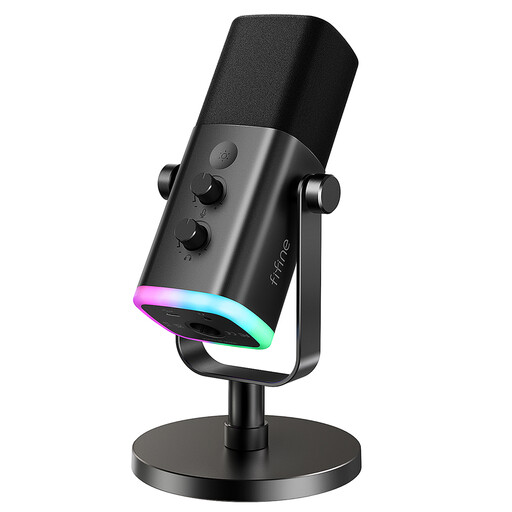
FIFINE AM8 USB/XLR dynamic microphone
For close-up speech recording with direct monitoring as you record.
USB and XLR; recommended speaking distance: 2 to 6 inches. Headphone socket, adjustable monitoring volume and mute function. A boom arm and XLR cable are not included; the buttons are inactive when using XLR.
View at Joybuy
 No image available
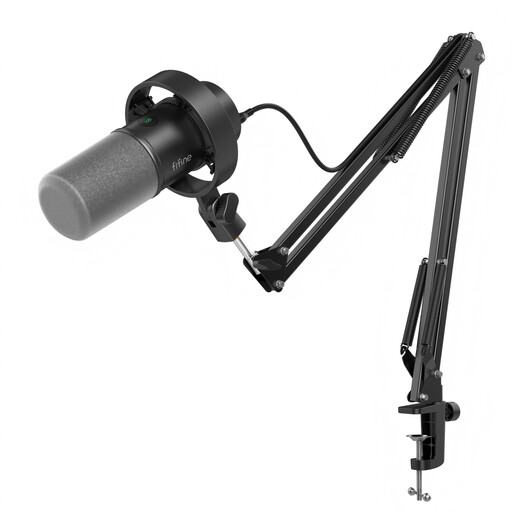
FIFINE K688CT USB/XLR dynamic microphone kit
For recording one voice at close range when you want to monitor the level during USB recording.
USB and XLR; recommended speaking distance: 2 to 6 inches. According to the description, the headphone socket, gain control and mute button work in USB mode. The boom arm is included; its C-clamp fits desks under 2 inches thick, according to the description. An XLR cable is not included.
View at Joybuy
 No image available
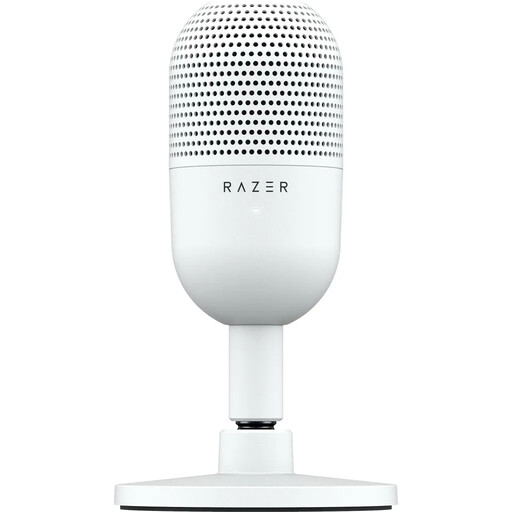
Razer SEIRÉN V3 MINI White USB microphone
A condenser alternative for speech recording, if the intended position works well in your room during testing.
USB-C connection and supercardioid pickup pattern. The package includes a tilting desk stand; the description also lists a mute function and shock absorption.
View at Joybuy
 No image available
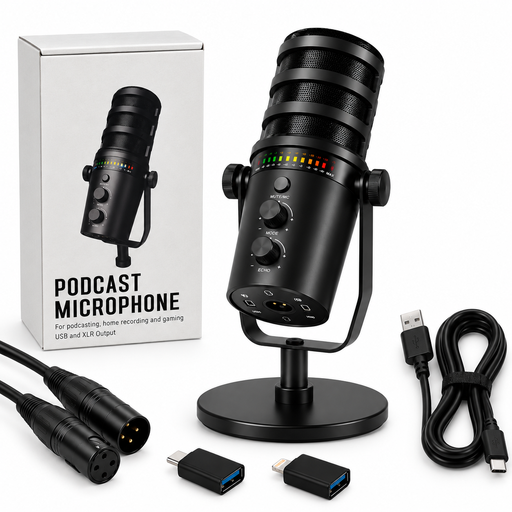
Dynamic USB/XLR microphone kit
For close-up speech recording with headphone monitoring as you record.
Dynamic cardioid microphone; USB-C and XLR. The description lists a headphone output, gain control, desk stand and a connection for a boom arm.
View at Joybuy
Frequently asked questions
Can a microphone completely block out a running fan?
No, you can’t tell from the type of microphone alone. Speak as close as you can to the correct side of the microphone and listen back to a recording made with the fan running. Shure describes an additional feature for persistent noise on certain models, but it isn’t designed to tackle every type of interference.
Do I need an audio interface for a USB microphone?
You don’t automatically need an audio interface to record directly over USB on a supported device. Before buying, check the USB connection, the cable included and compatibility with the specific model.
What should I test before recording a long fairy tale?
With the fan running, record a short test that includes normal, quiet and emphasised passages, then listen back. If you want to monitor as you record, check whether the specific model has a headphone output and try to keep the position that worked well in your test as consistent as possible.
Can I record a folk tale and publish it online?
It depends on the text you use. The German Patent and Trade Mark Office explains that copyright protection for a work in Germany generally ends 70 years after the death of its author; adaptations such as translations may also be protected in their own right. Before publishing, check the rights to the specific version of the text and any other works you use.
What consumer rights apply when shopping online in Germany?
The Verbraucherzentrale distinguishes between your statutory rights against the seller and a voluntary guarantee. For online orders, it generally gives a withdrawal period of 14 days from receipt of the goods; check the terms of your specific purchase. The right to withdraw is separate from claims relating to faulty goods.


