Solo fairy-tale narrators
If you’re speaking for longer stretches from a fixed position, a comfortable microphone position, the ability to monitor your voice and reliable recording are important.


For long fairy-tale recordings, choose a microphone that lets you speak comfortably at a consistent distance and monitor your voice. If there’s noticeable noise in the room, a directional dynamic microphone used at close range may be suitable; in a quiet room, a directional condenser microphone is another option. Test quiet and loud passages, as well as your recording software, before the actual take. A directional pickup pattern alone won’t prevent echo or recording dropouts.
If you’re speaking for longer stretches from a fixed position, a comfortable microphone position, the ability to monitor your voice and reliable recording are important.
If you’re recording alone and can speak close to the microphone, choosing the right direction and position can help reduce noise coming from the sides or behind you.
If you switch between quiet and loud character voices, or occasionally record with other people, level control and the position of everyone speaking become more important.
A good fit if: You’re narrating alone in a noticeably noisy room and can comfortably speak close to the microphone throughout.
Trade-off: Its directional pickup can reduce sound coming from the sides and behind, but it won’t eliminate echo or room noise altogether.
A good fit if: You’re recording from a fixed storytelling spot in a quiet room and want easy access to gain or headphone controls.
Trade-off: Positioning and speaking distance are still crucial. Check that the stand, cable and setup will work for a long take.
A good fit if: You occasionally record several people and they won’t all be sitting in front of one side of the microphone.
Trade-off: A wider pickup captures more of the room. Test the seating arrangement and each voice rather than assuming you’ll have separate individual tracks.
| Priority | What to check before buying | Who is this important to? |
|---|---|---|
| Long takes without dropouts | Check storage space and your project beforehand; listen to a test recording, including the connection. | When I’m recording a long story, I want to monitor the sound during the take and know that the whole recording will be saved. Around 36% of consumers put reliable long takes first. |
| Voice and room noise | Check the pickup pattern and the side you speak into; test it where you’ll actually be recording. | If there’s noticeable fan noise or echo, I want to capture my voice clearly from the planned position without assuming the room will be silent. Around 29% of consumers prioritise reducing room noise. |
| Quiet and loud character voices | Check for a gain control or level meter; record and listen back to your quietest and loudest passages. | When my story ranges from whispers to loud exclamations, I want to check that the dynamics come through as intended. Level control is the top priority for around 21% of consumers. |
| Additional voices | If several people will be speaking, test the pickup pattern and seating arrangement in a trial recording. | If other people will occasionally join in, I want to know whether the chosen setup will pick up everyone’s position. Around 14% of consumers put additional storytelling voices first. |
Storage space, computer workload and cable connections can also limit or interrupt a recording.
Before your reading, make a test recording that’s long enough and listen to the entire saved file.
A damaged or incomplete take may mean you have to record it again.
How well a pickup pattern works depends on the microphone’s position and the direction the sound is coming from. Manufacturers’ claims about automatic processing don’t tell you how it will sound in your own room.
Test it in the planned position with the usual sounds in your room. If you’re using a dynamic microphone, make sure you can stay comfortably close to it.
Background noise could mean recording again or spending more time editing.
For example, the Sennheiser Profile sets described differ in what’s included; details for the MV7+ don’t automatically apply to the MV6.
Compare the full model name, connection and the parts actually included.
Depending on the set, you may need to buy a suitable mount or pop filter separately.
The ATR2100x-USB is a dynamic option for close-miked solo recordings, with USB and an additional XLR connection.
The Profile USB is a directional condenser microphone for a fixed storytelling spot, with controls on the microphone.
The NT-USB+ is a condenser microphone option for voice recording in a suitable fixed position.
According to Shure, the MV7+ offers USB-C and XLR for a single storytelling voice, as well as automatic level features.
The UM 6.0 ADVANCED is an option if you switch between solo storytelling and occasionally recording additional voices.
The Joybuy picks below are USB microphones for voice recording from a fixed position. For long takes, look for a comfortable setup and the monitoring options you want, and make a test recording. Features and what’s included vary by version.
 No image available
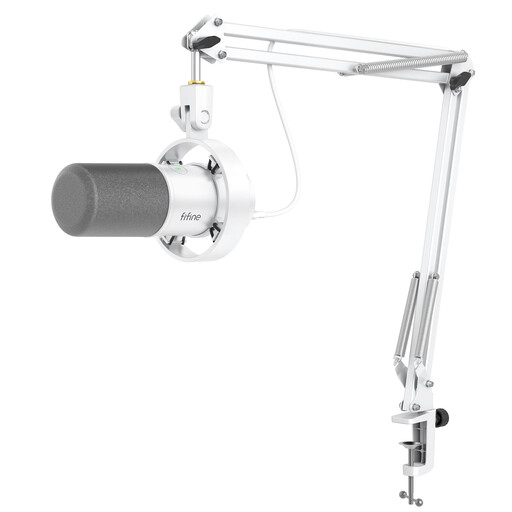
The boom arm can help you position the microphone for solo recording, so you can speak comfortably into it throughout your take.
Features named in the product title: dynamic microphone, USB and XLR, mute button, volume control and headphone connection.
 No image available
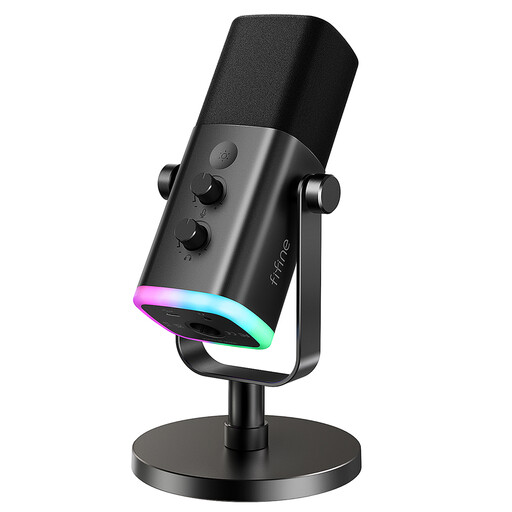
The described desktop setup may suit a fixed storytelling spot. Before a long take, check that you can monitor your voice as you want to.
Features named in the product title: dynamic USB/XLR microphone, desktop stand, mute button and headphone connection.
 No image available
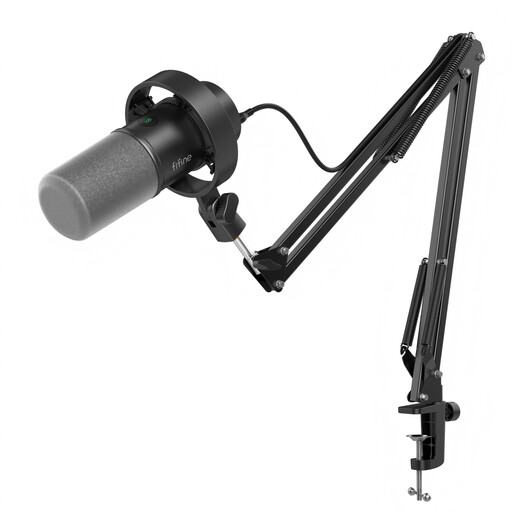
A boom arm can help you position the microphone for solo recording; check that the mount will fit your desk.
Features named in the product title: dynamic USB/XLR microphone, boom arm, mute button, headphone connection and gain control.
 No image available
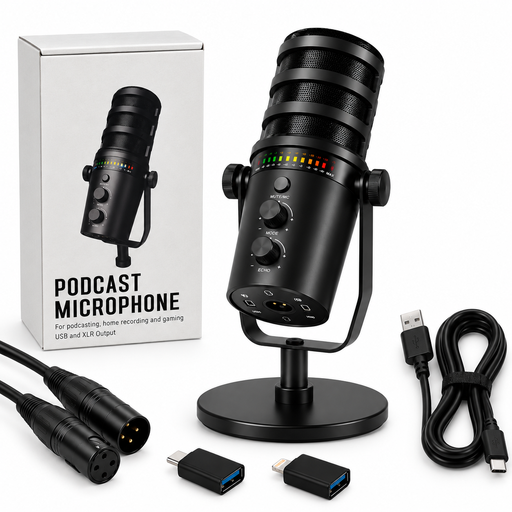
The desktop stand suits recording from a fixed position; check beforehand that the monitoring options will meet your needs for a long take.
Features named in the product title: dynamic USB/XLR microphone kit with gain control, mute, echo function and RGB lighting.
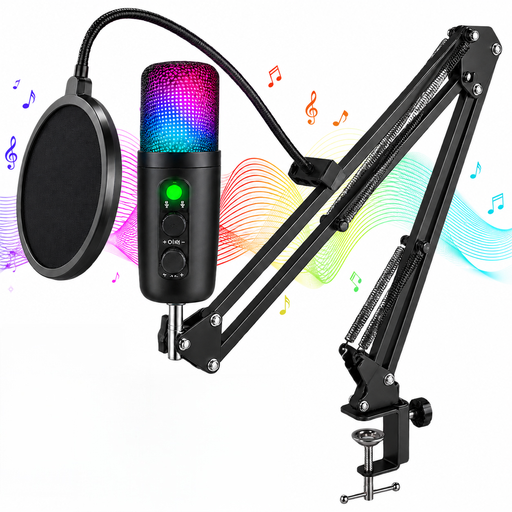 No image available
According to the product title, the set is designed for voice recording on a PC; check that the connections suit your planned recording setup.
Features named in the product title: condenser microphone, Type-C adapter, mute button and 7-piece set.
Check how much storage space is available, save your project beforehand and listen to a full test recording of a similar length. Audacity says that available storage limits the possible recording time; a heavy computer workload or damaged cables can cause dropouts.
It depends on whether you can use it to speak comfortably at a consistent distance throughout the take. The mount included with the Sennheiser Profile varies by set. Sennheiser’s user guide also notes that positioning and distance affect the input signal.
If goods are faulty, you’re generally entitled to statutory consumer rights against the retailer. The German Federal Government describes this period as two years. This is different from a voluntary manufacturer’s guarantee, so check who the seller is when you make your purchase.
The age of a storytelling tradition doesn’t automatically mean that every version of the text you use is free to reproduce. The DPMA notes that translations can also be protected, and that in Germany copyright generally expires 70 years after the death of the relevant author. So check the rights to any specific modern version. If other people take part, the circumstances of their recording and any publication should be checked separately. Processing personal data requires a legal basis. This is not blanket permission to publish.