Storytellers recording in a fixed location
You mostly record one firefighter and can position the microphone close in front of them, with a fan audible in the background.


For one person telling a story, a dynamic USB microphone with a cardioid pickup pattern is a sensible starting point, provided you can place it close in front of them. The key is to make a test recording in the actual location with the fan running: a cardioid pattern reduces sound coming from the sides and rear, but does not eliminate it. If there are two speakers, make sure both voices are clear in the test recording. If they are not, consider separate microphones and the recording setup required to use them.
You mostly record one firefighter and can position the microphone close in front of them, with a fan audible in the background.
You want to capture questions and answers clearly, and need to decide whether a shared test recording is enough or separate microphones are required.
You set up your equipment in different places and need a suitable USB connection, controllable levels and a practical sound check before the interview.
A good fit if: mainly one person is speaking and you can place the microphone close in front of them.
Consider: The close speaking position limits movement; with two people, one voice may be too far from the microphone.
A good fit if: you need more distance or want to record two people sitting close together, and a test recording captures both voices clearly.
Consider: With the fan running, check whether the more flexible positioning also picks up more room and fan noise.
A good fit if: you need both the interviewer and storyteller to be clear, and a shared microphone cannot deliver that in a test recording.
Consider: Allow for more equipment, connections and recording setup. Audio-Technica notes that two USB microphones cannot necessarily be used together without further steps.
For firefighter stories recorded with an audible fan, the key considerations are a close-miked solo voice, the possibility of a two-person conversation and the practicalities of recording on location. The figures below show which of these concerns consumers put first.
| Priority | What to check | Who is it important for? |
|---|---|---|
| One voice clearly captured despite the fan | Check the USB connection and pickup pattern; record and listen back at the intended location with the fan running. | If I’m telling a story on my own, I want to be clear despite the fan. Around 36% of consumers put a clear, close-miked solo voice first. |
| Capturing questions and answers | Have both people speak from their planned positions; if needed, check separate microphones and how they can be used together for recording. | If I’m asking questions and the storyteller also needs to be clear, I want to be able to assess both voices in the test recording. Around 29% of consumers prioritise clarity for both voices. |
| Setting up in different locations | Check the USB cable and computer connection, as well as the stand and any XLR accessories required for the exact model. | If I record in different places, I want to be able to repeat the USB setup with a suitable cable and stand. Around 21% of consumers put a straightforward setup first. |
| Monitoring the recording | Check whether the headphone output works in the intended connection mode; compare an unprocessed test recording with a processed one. | If I want to check that the voice and fan sound balanced before a longer conversation, I need a practical way to listen back. Around 14% of consumers prioritise checking the recording and applying moderate post-processing. |
Even a directional microphone picks up sound within its recording area. Strong software filters can also alter the voice.
Make a sound check with the fan running and speak at your normal volume before the interview.
A failed test recording may mean setting up again or recording another take; strong filters also mean you need to listen back carefully.
With a dynamic cardioid microphone, seating position and distance affect how clearly each voice is captured. According to Audio-Technica, two USB microphones cannot necessarily be used together without further steps.
Test questions and answers from the actual seats. If one voice is too quiet, consider separate microphones and how to record them together.
A separate setup may require an additional microphone and a suitable solution for recording both together.
RØDE explicitly distinguishes the PodMic USB from the PodMic without USB; Elgato provides separate technical specifications for the Wave:3 MK.1 and MK.2.
Check the full model name, connections and what is included with the specific offer.
An unsuitable connection or missing accessories could mean extra time and expense sourcing equipment and setting it up.
Audio-Technica Germany describes the ATR2100x-USB as a dynamic cardioid microphone with USB and XLR connections for voice recording.
Samson describes the Q2U as a dynamic USB/XLR cardioid microphone with a headphone output.
According to RØDE, the PodMic USB offers USB-C, XLR and direct headphone monitoring, making it suitable for a close-miked storyteller.
According to Shure, the MV7+ combines USB-C, XLR, a headphone output and switchable digital processing.
Elgato describes the Wave:3 MK.1 as a USB condenser microphone with a cardioid pickup pattern and headphone socket.
This selection of USB microphones at Joybuy includes options for close-miked voice recording, monitoring and potential interview setups.
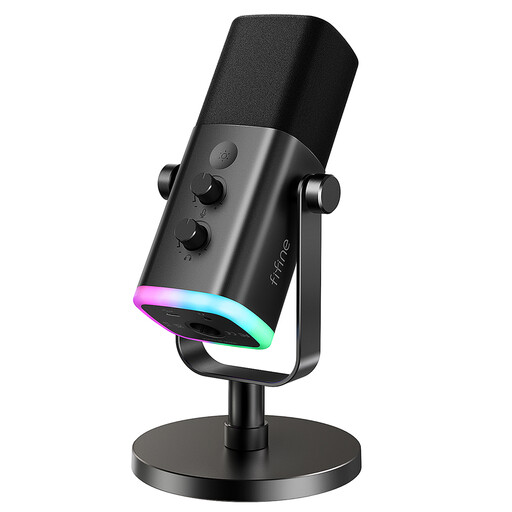 No image available
An option for close-miked voice recording if you want to monitor the audio while recording over USB.
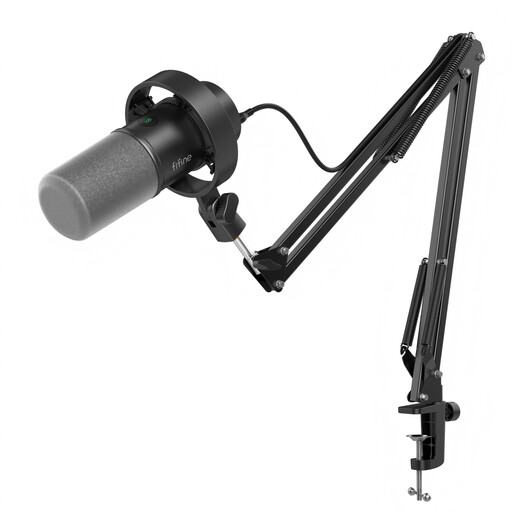 No image available
This kit could suit close-miked voice recording at a fixed desk if a boom arm works for your setup.
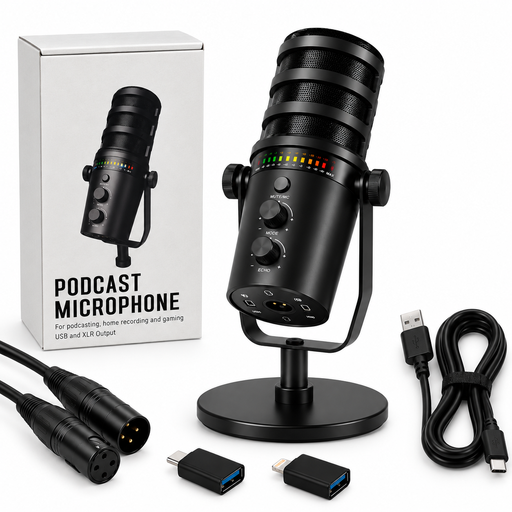 No image available
This set may be worth considering for USB voice recording at a desk if the listed controls suit the way you work.
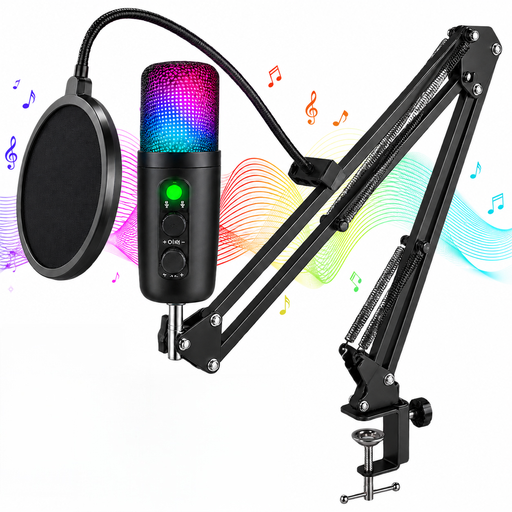 No image available
A potential USB option for voice recording if a condenser microphone suits your recording location.
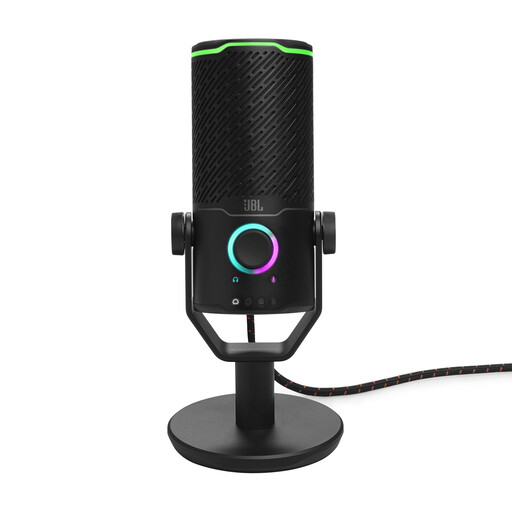 No image available
This microphone could be worth considering for testing a solo voice or conversation if you want to monitor the recording directly.
No. You should not base your choice on that expectation. Shure describes the MV7+ Denoiser as a feature for reducing steady fan noise, not background voices or short sounds. OBS warns that strong filtering can distort the voice. Make and listen back to a test recording with the actual fan running.
Connect the microphone, select the correct input device and make a short recording of both planned voices with the fan running. The Library of Congress recommends testing recording equipment before starting an oral history interview; this is recording advice, not a German legal requirement.
Check the specific offer to see whether it includes a stand, cables and any accessories you need, as the listed contents vary by model. For consumer goods in the EU, the seller is generally responsible for a minimum two-year legal guarantee from the date you receive the goods; Your Europe explains this rule. This is separate from a voluntary manufacturer’s warranty. The additional right to repair, which the Verbraucherzentrale (German consumer advice centre) says applies to certain product groups from 31 July 2026, does not automatically cover every USB microphone.
Recording another person’s non-public spoken words without authorisation is a criminal offence under Section 201 of the German Criminal Code (StGB). Before recording, establish whether you are authorised to do so; before planning to publish, clarify the purpose and scope of the intended use. If consent is used as the legal basis under data protection law, the Datenschutzkonferenz (German Data Protection Conference) says it must be freely given, informed and specific to the particular case. Consent to being recorded is not blanket permission for every subsequent publication.
For market surveillance, the Bundesnetzagentur (German Federal Network Agency) lists points to check including correct CE marking, an identifiable product and accurate manufacturer details. An advertising description alone does not prove that the specific offer meets these requirements.