Which setup is right for you?

Interviewers focused on speech detail

If you want to monitor quiet syllables, pronunciation and changes in volume, a fixed speaking position, headphone monitoring and a test at a realistic speaking volume are especially important. RØDE recommends close-mic placement for the PodMic USB, while the Audacity manual recommends exporting recordings afterwards.

Interviewers sharing a table

If one USB microphone is to record two people, you need to consider the polar pattern, seating distance and room noise together. CHERRY and Logitech G both list cardioid and omnidirectional modes for their respective models.

Interviewers recording long conversations

If a conversation would be difficult to repeat, plan for storage space, ongoing monitoring and how you’ll handle the recording file. The Audacity manual explains that storage requirements depend on recording quality and settings; Zoom says the H2essential can record to USB and microSD simultaneously.

What should you look for when buying?

Directional USB microphone for a close speaking position

A good fit if: The interviewee will speak from a fixed seat and the microphone can be positioned close by and kept steady.

Consider: You’ll need to keep the microphone in a consistent position, and this setup won’t automatically capture questions from the seat opposite.

USB microphone with switchable polar patterns for a round-table discussion

A good fit if: One microphone needs to capture both voices and a test from the actual seats produces clear results.

Consider: The omnidirectional mode picks up sound from several directions, which can also mean more room noise.

Recorder with USB functionality

A good fit if: Recording to a memory card as well is part of your planned workflow.

Consider: Extra equipment and setup call for a tested workflow; making a second recording does not guarantee that the interview will be preserved in every situation.

What you need What to check before buying Who is this important to?
Speech detail at varying volumes Polar pattern and speaking distance; listen to test recordings of both quiet and loud passages. If I want to hear quiet syllables and changes in volume for later analysis, I pay particular attention to monitoring the signal. Around 31% of consumers put speech detail first.
Preparing for long takes Check the available storage and the displayed remaining recording time; test the software and recording device in advance. If a long conversation would be difficult to repeat, I want to check the recording setup beforehand and save the file afterwards. Around 31% of consumers prioritise a reliable workflow for long recordings.
Recording both voices at the table Check the seating positions against the polar pattern; make a test recording with both voices. If both participants are equally important, I want to hear whether their voices come through clearly from the actual seats. Around 25% of consumers prioritise recording both voices.
Setting up in different locations Check the recording device’s connections, as well as the cables and stand included in the box. If I move the recording setup, I want to check in advance that the connections and included accessories will work with each setup. Around 13% of consumers prioritise a flexible recording setup.

Common pitfalls

  • Assuming an omnidirectional pattern will record two people without interference

    Omnidirectional mode picks up sound from several directions, including noise from the room. That alone does not prove that both voices will be recorded clearly at the table.

    Test both seats with the actual room noise. If you need to monitor each voice separately, plan the whole recording setup around that.

  • Focusing only on the microphone for long takes

    The possible recording duration also depends on available storage and the recording software’s settings.

    Check the remaining recording time before the interview and listen to a test file. Export a backup copy after recording.

    Depending on the recording format and workflow, you may need extra storage or another recorder.

  • Assuming similarly named generations of a model are identical

    A ranking or model name does not prove that another model has the same features.

    Check the full model name, connections and contents against the specific listing.

Key brands at a glance

CHERRY

According to CHERRY, the UM 6.0 ADVANCED offers switchable cardioid and omnidirectional patterns to suit different seating arrangements.

  • CHERRY lists a gain control, a headphone socket and a stand.
  • COMPUTER BILD described the sound of the model it tested as natural, but found that voices could sometimes sound muffled. This assessment applies to that model.

RØDE

The PodMic USB is designed for a close, directional speaking position; the NT-USB Mini is a compact, directional USB alternative.

  • RØDE lists a headphone socket on both models.
  • The close-mic placement RØDE recommends for the PodMic USB requires the microphone to be positioned appropriately. COMPUTER BILD heard popping sounds from the NT-USB Mini it tested.

Shure

According to Shure, the MV6 is a dynamic USB microphone for a directional speaking position, with headphone monitoring.

  • Shure promotes automatic level adjustment and noise processing.
  • These manufacturer claims do not prove that recordings will be free of interference in an interview room. COMPUTER BILD could still hear ambient noise from the MV6 it tested and noted that the microphone has no volume control.

Logitech G

According to Logitech G, the Yeti Nano offers cardioid and omnidirectional modes for solo use or a round-table discussion.

  • The manufacturer recommends the omnidirectional pattern for a group with several guests.
  • Only a test from the planned seating positions will show whether both voices come through clearly in the room.

Audio-Technica

According to Audio-Technica, the ATR2100x-USB is a dynamic handheld microphone with USB and XLR outputs for a flexible speaking setup.

  • The European product page lists headphone monitoring, two USB cables and a desktop tripod.
  • The cardioid pattern won’t automatically solve the problem of recording two interviewees sitting far apart.

Zoom

According to Zoom, the H2essential is a recorder that can also be used as a USB microphone.

  • Zoom describes simultaneous USB and microSD recording.
  • You’ll need to prepare and test the memory card and workflow. An additional recording does not guarantee protection against failure in every situation.

Joybuy products for close speaking positions

This selection includes microphones for a close, directional speaking position, as well as a wireless USB-C microphone for interviews. Before buying, check that the connection and setup are compatible with your recording device.
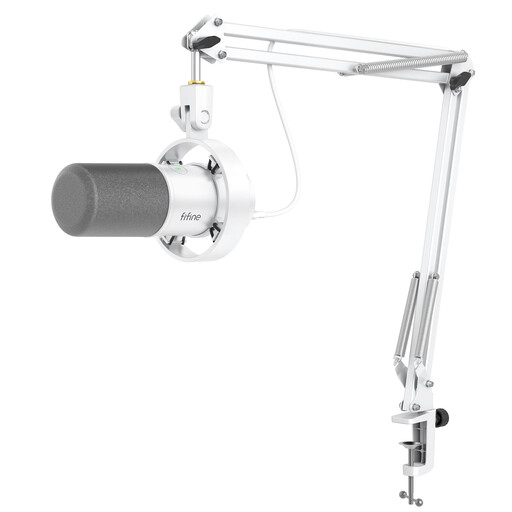
FIFINE K688CTW dynamic microphone with boom arm, USB/XLR, white

FIFINE K688CTW with boom arm, USB/XLR, white

For a close, fixed speaking position when you want to monitor the signal through a headphone socket while recording.

USB/XLR; the product title also mentions a boom arm, mute button, volume control and headphone socket.

View at Joybuy
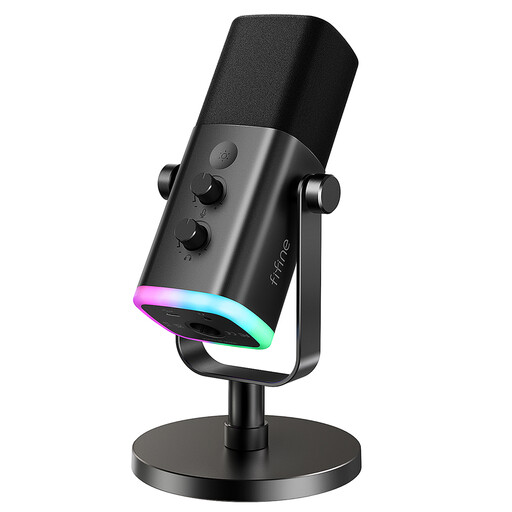
FIFINE AM8 dynamic microphone, USB/XLR, with desktop stand

FIFINE AM8, USB/XLR, with desktop stand

For one voice in a fixed position when you want to monitor the signal through a headphone socket while using USB.

USB/XLR; the product title also mentions a mute button, headphone socket and desktop stand.

View at Joybuy
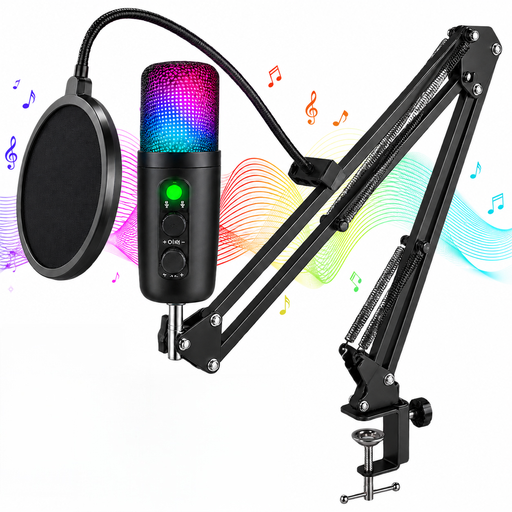
Cardioid USB condenser microphone with mute button and Type-C adapter, 7-piece set

Cardioid USB condenser microphone, 7-piece set

For a recording position focused on one voice; check that the Type-C adapter mentioned in the product title is compatible with your device.

The product title lists a cardioid pattern, a mute button, a Type-C adapter and a 7-piece set.

View at Joybuy
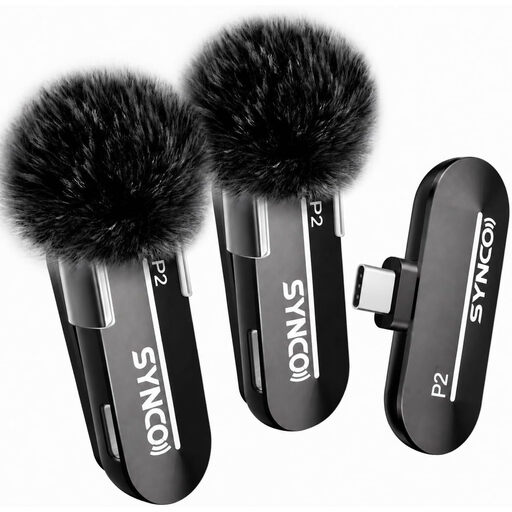
SYNCO P2XT wireless USB-C microphone

SYNCO P2XT wireless USB-C microphone

For interviews in a mobile recording setup when wireless transmission suits your needs.

USB-C; the stated battery life on a full charge is up to 6 hours.

View at Joybuy
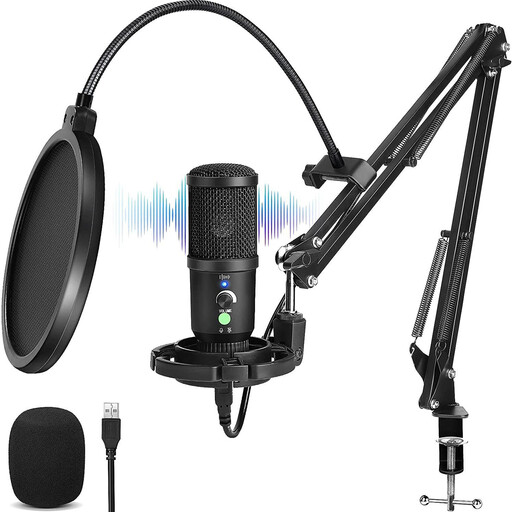
Cardioid USB condenser microphone with headphone monitoring

Cardioid USB condenser microphone

For a position focused on one voice when you want to monitor the recording signal through the headphone socket during a take.

The product title lists a cardioid pattern and latency-free monitoring.

View at Joybuy

Frequently asked questions

Can a USB microphone record both people at the table?

Yes, as long as a test recording from both actual seats is clear. The CHERRY UM 6.0 ADVANCED has an omnidirectional mode for sound from several directions, but it also picks up room noise. If you need to adjust each voice separately, the whole recording setup must be designed for that.

How do I prepare for a long take on a computer?

Select the microphone as the input, check the level and the displayed remaining recording time, then listen to a test recording. The Audacity manual recommends exporting a WAV or AIFF backup before editing the recording; active projects should not be stored on a USB stick or network drive.

Can I record a private interview in Germany?

Unauthorised recording of another person’s non-public spoken words is covered by § 201 para. 1 StGB. So make sure you discuss the recording with everyone involved beforehand. Questions about subsequent use and data protection are separate matters.

Does consent to recording also cover storage or publication?

Not automatically. Where personal data is processed, there must be a relevant legal basis under the GDPR. The Federal Commissioner for Data Protection and Freedom of Information explains that consent involves, among other things, being given freely and being informed about the purposes of processing. Whether a specific publication is permissible depends on its purpose and the circumstances.

Is a manufacturer’s guarantee the same as statutory warranty rights?

No. Your statutory rights for a purchase are against the seller; a guarantee is an additional voluntary promise subject to its own terms. § 438 BGB generally sets a two-year limitation period for claims relating to defects, starting from delivery.