If you can hear echo or fan noise, a directional microphone used close to your mouth is a sensible starting point. In a quiet room, a directional USB condenser microphone may also be suitable. The key is to test it in the spot where you’ll actually record: check for breath and plosive sounds, monitor the levels and make sure you can comfortably maintain your speaking distance. The polar pattern and noise processing won’t eliminate every unwanted sound.
Which approach is right for you?
Speakers in noisy rooms
If you can hear fan noise or reflections from the room, directional recording and a comfortable position close to the microphone can be a sensible starting point. Shure and Audio-Technica describe their microphones as directional; testing one in your usual room will show how your voice actually sounds.
Quiet speakers in quiet rooms
In a quiet spot, you can compare directional USB condenser microphones and dynamic models using the same passages. RØDE and Sennheiser list direct headphone monitoring on selected models, but the microphone type alone won’t predict how it will sound in your space.
People recording for long sessions
If you want to keep an eye on levels and headphone audio during longer takes, look for easily accessible controls and monitoring on the microphone. RØDE and Sennheiser list these features on selected models. The Audacity manual notes that lowering the level afterwards won’t fix a recording that has clipped.
What should you look for when buying?
Directional dynamic USB microphone
A good fit if: You can speak close to the microphone at a consistent distance and your room has background noise.
Bear in mind: You’ll need to stay comfortably close, even during long, relaxed passages; unwanted sounds may still be audible.
Directional USB condenser microphone
A good fit if: Your recording space is quiet and you can control your position, levels and plosive sounds.
Bear in mind: A cardioid polar pattern won’t make the room inaudible; test emphatic consonants in your own space.
Microphone with switchable cardioid and omnidirectional patterns
A good fit if: You usually record alone but occasionally have several people speaking around the same table.
Bear in mind: Omnidirectional mode picks up sound from all directions, so it isn’t automatically the best choice for a single voice.
| What matters |
What to check when buying |
Who is it important to? |
| Clear speech despite room noise |
Polar pattern, a suitable mount and a headphone socket; listen to a test recording with your usual background noise. |
If I can hear fan noise or room reflections, I want to record my voice comfortably close to the microphone. Around 36% of consumers prioritise clear speech despite room noise. |
| Quiet passages and plosive sounds |
Test the speaking direction, positioning and pop filter with quiet and emphatic passages. |
When I speak quietly, I want soft words to remain clear without breath or plosive sounds getting in the way. Around 29% of consumers prioritise quiet speech and controlling these sounds. |
| Levels and monitoring during long takes |
Check for a headphone output and an accessible level or gain control; record the loudest passage you plan to use, too. |
During a long meditation, I want to check the levels and headphone audio before recording the whole script. Around 21% of consumers prioritise recording controls and monitoring. |
| A simple or expandable setup |
Compare what’s included, the USB connection on your recording device, the mounting options and, if applicable, the XLR output. |
If I want to record on my computer without extra steps or use a different signal path later, I check the connections and included mount. Around 14% of consumers prioritise a straightforward or expandable setup. |
Common misconceptions
-
A cardioid pattern or noise processing means the room is soundproof
Even a directional microphone picks up sound within its recording area. Shure explains that its real-time noise processing handles continuous sounds such as fans differently from sounds such as keyboard clicks, barking or voices in the background.
Test your voice with the fan on and in your usual speaking position before settling on a type of microphone.
Finding a suitable position or a quieter recording space may mean extra setup and adjustments.
-
An integrated pop filter prevents audible plosive sounds
When COMPUTER BILD tested the RØDE NT-USB Mini on 21 October 2026, it heard noticeable popping despite the integrated filter. This result applies to that model and test, not to every voice or recording situation.
Record emphatic consonants and quiet breaths in your planned recording spot, then listen back to the test.
-
Choosing an omnidirectional pattern for a solo voice without testing it
According to CHERRY, the omnidirectional mode on the CHERRY UM 6.0 ADVANCED picks up sound from all directions. This may work well for several people around the same table, but it could also bring more of the room into your recording.
For a single voice, try cardioid mode first and use the wider pattern only when your recording setup calls for it.
Brands to consider
RØDE
The NT-USB Mini is a compact USB condenser option for recording a single voice directionally at your desk.
- RØDE lists a cardioid polar pattern, detachable desktop stand, integrated pop filter and latency-free headphone monitoring.
- COMPUTER BILD heard noticeable popping when testing the NT-USB Mini, so check how emphatic consonants sound with your own voice.
Shure
The MV7+ is a dynamic USB/XLR microphone for close-miking, with adjustable digital settings.
- Shure lists USB-C, XLR, a headphone socket and switchable real-time noise processing.
- Shure distinguishes this processing from the handling of keyboard clicks, barking and voices in the background; it won’t make every recording noise-free.
Audio-Technica
The ATR2100x-USB is a dynamic option for recording a single voice, with USB and XLR connections.
- Audio-Technica lists a cardioid polar pattern, USB-C, a direct headphone socket and an included desktop tripod.
- The XLR output is only useful if you want to use a compatible analogue signal path.
Sennheiser
The Profile USB is a directional USB condenser microphone with easily accessible recording controls.
- Sennheiser lists gain, mix and volume controls, a headphone socket and a desktop stand with the Profile package.
- These features don’t demonstrate independently measured suppression of room echo.
CHERRY
The UM 6.0 ADVANCED switches between cardioid and omnidirectional patterns, making it worth considering for recordings with several people, too.
- CHERRY lists a gain control and a headphone socket.
- According to CHERRY, omnidirectional mode picks up sound from all directions, so try cardioid mode as well for quiet solo recordings.
Joybuy products for voice recording
This selection includes directional dynamic USB microphones, a directional USB condenser microphone and kits for recording speech on a computer.
 No image available
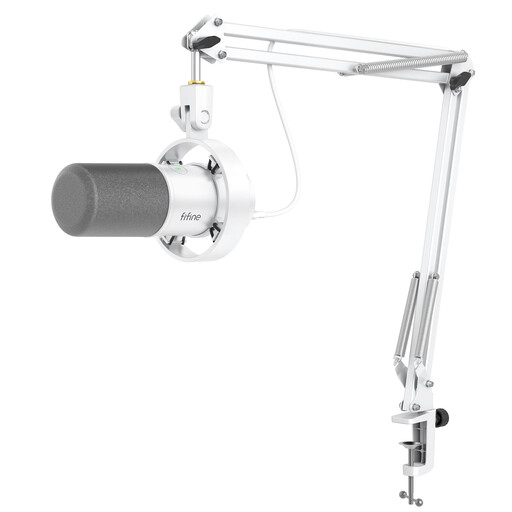
FIFINE K688CTW dynamic USB/XLR microphone with boom arm
A good fit if you want to position a directional dynamic microphone at your desk and monitor your audio when using USB.
The listed package includes a boom arm and shock mount. According to the description, the gain control, headphone socket and microphone buttons work in USB mode; an XLR cable isn’t included.
View at Joybuy
 No image available
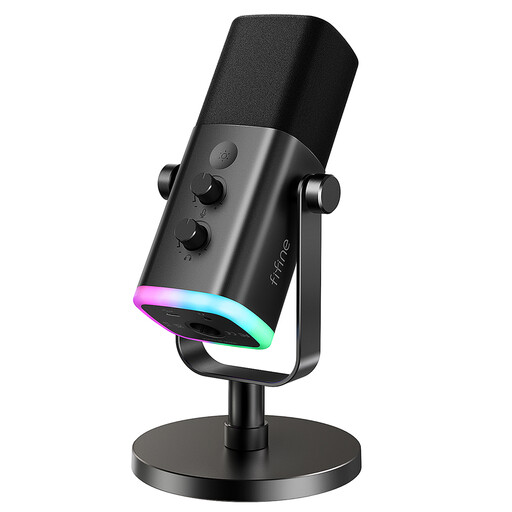
FIFINE AM8 dynamic USB/XLR microphone
An option for recording speech on your computer if you want to use gain control and headphone monitoring on the microphone.
The description lists USB-C, XLR, a cardioid polar pattern and a desktop stand. According to the description, RGB lighting and the microphone buttons are only active in USB mode; an XLR cable isn’t included.
View at Joybuy
 No image available
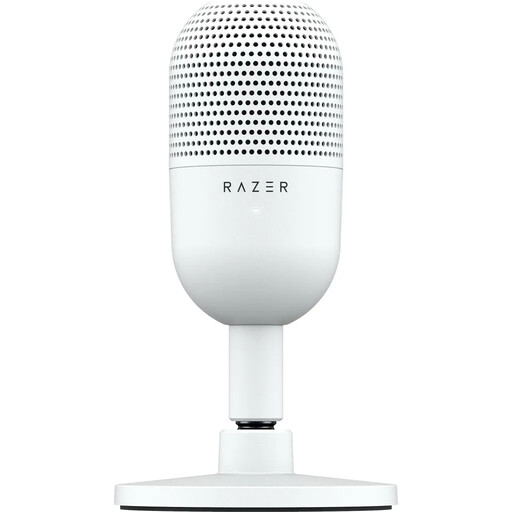
Razer Seiren V3 Mini White USB condenser microphone
A good fit if you’re looking for a directional USB condenser microphone for a single voice, with an adjustable angle on your desk.
The description lists a supercardioid polar pattern, adjustable stand, USB-C cable and touch mute function.
View at Joybuy
 No image available
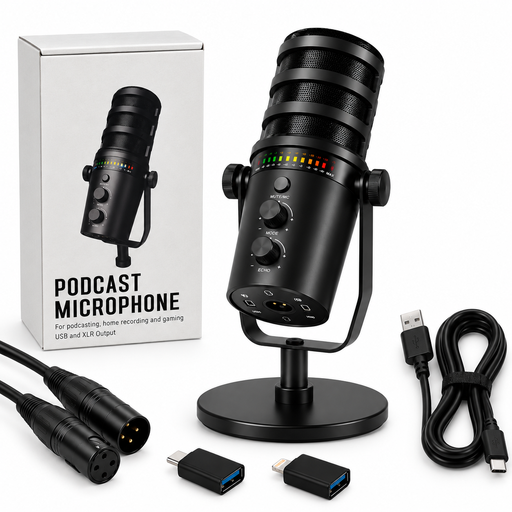
Dynamic USB/XLR microphone kit with desktop stand
An option for recording speech on your computer if you want to use gain control and headphone monitoring directly on the microphone.
The description lists a cardioid polar pattern, gain control, mute function and headphone socket with monitoring volume; a desktop stand is listed in the kit title.
View at Joybuy
 No image available
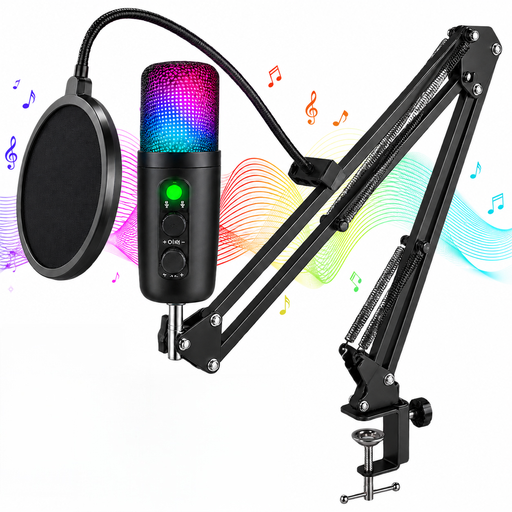
USB condenser microphone for PC, 7-piece kit
May suit voice recording on a PC if you want to use a mute button and headphone monitoring.
The product title lists a Type-C adapter and mute button; the description includes a headphone socket for real-time monitoring.
View at Joybuy
Frequently asked questions
How should I set up the microphone for a long meditation?
Position it so you can comfortably maintain your speaking distance, point the speaking side towards you and record test passages at both a quiet and your planned loudest volume. Select the right input in your recording software and lower the recording level if the meter indicates clipping. Audio that has already clipped can’t simply be fixed by turning it down afterwards.
Does noise reduction remove fan noise and every other sound?
No. Noise processing doesn’t necessarily remove every type of sound. Shure describes its real-time denoiser for the MV7+ as handling continuous sounds such as fans, among others, but specifically distinguishes these from keyboard clicks, barking and voices in the background. Test your recording with the usual room noise and check the microphone’s position and the room first.
What should I check about what’s included and the warranty?
Check whether the specific package includes a cable, desktop stand or microphone arm. The Verbraucherzentrale distinguishes the statutory warranty from a voluntary guarantee; if there’s a fault, statutory warranty claims are made against the seller. For a typical online purchase, the Verbraucherzentrale generally describes a 14-day right to cancel; check whether any exceptions apply to your specific contract.
Can I publish a recording online if it uses someone else’s meditation music or text?
Not simply because you recorded the voice yourself. The German Federal Ministry of Justice explains that German copyright law covers, among other things, rights to literary and musical works and the right to make them publicly available. Whether a particular piece of music, passage of text or licence permits your planned publication depends on the relevant rights and terms of use.


