Recording in a reverberant room
If you’re recording someone speaking while seated in a room where reflections or background noise may be an issue, choosing a microphone that can be positioned close to them and facing them may be important.


For one person speaking while seated in a reverberant or noisy room, a dynamic cardioid microphone may be a good fit if they speak close to it and directly into the front. In a quieter room, a condenser microphone may also work well. Check the specific model’s headphone monitoring, USB connection and what’s included in the box, too. Before recording a talk that is not being given in public, make sure you have permission: Section 201 of the German Criminal Code (StGB) prohibits recording another person’s non-public spoken words without authorisation.
If you’re recording someone speaking while seated in a room where reflections or background noise may be an issue, choosing a microphone that can be positioned close to them and facing them may be important.
For a desk setup shared by different volunteers, the connection, positioning and controls should suit the planned recording process.
If you want to listen through headphones as you speak, or adjust the levels and mute the microphone directly, check the features of the specific model.
Start by checking the room and speaking distance, then look at the controls and monitoring options, followed by the connections and what’s included.
| Criteria | What to check | Who it matters most to |
|---|---|---|
| Room noise | Check the pickup pattern and speaking direction for the specific model; make a short test recording from the intended seat. | If reverberation or background noise is an issue in the room, I want to record the seated speaker from close up and head-on; that’s why around 36% of consumers put room noise first. |
| Ease of use | Check that the USB connection, level display and controls you need fit your recording process. | When volunteers take turns, I want a process that’s easy to repeat, so there’s no need to explain the setup from scratch each time; around 29% of consumers prioritise ease of use. |
| Direct monitoring | Check for a headphone socket, volume control and, where applicable, the ability to mix the microphone and computer signals. | When recording, I want to listen through headphones to check that the voice and levels sound right; around 21% of consumers prioritise direct monitoring. |
| Desk setup and accessories | Compare the mount, cable and connections you need with the seating position and recording device. | For a permanent desk setup, I want to know whether the stand, cable and connections will work with the seating position and recording device; around 14% of consumers look at setup and accessories first. |
A general test list won’t tell you how room reflections, speaking distance and controls will work in your own recording space.
Use rankings as a starting point for finding models at most, then check the room, positioning and controls for your specific recording setup. COMPUTER BILD’s USB microphone list dated 21 October 2026 is an external ranking, not an assessment of how suitable a microphone is for your museum room.
The RØDE NT-USB Mini manual lists a USB-C-to-USB-A cable as included. A different cable connection is needed for a computer with a USB-C input.
Compare the sockets on your recording device with the cable supplied with the specific version.
If your computer only has USB-C ports, you may need to buy a compatible USB-C-to-USB-C cable separately.
The Sennheiser Profile sets differ: depending on the version, the listing describes either a desk stand or a microphone arm.
Check the exact set name and whether the included mount lets you position the microphone where you want it in front of the seated speaker.
The documented ATR2100x-USB and ATR2500x-USB models represent two different types of USB microphone: a dynamic USB/XLR model and a USB condenser model.
The Profile is a USB-C condenser microphone with controls for gain, mix and headphone volume.
The NT-USB Mini is a compact USB condenser microphone with a detachable desk stand and direct monitoring.
The MV7+ is a USB-C/XLR alternative for a setup where extra connection options or app settings may be useful.
CHERRY describes the UM 6.0 ADVANCED’s Cardioid mode as being for one voice in front of the microphone.
The following Joybuy products include dynamic and condenser USB microphones for recording voices at a desk. Compare the room, speaking distance, connections and controls you need with your recording setup.
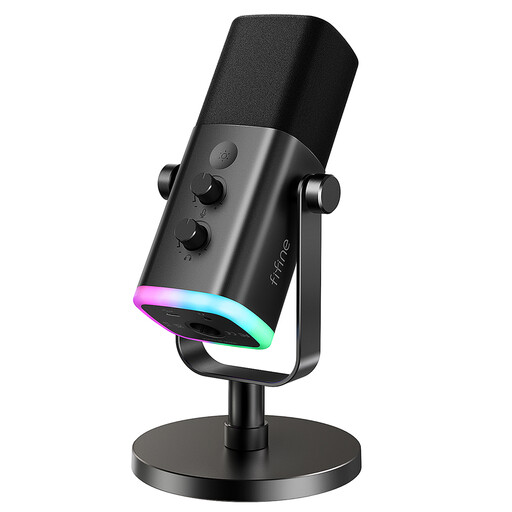 No image available
Designed for one voice speaking close to the front of the microphone; check that this position is practical at your desk. This model is described as a dynamic USB/XLR microphone.
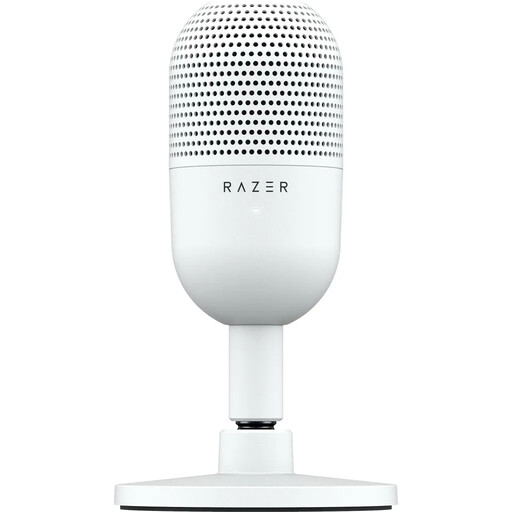 No image available
The listed supercardioid pickup pattern is designed for focused voice recording; check that you can position it correctly from the intended seat. The product name describes it as an ultra-compact USB microphone.
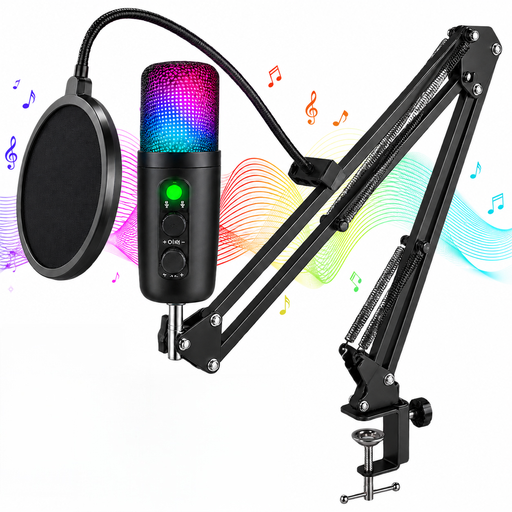 No image available
If muting and monitoring at your desk matter to you, check that the listed features and included Type-C adapter are compatible with your recording device. The product name describes it as a seven-piece set.
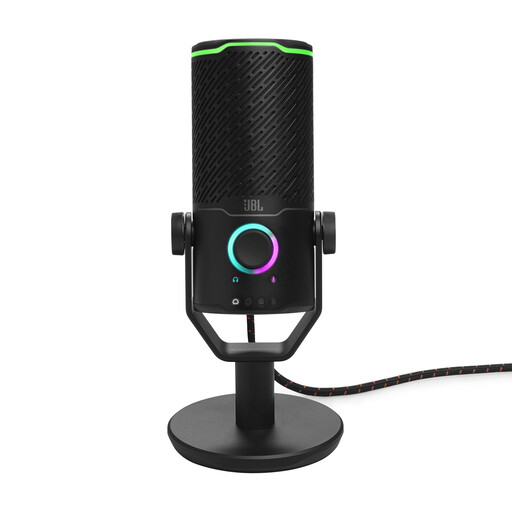 No image available
If you’re recording one voice, the selectable cardioid pickup pattern may be useful. The product description lists several pickup patterns, including Cardioid, as well as monitoring and muting.
Select the USB microphone as the input in your recording software, point its front towards the speaker and make a short test recording from the actual seat. The RØDE NT-USB Mini manual says to select it as the computer’s audio input and output; check the distance and positioning with the speaker and the room.
Check that the computer socket, cable and mount match the version you’ve chosen. The Sennheiser Profile is described as including a desk stand and USB-C cable; according to the manufacturer, the Audio-Technica ATR2500x-USB comes with two USB cables and a desk stand. You’ll also need compatible headphones for direct monitoring.
Not in every case: Section 201 of the German Criminal Code (StGB) covers the unauthorised recording of another person’s non-public spoken words. The Federal Commissioner for Data Protection and Freedom of Information also points out that processing personal data requires an appropriate legal basis and that, as a rule, people should be informed at the start of data collection. Agree the recording, its purpose and how it will be used later with the museum and the speaker in advance.
For a consumer purchase in Germany, the statutory warranty provided by the seller is separate from any voluntary manufacturer’s or retailer’s guarantee. The Verbraucherzentrale advises that, if a product is faulty, your first step is to ask the seller to put it right; any guarantee is also subject to its own terms and conditions.