Which USB microphone is right for you?

Recording one quiet voice

If a former miner is telling their story from a fixed position, the key things to consider are getting the microphone pointing in the right direction, choosing a practical distance and testing it with quiet passages. Shure and RØDE offer guidance on their respective microphones, but you should check the positioning at the actual recording location.

Interviewers who want their questions heard

If you want the questions to be heard alongside the memories, the seating arrangement and pickup pattern need to work together. JBL describes a bidirectional mode for people sitting opposite each other; CHERRY lists cardioid and omnidirectional patterns for the UM 6.0 ADVANCED.

Preserving longer oral history recordings

If you want to spot problems during a longer conversation and keep a clear record of the recording for the future, consider headphone monitoring and your file-handling workflow. The Oral History Association recommends documenting consent and agreements about future use.

What should you look for when choosing?

Directional USB microphone for one person

A good fit if: one person is doing most of the talking and you can position the microphone close by and keep it steady.

Things to consider: The speaker needs to be positioned in line with the microphone’s pickup direction. Listen to a test recording to assess room noise and quiet passages at the recording location.

Switchable microphone for two people

A good fit if: the interviewee and interviewer are sitting at a quiet table and you want to record them together.

Things to consider: The pickup pattern needs to suit the seating arrangement. A shared audio signal does not automatically let you adjust voices of different volumes separately.

Separate recording channels

A good fit if: you want to assess or edit the storyteller’s voice and the questions separately.

Things to consider: You may need extra microphones, connections and setup. Before buying, check whether your device and software support separate inputs or tracks.

What matters What to check before buying Who should consider this?
Quiet storytelling voice Can the microphone be positioned close by and kept steady? Can you adjust its direction and input level? If I want to capture a quiet storytelling voice clearly, distance, direction and a test recording are essential; around 36% of consumers are likely to put this first.
Storytelling voice and questions Does the specific pickup pattern suit the seating arrangement? Test it with both voices. If I want my questions to be heard too, the microphone needs to suit the positions of both people; around 29% of consumers are likely to prioritise recording two voices in conversation.
Monitoring and keeping recordings Is there a headphone socket? Can the recording software create and play back the file you need? If you want to monitor long interviews and keep them for the future, check the saved file; around 21% of consumers are likely to prioritise listening in and future usability.
Easy setup Check that the plug and cable work with your device; make sure the stand or arm fits the available space and can be attached securely. If you want a straightforward setup at the recording location, a compatible connection and practical positioning matter; around 14% of consumers are likely to put ease of setup first.

Buying decisions that can cause problems

  • Assuming noise processing guarantees a quiet recording

    Shure describes noise processing on the original MV6. However, COMPUTER BILD could still hear background noise on this model in its test on 21 October 2026. The result also depends on the room, distance and voice.

    Test quiet sentences and pauses in the place you plan to record, then listen back to the saved file.

  • Choosing a microphone for one voice without checking whether it suits a two-person conversation

    The documented pickup patterns vary: CHERRY lists cardioid and omnidirectional patterns for the UM 6.0 ADVANCED, while JBL also lists a bidirectional pattern for the Quantum Stream Studio. No pattern automatically gives you control over two voices at different volumes.

    Decide on the seating arrangement before you buy, and check whether you can edit both voices the way you want.

  • Assuming that monitoring means the archival file has been saved correctly

    A headphone signal does not automatically tell you which device or file format the recording software is actually saving.

    Before the interview, check the input selection, record a test file and play it back using the file-handling workflow you intend to use.

Microphone brands to consider

Shure

The original MV6 is an option for recording a single voice at close range, with USB-C, headphone monitoring and automatic level adjustment, according to the manufacturer. The MV6 and MV6 Gen 2 are different models.

  • Shure describes Auto Level and noise processing for the original MV6.
  • COMPUTER BILD could hear background noise on the model it tested. The manufacturer’s claims are no guarantee of a quiet interview room.

RØDE

The NT-USB Mini is a compact USB condenser microphone with a desk stand and direct headphone monitoring, suited to a single-voice setup.

  • The manufacturer provides details on its connection and positioning.
  • COMPUTER BILD heard noticeable popping sounds on the NT-USB Mini it tested. Try it in your actual speaking position with a longer recording.

CHERRY

According to CHERRY, the UM 6.0 ADVANCED offers cardioid and omnidirectional patterns, as well as a gain control and headphone socket.

  • Its switchable patterns may be useful when alternating between solo recordings and table conversations.
  • Omnidirectional mode is not designed specifically to record someone sitting opposite. COMPUTER BILD described voices on the model it tested as slightly muffled.

JBL

According to JBL, the Quantum Stream Studio offers four pickup patterns, including a bidirectional mode for conversation across the microphone, as well as headphone monitoring.

  • The documented patterns may be useful when the seating arrangement changes.
  • The manufacturer’s claim about automatic dynamic processing does not prove that voices at different volumes will be equally clear in every room.

FIFINE

According to the manufacturer, the K688CT set combines a directional dynamic USB/XLR microphone with a boom arm for close-range single-voice recording.

  • A boom arm can help keep the microphone in a steady position.
  • Claims about reducing background noise come from the manufacturer. A single set does not prove that two voices can be adjusted independently.

USB microphones and voice recording systems at Joybuy

The range includes microphones for recording speech at a table, as well as a wireless USB-C microphone system.
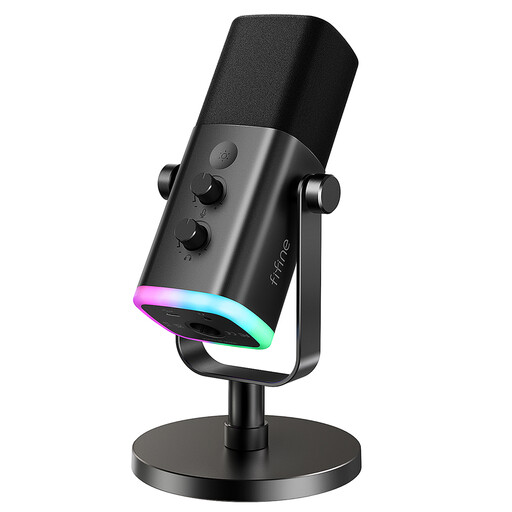
FIFINE AM8 USB/XLR dynamic microphone

FIFINE AM8 USB/XLR dynamic microphone

Its unidirectional pickup pattern and stated close-range performance make it suitable for recording a single voice positioned nearby.

USB/XLR connection and headphone socket. Monitoring volume and function buttons are specified for USB use; according to the description, the function buttons are inactive when connected via XLR. An XLR cable is not included.

View at Joybuy
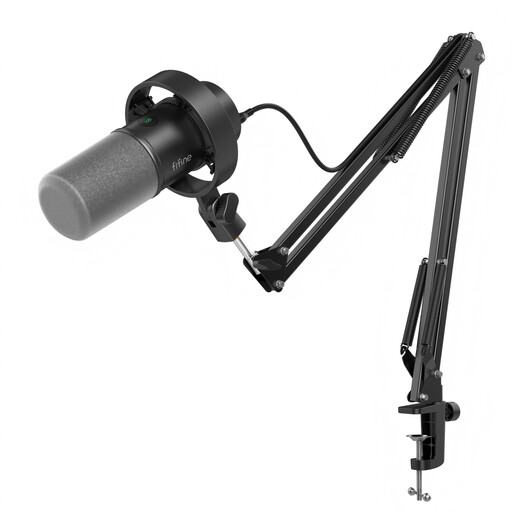
FIFINE K688CT USB/XLR microphone set with boom arm

FIFINE K688CT USB/XLR microphone set with boom arm

The dynamic microphone, with its cardioid pickup pattern and boom arm, is designed for recording a single voice in an adjustable position.

Gain control and headphone monitoring are specified for USB use. According to the description, the function buttons on the microphone are inactive when connected via XLR; an XLR cable is not included.

View at Joybuy
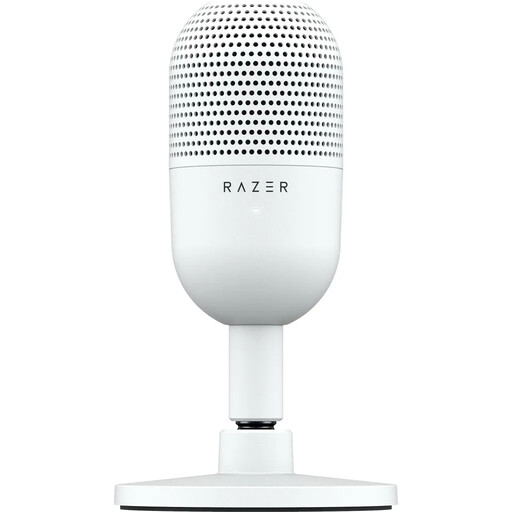
Razer SEIRĒN V3 MINI White USB microphone

Razer SEIRĒN V3 MINI White USB microphone

The stated supercardioid pickup pattern and adjustable tilt stand let you point the microphone towards a single speaker.

The product description lists a 14-mm condenser capsule and a touch mute button with an LED indicator.

View at Joybuy
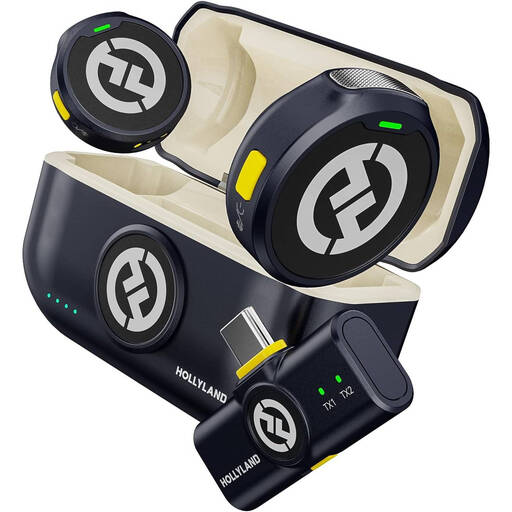
Lark M2 wireless USB-C microphone system

Lark M2 wireless USB-C microphone system

This system is described as a wireless option for recording speech when you want to use a USB-C receiver with your computer.

The set includes two transmitters, a USB-C receiver and a charging case. The product description also lists switchable background noise cancellation.

View at Joybuy
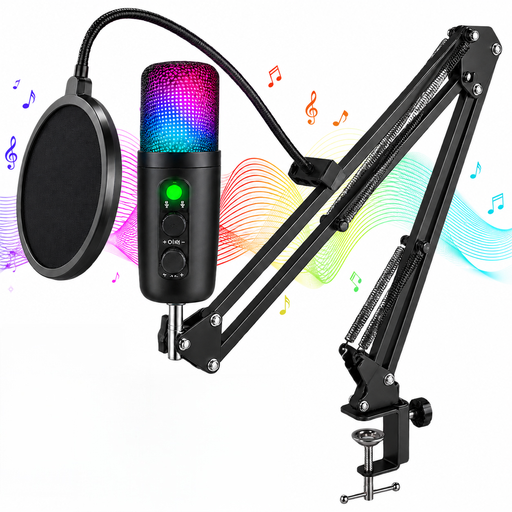
USB condenser microphone with RGB lighting, 7-piece set

USB condenser microphone with RGB lighting, 7-piece set

The product description lists a headphone socket and latency-free monitoring for USB recordings.

According to the product description, the set includes a scissor arm, shock mount and pop filter. Gain control and a mute function are also listed.

View at Joybuy

Frequently asked questions about oral history recordings

How can I check that quiet passages will be picked up before a long interview?

Make test recordings of quiet stories and questions in the intended location, then listen back to the saved file. Select the microphone as the input and, if available, use a headphone socket to monitor the recording as well. RØDE recommends a distance of 10–15 cm for certain uses of the NT-USB Mini; this is not a general guideline for every interview or microphone.

Do I need a particular microphone sample rate for keeping recordings long term?

A high stated sample rate alone does not guarantee a clear recording that is suitable for archiving. For audio recordings, the Oral History Association recommends using uncompressed standard formats such as WAV or Broadcast WAV where possible. Check whether your recording software can actually create and play back a file in that format.

Can I record or share a non-public oral history interview in Germany without the interviewee’s knowledge?

Section 201 of the German Criminal Code makes it a criminal offence to record another person’s privately spoken words without authorisation, as well as to use or make such a recording accessible in the ways specified there. Check that you have permission before recording, and clarify how you plan to use the recording before sharing it. The Oral History Association recommends documenting informed consent and agreements about future use. Whether the GDPR also applies to a specific archiving or publication project, and which legal basis is appropriate for processing the data, depends on the project; GDPR consent is not automatically the only possible legal basis.

What should I know about the legal guarantee when buying?

When you buy as a consumer from a trader in the EU, you have a legal guarantee of at least two years from the date you receive the goods. This EU rule does not apply in the same way to purchases from private individuals. Any additional manufacturer’s warranty is separate from this.