Voice performers who switch between contrasting characters
If you switch between quiet speech and loud shouts, it’s important to be able to control the recording and monitor the sound as you play.


For expressive puppet voices, a dynamic USB microphone is a good fit if you can speak close to it and keep a consistent distance while you play. A USB condenser microphone is also worth considering if you have a quiet, fixed recording spot. The key is to test it with a whisper and your loudest shout, take the room acoustics into account and monitor the sound directly – level controls are no substitute for checking the recording.
If you switch between quiet speech and loud shouts, it’s important to be able to control the recording and monitor the sound as you play.
If you’re recording without a treated studio, you’ll need to consider your speaking distance, room acoustics and background noise at your recording spot.
If you move your head or upper body along with the puppet, you should be able to position the microphone to suit your performance area.
| What matters when buying | What to look for | Who it matters most to |
|---|---|---|
| Levels for whispers and shouts | Record your quietest and loudest character voices as a test; check the level meter, gain setting and direct monitoring. | If you perform both quiet and loud passages in the same recording, you’ll want to spot distortion without unnecessarily flattening the character’s dynamics. Around 36% of consumers put changing levels first. |
| Room echo and background noise | Test the microphone where you’ll actually record and check that you can position it appropriately for your voice. | When recording in a room where background noise is audible, you’ll want to keep your voice close and clear without bringing the room to the fore. Room acoustics are the top concern for around 29% of consumers. |
| Movement and speaking distance | Try the head and upper-body movements you typically make; check that the stand or boom arm stays out of the way. | If you move around with the puppet as you play, you’ll need a microphone position that allows you to move freely and keeps changes in distance to a minimum. Freedom of movement is the priority for around 21% of consumers. |
| Set-up and what’s included | Check what’s included with the exact variant against your computer connections, set-up and existing accessories. | For an easy start, you’ll want to know whether the connections, stand and any accessories you need will work with your set-up. Around 14% of consumers name set-up and included accessories as their top concern. |
A directional dynamic microphone won’t eliminate room sound. Audio-Technica points out that increasing the distance from the sound source can make more of the room audible.
Test the microphone position and your usual playing distance in the actual recording spot before choosing a microphone type.
Auto-level, Clipguard and other level features vary by model. You should still check a loud passage with a test recording.
Record your loudest shout, then check the meter and listen back with headphones.
Stands and included accessories vary by model and variant. A missing boom arm or pair of headphones could make all the difference for your recording spot.
Check what’s included with the variant you’ve chosen and compare it with the accessories you already have.
The MV7+ is a dynamic USB-C/XLR option for speakers who want to manage character changes and monitor their sound directly.
The NT-USB Mini is a compact USB condenser microphone, while the dynamic PodMic USB also offers XLR connectivity.
The Wave:3 MK.2 is a USB condenser microphone for a computer-based recording set-up, with a level meter and adjustable processing.
The dynamic ATR2100x-USB is a USB/XLR option for close-mic recording with direct headphone monitoring.
The Quantum Stream Studio is a USB condenser microphone with selectable pickup patterns and a level meter.
The range includes dynamic USB microphones for close-mic recording, as well as USB models with direct monitoring or level control.
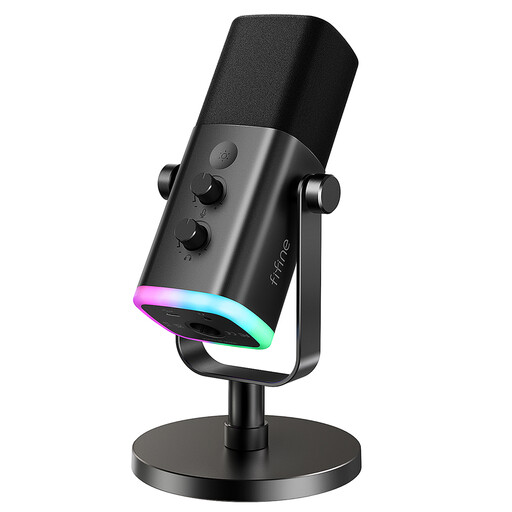 No image available
Suitable for close-mic recording if you can keep the microphone in a steady position while puppeteering.
Features a gain control, mute button, headphone monitoring and windscreen. These microphone functions are available in USB mode. A desktop stand and USB cable are included; the boom arm and XLR cable are not.
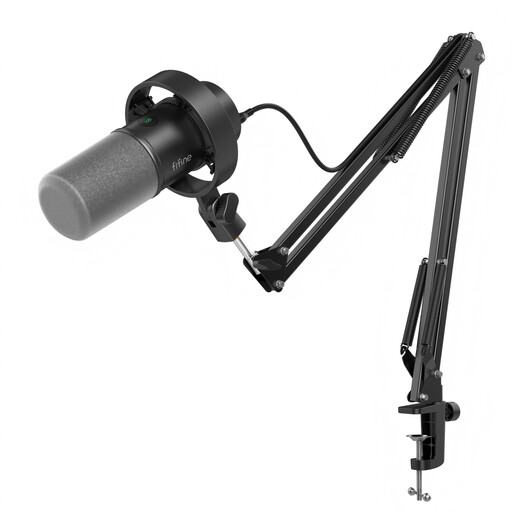 No image available
This kit is worth considering if you want to position the microphone flexibly at your desk.
Features a cardioid pickup pattern, windscreen and shock mount. In USB mode, it has a gain control, mute button and headphone monitoring; the boom arm and C-clamp are included. The clamp fits desks less than 2 inches thick. An XLR cable isn’t included, and the on-microphone controls are only available over a USB connection.
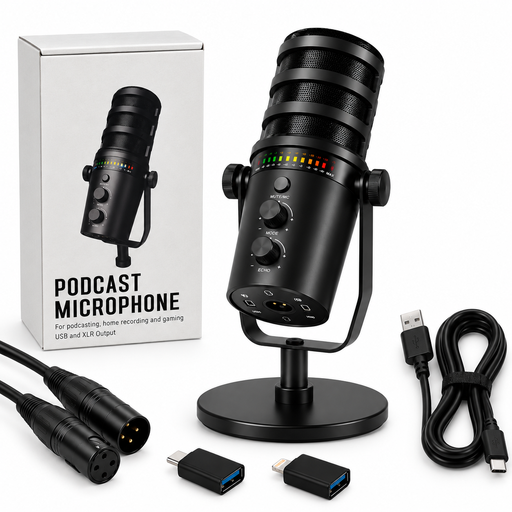 No image available
An option for voice recording if you want to use a gain control and monitor your sound directly through headphones.
Features a cardioid pickup pattern, headphone socket, USB-C and XLR connections, plus a desktop stand.
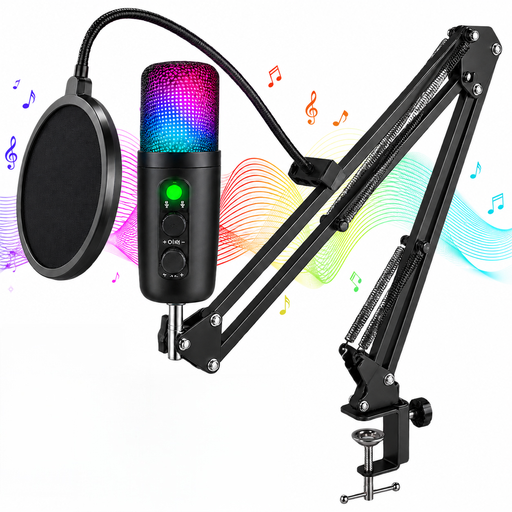 No image available
Worth considering if you want to monitor your sound directly and keep an eye on levels while recording.
USB condenser microphone with four selectable pickup patterns, including cardioid for solo recording, as well as Direct Voice Monitoring, a level meter and compressor. The product title mentions RGB lighting and a Type-C adapter.
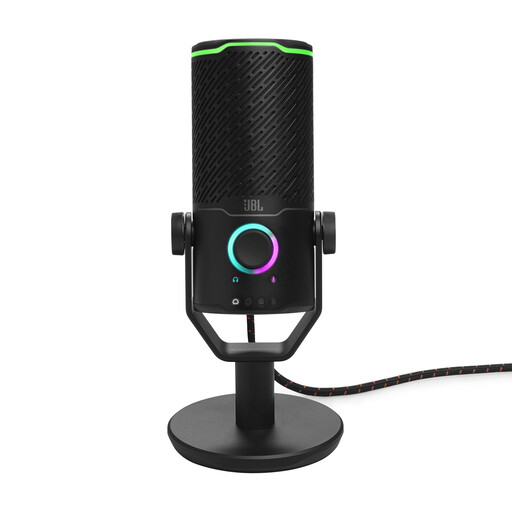 No image available
An option for a fixed recording spot if you want to use a level meter and monitor your sound directly.
Features four selectable pickup patterns, including cardioid, as well as a level meter, Direct Voice Monitoring and a compressor.
Record a test at your intended playing spot, using a whisper, your normal voice and your loudest shout, then listen back. Lower the recording level if loud sections distort. Audacity suggests aiming for a maximum peak of around −6 dB on its Recording Meter.
A pop filter can reduce bursts of air hitting the capsule, but it won’t suit every speaking style. RØDE lists an integrated pop filter for the NT-USB Mini and PodMic USB. Check the protection included with the exact variant, then test the position and a slight speaking angle with your puppet.
No. The German Environment Agency points out that old electrical equipment must not go in household rubbish. Find a suitable collection point and check whether it will accept the device.