Soft-spoken solo narrators
If you comment on poetry in a quiet voice, check that you can easily control the levels and monitor your quietest passages. Shure, Audio-Technica and Samson describe these kinds of features on selected models.


If you’re speaking in a room with audible fan noise or sound reflections, a dynamic USB microphone is a sensible starting point for close-miked speech. In a quiet room with little echo, a USB condenser microphone can capture subtle vocal details, but it may also pick up breathing and room noise more clearly. Shure’s recording guide highlights how microphone distance can affect your sound. Monitoring through headphones and testing the microphone at your usual speaking volume can help you find the right combination.
If you comment on poetry in a quiet voice, check that you can easily control the levels and monitor your quietest passages. Shure, Audio-Technica and Samson describe these kinds of features on selected models.
When you’re recording outside a studio, the noise and reflections at your actual reading spot matter. Shure’s recording guide explains that moving the microphone closer can help your voice stand out against background noise and room reflections.
In a quiet room, listen for how clearly your articulation, pauses and breathing come through in the recording. RØDE and Audio-Technica describe their condenser microphones as suitable for speech recording. A test in your own space will show whether the background noise is acceptable to you.
Consider the microphone and your recording space together. The right position and a monitored test recording matter just as much as the microphone type when you’re recording quiet passages of poetry.
| Buying priority | What to check | Who is it important to? |
|---|---|---|
| Setting levels for a quiet voice | Check the level controls, headphone socket and, if applicable, auto-level feature on the specific model. Test both quiet and more emphatic lines. | When I speak quietly, I want to control the levels as I read and listen back to a test recording straight away. Around 33% of consumers prioritise level control. |
| Reducing room noise | Check the polar pattern and positioning. Record a test at your intended desk with the usual room noise. | If I can hear a fan, traffic or sound reflections where I read, I want to record my voice close up and clearly. Around 27% of consumers prioritise reducing unwanted noise. |
| Assessing vocal detail | Compare unprocessed recordings in your own room and listen for any distracting breathing or mouth noises. | When articulation and subtle nuances matter for my poetry commentary, I want to be able to assess them in a quiet setting. Around 20% of consumers prioritise vocal detail. |
| Monitoring recordings easily | Check the USB connection, headphone and monitor controls, any software you need and exactly what’s included. | For longer readings, I want to monitor the audio as I record and keep the set-up straightforward. Around 20% of consumers prioritise a simple recording process. |
A condenser microphone may pick up fan and mouth noises more clearly as well as your voice. That can make choosing a microphone more difficult if your recording space isn’t quiet.
Compare dynamic and condenser models using the same quiet speaking test at your intended recording spot.
Depending on the room, you may also need to spend time finding a better recording position or editing the audio afterwards.
Processing features don’t change the fact that the distance from your voice and the noise at your recording spot still matter when you test the microphone.
Position the microphone appropriately and listen to an unprocessed recording first, before using any optional processing.
Microphones with similar names can differ in their features and what’s included. Elgato lists the Wave:3 and Wave:3 MK.2 as different generations. The exact version matters for other models too.
Before buying, check the full model name and the accessories listed with that particular offer.
If your set-up requires a stand, boom arm or pop filter, check whether it’s included in the version you’ve chosen.
The examples below refer to the named model ranges and manufacturers’ specifications. They’re not a general assessment of each brand’s entire range.
The MV7+ is a dynamic USB-C/XLR microphone for close-miked solo speech.
The PodMic USB and NT-USB+ take different approaches to solo speech recording: one is dynamic and the other condenser-based.
The AT2020USB-X is a USB condenser microphone for solo speech in a quiet recording space.
The Q2U is a dynamic USB/XLR model for a simple speech-recording set-up.
The Wave:3 MK.2 is a USB condenser microphone with on-device controls and recording processing.
This selection includes USB microphones for quiet solo speech recording, including dynamic USB/XLR models and USB condenser microphones. The best type for you also depends on the noise at your recording spot.
 No image available
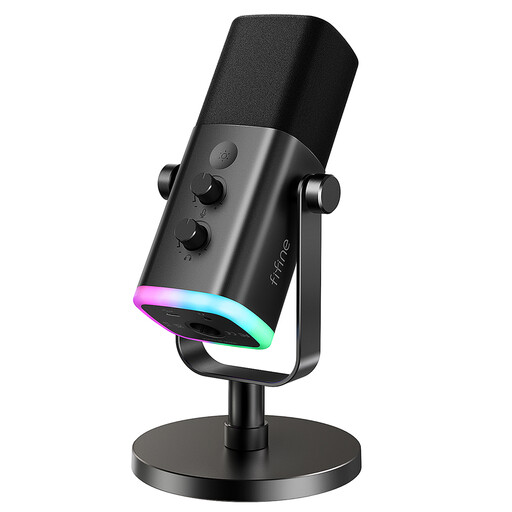
For quiet solo passages, you can adjust the input level using the gain control and listen back through headphones.
Dynamic microphone with USB and XLR connections, a unidirectional polar pattern, mute function, headphone monitoring and a desk stand. The product description says an XLR cable isn’t included.
 No image available
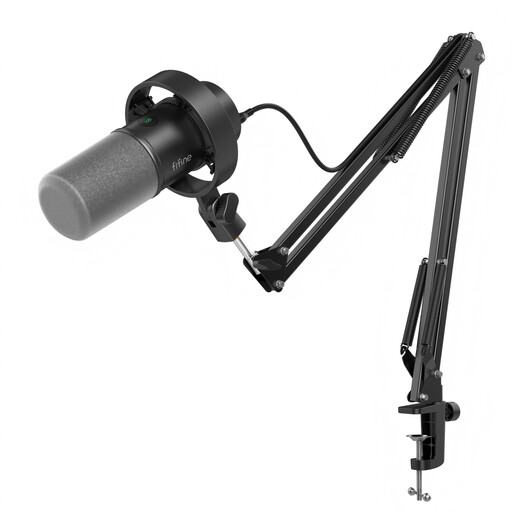
The boom arm gives you an option for positioning the microphone close to you when recording at your desk.
Dynamic USB/XLR microphone with gain control, mute function and headphone monitoring. The product description recommends a recording distance of 2 to 6 inches. An XLR cable isn’t included.
 No image available
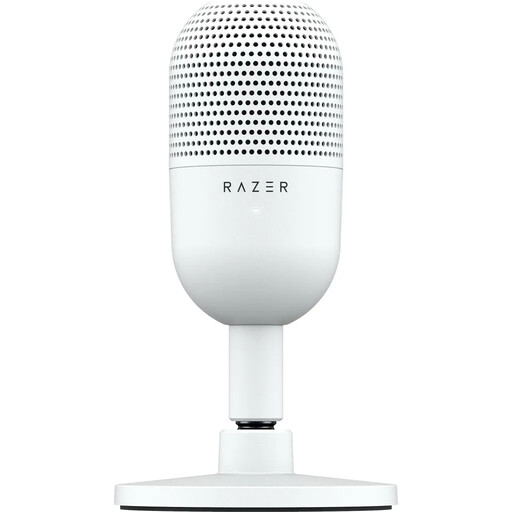
For a straightforward USB set-up at your desk, the product description lists plug-and-play operation and an adjustable stand.
USB-C condenser microphone with a supercardioid polar pattern and tap-to-mute function. The description also lists an LED indicator and built-in shock absorption.
 No image available
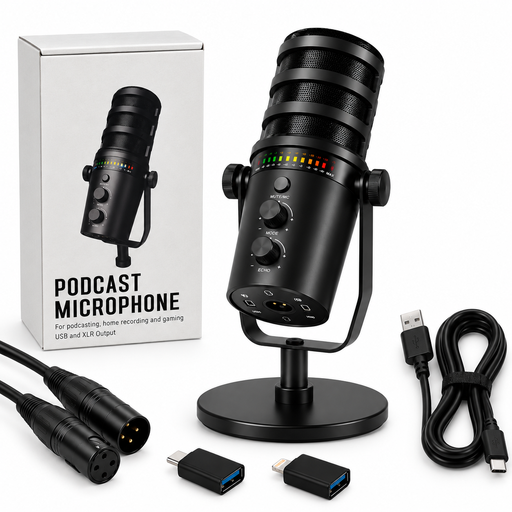
Gain control and real-time monitoring can help you keep an eye on quiet passages as you record.
Dynamic USB-C/XLR microphone with cardioid polar pattern, mute function, echo control and headphone socket. The product description lists a desk stand and USB adapter in the set.
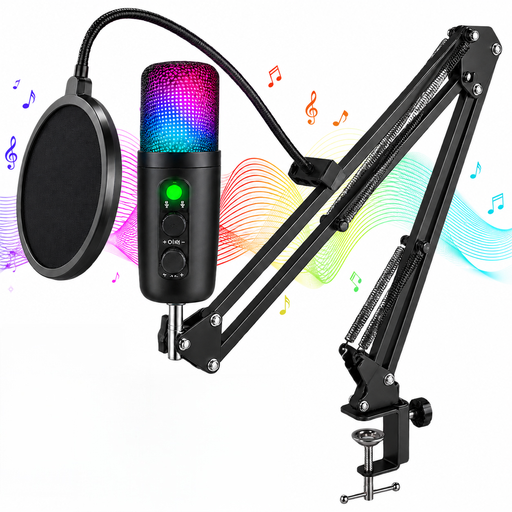 No image available
If you want to listen back to your test recording at your recording spot, the product description says this model has a headphone socket for real-time monitoring.
USB condenser microphone with a mute function, plug-and-play connection and Type-C adapter included in the set.
First, position the microphone appropriately for your speaking direction, then test it with your quietest and most emphatic passages. Shure’s recording guide explains that moving the microphone closer can help your voice stand out against noise and reflections. Check the actual level using headphones and the recording meter.
The side you speak into and the ideal distance depend on the model. Elgato’s guide for the Wave:3 MK.2 recommends speaking into the front rather than the top, and suggests a distance of around 10 to 20 cm for this model. Don’t assume the same guidance applies to other microphones without checking.
Your statutory rights cover faults and apply against the seller; they’re separate from a manufacturer’s guarantee. In its article dated 13 August 2026, the Verbraucherzentrale explains that online purchases often come with a right to cancel, usually within 14 days. Check the terms of your specific contract and any exceptions that may apply.
There’s no blanket answer. Under § 51 UrhG, the extent of a quotation must be justified by its specific purpose; § 63 UrhG sets out the requirements for acknowledging the source. The Federal Ministry of Justice and the Federal Office of Justice list these requirements in the official legislation. Whether a particular reading qualifies depends on the work and how you plan to use it.