Interviews with quiet speakers
If you can position the microphone close to the person telling their story, you can focus the recording on their voice. A test recording will help you judge how clearly they come across in the room.


For a quiet solo voice, a close-positioned microphone with a cardioid polar pattern, aimed appropriately, is a sensible starting point. The key is to listen to a test recording made in the actual recording space. If two people are sitting in different places, consider whether one shared microphone will capture both voices clearly enough or whether separate microphones will give you more control. A wider pickup pattern may also capture more workshop noise.
If you can position the microphone close to the person telling their story, you can focus the recording on their voice. A test recording will help you judge how clearly they come across in the room.
If two people are sitting in different positions, consider whether one shared microphone will pick up both voices clearly enough or whether separate microphones would better suit your recording set-up.
If room or work-related noise is audible, the speaker’s position, the microphone’s polar pattern and listening to a test recording under the actual conditions all matter.
First decide whether you’re focusing on one voice or several people in conversation. Then check the background noise and set-up at the recording location.
| Your priority | What to check before buying | Who may find it especially important |
|---|---|---|
| Quiet solo voice | Polar pattern and positioning close to the speaker; a headphone socket for listening to a test recording. | If I’m recording someone speaking quietly, I want to position the microphone close to them and monitor the sound directly. Around 36% of consumers would say that making a solo voice clear is their top priority. |
| Two voices in conversation | Seating arrangement, selectable polar patterns or a specific set-up using separate microphones and suitable software. | If the questions and answers come from different positions, I want to record both voices clearly without having to rearrange the seating to suit the microphone. Around 29% of consumers would prioritise capturing both people in the conversation. |
| Workshop noise | Whether the speaker can be positioned in front of a directional microphone; a test recording made with the usual room and work-related noise. | If work is taking place in the room, I want to check in advance that the quiet voice remains clear against the background noise. Around 21% of consumers would say that managing background noise is their main concern. |
| Set-up and monitoring | Check the computer connection, cables included and headphone socket on the specific model. | If I’m recording a conversation on location, I want to check the set-up quickly and listen back to a short recording straight away. Around 14% of consumers would prioritise easy connection and sound monitoring. |
A greater distance from the microphone won’t automatically make a quiet voice clearer against sounds in the room. RØDE notes that, with the NT-USB Mini, moving closer to the sound source can improve the balance between voice and background noise.
Test the quietest way the person is likely to speak from the planned distance, then listen back with the actual room noise in the background.
An omnidirectional microphone picks up sound from every direction, including noise from outside the conversation. In a workshop, this could make the voices harder to hear clearly.
At the interview location, compare a shared recording with a closer, directional set-up or separate microphones.
Different versions of a model may vary in their connections, polar patterns and included accessories. For example, details for the original HyperX QuadCast shouldn’t be assumed to apply to the QuadCast S or QuadCast 2.
Before buying, check the full model name, the connections you need and what’s included with the specific version on offer.
The ATR2100x-USB is an option for recording a single voice up close, with USB and an additional XLR output.
The Q2U is a dynamic handheld USB/XLR microphone for focused voice recording.
The NT-USB Mini is a compact USB condenser microphone. RØDE Connect describes a multi-microphone set-up using supported USB microphones.
The UM 6.0 ADVANCED is a single-microphone option worth considering if you switch between recording one person and a conversation around a table.
The MV7+ offers USB-C and XLR, as well as automatic level adjustment for changes in speaking volume.
The original QuadCast offers several polar patterns for different solo and group recording set-ups.
This selection includes USB microphones for close-up voice recording and seated interviews. The models differ in areas such as polar pattern, connections and set-up.
 No image available
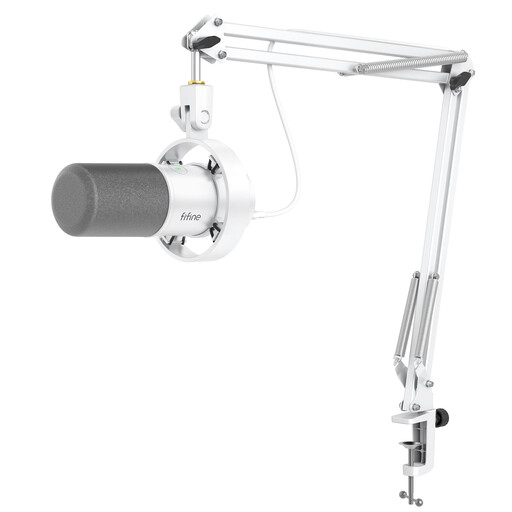
For one person whose voice can be recorded close to the microphone; the boom arm helps you position it at the recording location.
Dynamic USB/XLR microphone with a mute button, volume control and headphone socket. The product description says an XLR cable isn’t included for XLR connection.
 No image available
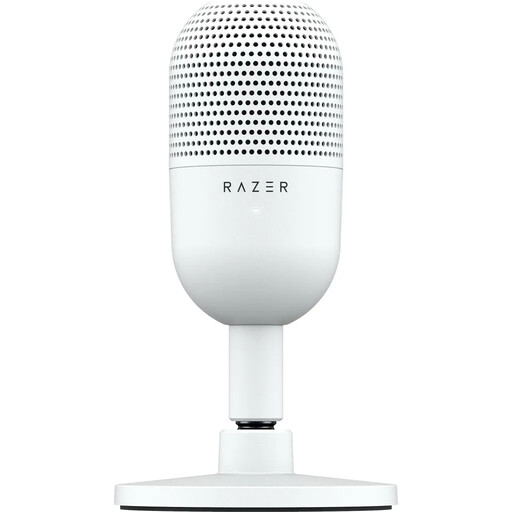
For a focused voice recording at a fixed interview location; the tilt stand can be angled towards the speaker.
Compact USB microphone with tap-to-mute.
 No image available
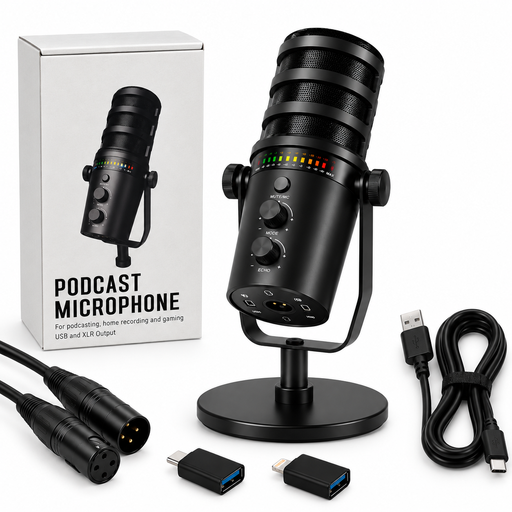
For a fixed voice recording where the microphone is positioned on a desk stand.
The product name lists gain control, echo, mute and a desk stand.
 No image available
For recording one voice directly in front of the microphone at the interview location; the microphone arm helps with positioning.
The product name lists a cardioid polar pattern and latency-free monitoring through the headphone socket.
 No image available
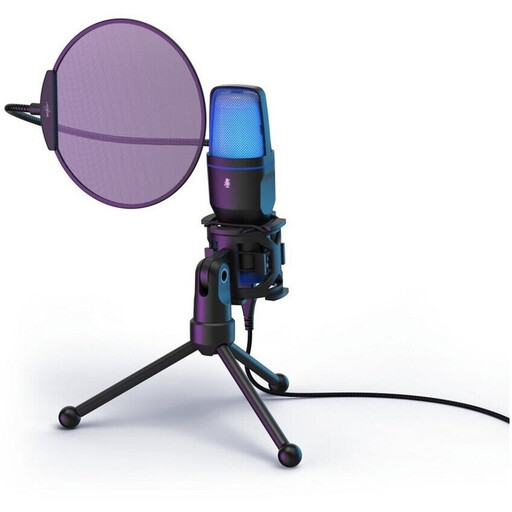
For recording at a table when you want to capture several people or sound sources from different directions.
The product description lists an omnidirectional polar pattern, USB output, desk stand and pop filter. Omnidirectional mode also picks up sound from around the room, so it is less effective at focusing on voices while limiting workshop noise.
If the person can speak close to and directly in front of the microphone, and room noise is a concern, a dynamic cardioid microphone is a sensible option to consider. Audio-Technica’s selection guide says a condenser microphone may allow more freedom of movement, but it can also pick up more of the surroundings. Decide by listening to a test recording made in the intended position.
Connect it, select it as the input device on your computer and in your recording software, then listen to a short test recording with the person speaking as quietly as they normally would. The NT-USB Mini guide also explains how to select the microphone as the output device to monitor through its headphone socket; this guidance applies to that model.
It depends on the specific microphones and the software you’re using. RØDE explains how to assign multiple supported USB microphones to channels in RØDE Connect; this doesn’t mean that any USB microphones will be compatible.
Check the specific offer to see whether cables and a stand are included, and whether you’ll need headphones or a second microphone for your set-up. For consumer purchases made at a distance, Germany’s Federal Ministry of Justice explains that there is generally a 14-day cancellation period; for purchases of goods, it starts after the goods have been delivered in full. The terms of the specific contract and any applicable legal exceptions apply.
Under § 201 StGB, recording another person’s privately spoken words without authorisation is prohibited; the provision also covers unauthorised use or sharing of such a recording. Check in advance that you’re authorised to make the recording, and separately consider whether you can share or publish it. If personal data is processed, an appropriate legal basis under data protection law is also required; consent is one possible legal basis, but not the only one.