Recording one person telling a story
If you want to record a quiet speaker at an agreed spot, you can test the microphone's direction and distance beforehand. Audio-Technica and Sennheiser describe directional microphones for this type of recording.


For a quiet speaker at a fixed storytelling spot, an adjustable USB microphone is a suitable choice, provided you use a test recording to fine-tune the seating position and speaking distance. If several people are speaking from different seats, a microphone with switchable polar patterns may offer more flexibility; in omnidirectional mode, however, it will also pick up sounds from around the room. Headphone monitoring and a suitable connection help you check the recording while the gathering is under way.
If you want to record a quiet speaker at an agreed spot, you can test the microphone's direction and distance beforehand. Audio-Technica and Sennheiser describe directional microphones for this type of recording.
If several people are speaking from different seats, consider how many voices the microphone should pick up and which other sounds in the room may be recorded along with them. CHERRY describes switchable polar patterns for the UM 6.0 ADVANCED.
If you want to monitor levels, the connection and the recording as you go, check for a headphone output and a suitable connection to your recording device. Sennheiser and RØDE describe monitoring options for their models.
First decide whether you want to record one voice from a fixed spot or several voices around the table. A test recording in the room you plan to use will show whether the microphone's direction, seating distance and monitoring setup work for your group.
| Consideration | What to check before buying | Who is this important to? |
|---|---|---|
| Quiet individual voice | Speaking direction and positioning close to the person telling the story; make a test recording at their usual speaking volume. | If I'm recording a quiet person in a fixed spot, I want to check that their voice remains clear at a normal volume. Around 36% of consumers prioritise recording a single quiet voice. |
| Several seats | Seating arrangement and a test recording from each planned spot; compare the settings if the microphone has switchable polar patterns. | If several people are telling stories around the table, I want to capture voices from different seats without constantly moving the microphone. Around 29% of consumers prioritise recording several speakers in different seats. |
| Room noise | Test it at the actual recording spot, with the background noise you would normally expect there, then listen back to the recording. | If side conversations or other sounds might drown out the stories, I want to check the recording spot beforehand. Around 21% of consumers prioritise limiting distracting room noise. |
| Monitoring and connection | Check the headphone socket, microphone input on the recording device, cable and any adapter you may need. | For a longer recording, I want to notice early if the input or levels aren't right. That's why around 14% of consumers prioritise connection options and monitoring while recording. |
An omnidirectional microphone picks up sound from every direction. This means side conversations and other sounds in the room may also end up in the recording.
Test the planned seating positions and the actual noise levels. For one fixed spot, you can try a directional setting instead.
If background noise makes a recording unusable, you may need to record it again or spend extra time editing it.
For the RØDE NT-USB Mini, the manufacturer lists different cable or adapter requirements depending on the mobile device. Having a compatible plug doesn't necessarily mean the microphone will work with the device and software you plan to use.
Before the gathering, check the connections and included cable, and make a test recording on the device you intend to use.
Depending on your device, you may need a different cable or an adapter.
Claims about directional recording or Voice Isolation don't prove that side conversations will disappear in a room with several people speaking.
First choose a suitable spot, then compare short test recordings in conditions similar to those at the gathering.
According to Audio-Technica, the AT2040USB is a dynamic USB microphone with a hypercardioid pattern, designed to focus on one voice.
According to Sennheiser, the Profile USB Microphone combines a cardioid condenser capsule with a desk stand, plus gain, mix and headphone controls.
CHERRY describes the UM 6.0 ADVANCED as offering two polar patterns: one for a voice in front of the microphone or one for several people in the room.
The NT-USB Mini is a compact USB condenser microphone with a removable desk stand and a headphone socket.
According to Shure, the MV7+ offers USB-C and XLR connections as well as headphone monitoring, making it worth considering for setups with different connection types.
The Joybuy products below are intended for USB voice recording from a fixed storytelling spot; some models also offer monitoring and level control.
 No image available
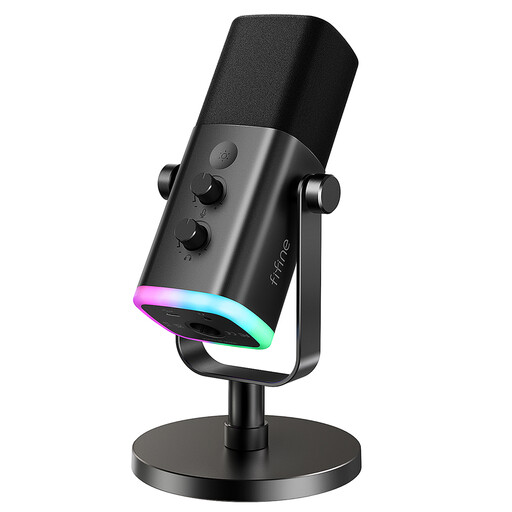
The described unidirectional recording can be tested at a fixed storytelling spot; headphone monitoring is available over USB.
USB and XLR connections; a headphone socket, volume control and mute function are listed.
 No image available
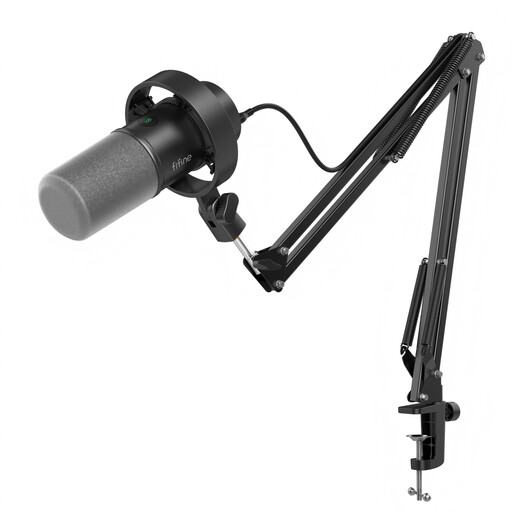
The described unidirectional voice recording and boom arm can be tested at a fixed storytelling spot.
USB/XLR dynamic microphone; a gain control and headphone monitoring are listed for USB operation.
 No image available
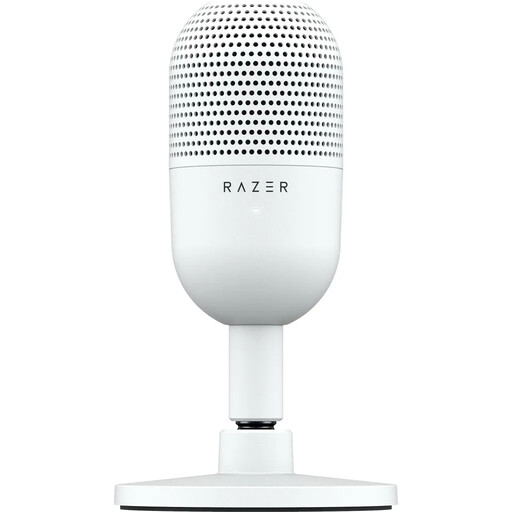
The adjustable tilt stand and described supercardioid pattern can be positioned at a fixed speaking spot and tested there.
USB microphone with tap-to-mute function and LED indicator.
 No image available
The described cardioid pattern and desk stand can be tested when recording from a fixed position.
Gain control, mute function and headphone monitoring are listed.
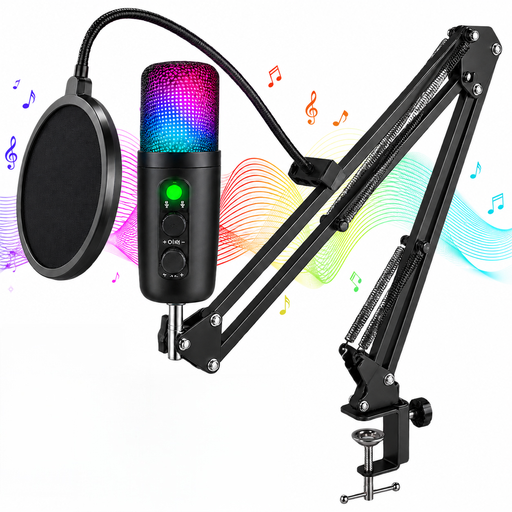 No image available
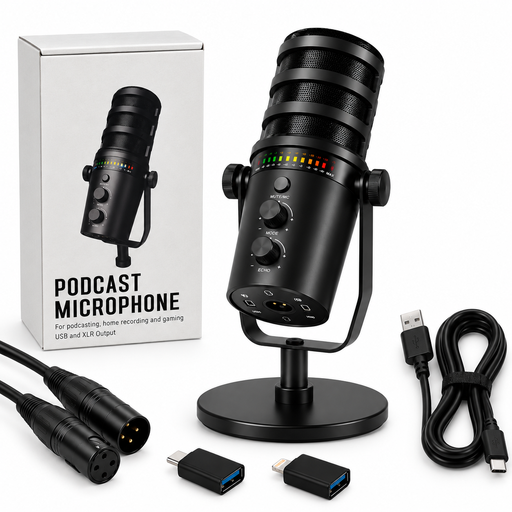
The headphone socket is described as allowing monitoring while recording; test the connection with the recording device you plan to use.
USB condenser microphone with mute button and Type-C adapter.
Make a short test recording from the planned seating positions at a normal speaking volume, then listen back to it. Select the microphone as the input on your recording device; the Sennheiser Profile is described as having a gain control and headphone output. Don't assume other models have the same controls without checking.
Not necessarily; it depends on the microphone and recording device. For the NT-USB Mini, RØDE lists a USB-C-to-USB-A cable and, depending on the mobile device, a different cable or adapter. Before the gathering, check that recording works with the specific device and software you plan to use.
Under § 201 Abs. 1 StGB, making an unauthorised audio recording of another person's privately spoken words is a criminal offence. Whether a particular conversation is private and what legal basis is needed to share a recording depends on the circumstances. Tell people in advance that you intend to record and how you plan to use the recording, and get their consent; this does not amount to blanket permission to record at a village gathering.
Statutory consumer rights are separate from a voluntary guarantee and generally apply against the seller. For ordinary goods, § 438 BGB generally provides for a limitation period of two years from delivery. If a product is faulty, repair or replacement may be available in the first instance; the Verbraucherzentrale explains the difference between statutory rights and a guarantee.
Check the information for the specific product. For market surveillance of electrical and electronic products, the German Federal Network Agency lists formal criteria including correct CE marking, manufacturer details and user instructions in German. You can't determine whether a specific product listing is compliant from the model name alone.