Narrators in one fixed position
If you record your recipe narration from one fixed position and want your voice to stand out over the fan, distance and microphone direction are important factors when choosing and setting up your mic.


If you’re narrating a recipe with a fan running, a directional USB microphone is a sensible starting point if you’ll mostly be speaking from one spot, close to the microphone. If you move around while cooking or deliberately want to capture the room’s ambience, microphone placement and polar pattern become more important. Neither the microphone type nor noise reduction guarantees that fan noise will disappear from your recording.
If you record your recipe narration from one fixed position and want your voice to stand out over the fan, distance and microphone direction are important factors when choosing and setting up your mic.
If you move between worktops as you cook, check whether the microphone can pick up your voice from all the positions where you plan to speak. It may be harder to maintain a consistently close distance.
If you want room sounds to be audible alongside your voice, a switchable polar pattern may be useful. In omnidirectional mode, however, the microphone will also pick up sound from the direction of the fan.
First, decide whether you’ll mostly speak from one spot or move around while cooking. Then consider the microphone’s position, monitoring options and the room sounds you want to capture.
| Priority | What to check when buying | Who this matters most to |
|---|---|---|
| Make your voice stand out over the fan | Check the polar pattern and mounting options for a position close to your mouth; record a test with the fan running. | If I’m speaking from one spot, I want my voice to stand out over the fan. Around 42% of consumers put this priority first. |
| Set-up for moving between speaking positions | Check that there’s space for a stand or boom arm, and confirm the USB connection and included accessories. | If I move between worktops while cooking, I need a set-up that suits the way I move around. Around 25% of consumers prioritise a flexible speaking position and an easy set-up. |
| Monitor your voice while recording | Check for a headphone output and the recording software you’ll need. | If I want to assess the recording as I speak, direct monitoring is important. Around 17% of consumers prioritise this kind of audio monitoring. |
| Capture the atmosphere of the kitchen | Decide in advance which room sounds you want to include, and test the polar pattern in the recording location. | If I want to hear kitchen sounds alongside the narration, I’m prepared to accept the trade-off with the fan. Around 16% of consumers prioritise capturing the kitchen’s ambience. |
The microphone type alone won’t eliminate background noise. Distance and direction affect how both your voice and unwanted sounds are picked up.
Record and listen back to a short test with the fan running and your mouth in the planned position before relying on the microphone type or marketing claims.
On the CHERRY UM 6.0 ADVANCED, omnidirectional mode also picks up sounds from the direction of the fan.
If mainly one person will be speaking, try cardioid mode and adjust the microphone position first. Use omnidirectional recording only if you deliberately want to include the room sounds.
A desk stand doesn’t automatically put the microphone close enough to your voice. If it’s too far away, your voice may sound quieter.
Before buying, check your speaking position, the space available for a stand or boom arm, and what’s included with the specific model.
According to the manufacturer, the MV7+ combines USB-C and XLR connectivity with a headphone output and digital signal processing.
The dynamic PodMic USB offers USB-C and XLR connectivity, direct headphone monitoring and a swivelling mount.
According to Samson, the Q2U is a USB/XLR model with a cardioid polar pattern, headphone output, and a desk stand, windscreen and cables included.
According to the manufacturer, the ATR2100x-USB combines a dynamic cardioid capsule with USB-C, XLR and a direct headphone connection.
The UM 6.0 ADVANCED is a USB-C desktop microphone with a choice of cardioid or omnidirectional polar patterns.
The following Joybuy options are USB microphones for voice recording. For recipe narration, pay particular attention to whether the set-up and microphone direction suit your speaking position.
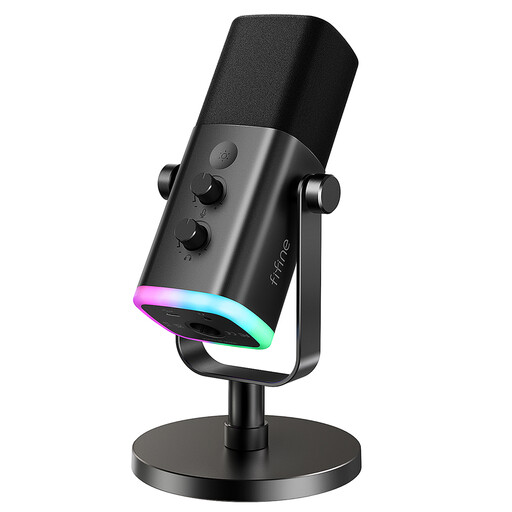 No image available
For a fixed speaking position, if a dynamic USB microphone suits your needs. The product title also lists a headphone socket, a mute button and a desk stand; a recording distance of 2 to 6 inches is recommended.
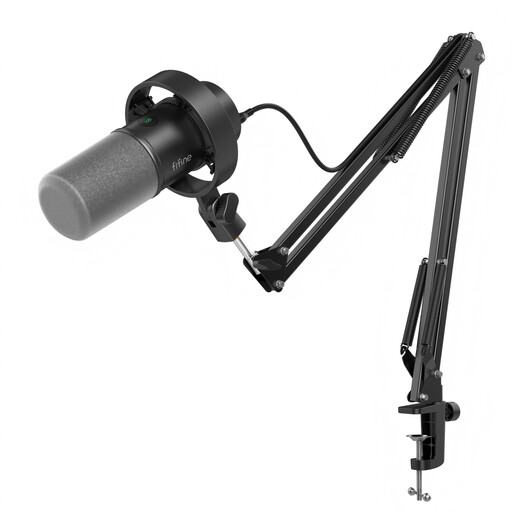 No image available
For a fixed desk position, if a boom arm suits your planned set-up. The product details list USB/XLR, a mute button, a headphone socket and gain control; a recording distance of 2 to 6 inches is recommended. The C-clamp is designed for desks under 2 inches thick.
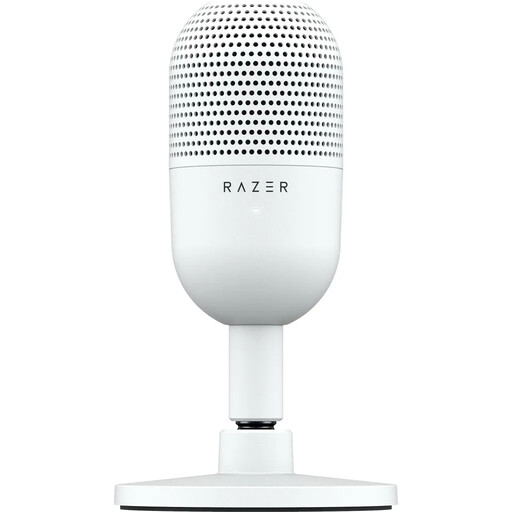 No image available
For a compact desktop set-up. The product name describes a white USB microphone with tap-to-mute; check that its position on your desk works with your speaking distance.
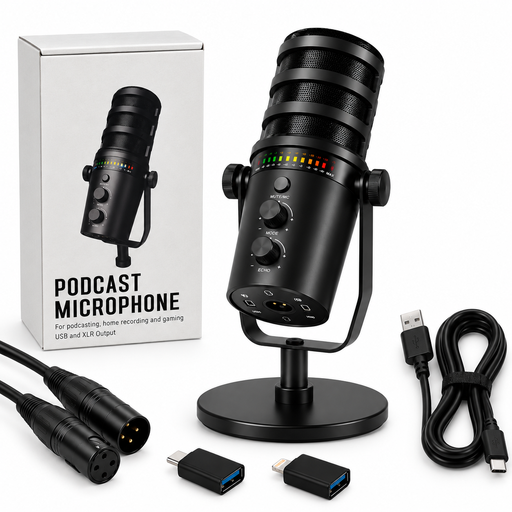 No image available
For directional voice recording at a desk, if a dynamic set suits your needs. The product title lists RGB lighting, gain control, echo, a mute button and a desk stand.
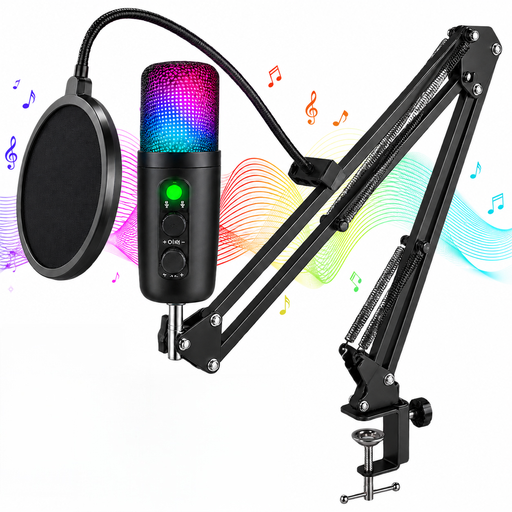 No image available
If you’re considering a USB microphone with a listed noise reduction feature, bear in mind that this doesn’t guarantee it will eliminate fan noise. The product title also lists a mute button, a Type-C adapter and a 7-piece set.
When recording a single voice, first point the microphone’s most sensitive side towards your mouth. Try a position where the fan is coming from a less sensitive direction. Record a short sample under the actual recording conditions. RØDE recommends a distance of about 5–10 cm for the PodMic USB; this isn’t a one-size-fits-all figure for every microphone.
For mild fan noise, the OBS noise suppression filter may help. The OBS Project notes that the filter is usually ineffective against loud background noise, and stronger settings can distort your voice.
For a consumer purchase in Germany, statutory warranty claims are generally made against the seller; for new goods, the standard period is two years from delivery. Verbraucherzentrale distinguishes these rights from a voluntary guarantee.
As part of its market surveillance, the Bundesnetzagentur checks, among other things, whether the CE marking is present and correct and whether the product can be identified. The European Union explains that CE marking does not represent approval by a central EU body. A microphone that has reached the end of its life should be taken to a separate collection point for electrical waste, not put in household rubbish.