Storytellers in a quiet room
If you’re speaking alone at a table, an adjustable USB microphone with a desktop stand can make setup easier. Sennheiser and RØDE both offer desktop microphones with cardioid polar patterns.


For one person telling a story while seated, an adjustable USB microphone with a cardioid polar pattern is a sensible starting point. In a reverberant room, the distance from the microphone and its position matter too. RØDE recommends a distance of around 10–15 cm for voiceover with the NT-USB Mini, while COMPUTER BILD still picked up audible background noise when testing the Shure MV6. So first check the setup from your actual seat, then decide whether you want a desktop stand, direct headphone monitoring or extra connection options.
If you’re speaking alone at a table, an adjustable USB microphone with a desktop stand can make setup easier. Sennheiser and RØDE both offer desktop microphones with cardioid polar patterns.
If you can speak close to the microphone, pay particular attention to its position and make a short test recording from the spot you plan to use. For voiceover with the NT-USB Mini, RØDE recommends a distance of around 10–15 cm. This guidance is specific to that model and doesn’t automatically apply to other microphones.
For longer passages, direct monitoring can help you check your voice and levels as you record. Sennheiser and RØDE describe headphone monitoring features for their respective models.
A good fit if: you speak alone in a fairly quiet room and can position the microphone towards you while seated. According to their manufacturers, the Sennheiser Profile USB and RØDE NT-USB Mini both have a desktop setup and a cardioid polar pattern.
Keep in mind: At a greater distance, more room noise may be audible in relation to your voice. Positioning still matters.
A good fit if: the storyteller can sit close to the microphone consistently and background noise is a major concern. Shure describes the MV6 as a dynamic USB model for close-up voice recording.
Keep in mind: Shure’s claims about voice isolation are manufacturer information; COMPUTER BILD still heard background noise when testing the MV6.
A good fit if: you sometimes want several people to speak at the same table. According to their respective product information, the CHERRY UM 6.0 ADVANCED and HyperX QuadCast offer more than one polar pattern.
Keep in mind: For one person telling a story while seated, cardioid mode is the obvious starting point. COMPUTER BILD noted distracting popping noises with the QuadCast.
| What to consider | What to check before buying | Who should prioritise it |
|---|---|---|
| Voice and room noise | Compare polar patterns, how the microphone points towards your mouth and a test recording from the seat you plan to use. | If your room is reverberant, you’ll want to capture your voice as clearly as possible without assuming you need a completely noise-free environment. Around 29% of consumers put room noise first. |
| Stable positioning | Check the tilt, stand or boom-arm mount, and what’s actually included in the box. | If you don’t always sit directly in front of the microphone, you’ll need a setup that can be adjusted to suit you. Positioning is a priority for around 23% of consumers. |
| Monitoring while recording | Compare the headphone socket, monitoring features and controls for gain, mix or headphone volume. | For longer storytelling sessions, you may want to listen through headphones to check what’s actually being recorded. Around 18% of consumers prioritise this kind of audio monitoring. |
| Connection and setup | Check the cable connectors, supported operating system and how to select the microphone as the input source on your recording device. | If you want to connect your existing device without extra hassle, make sure the cable and connection are compatible. Around 18% of consumers put ease of setup first. |
| Complete setup | Check what’s included against your desk, recording device and existing headphones; only budget for parts you’re actually missing. | If you’re putting together a complete recording setup, you may also need to consider a mount or a compatible cable. Around 12% of consumers prioritise the cost of a complete setup. |
A technical specification alone doesn’t tell you how clearly your voice will come through from the seat you plan to use. Distance, positioning and room noise all affect the recording too.
First, make a test recording in the position you plan to use and compare different setups before making recording formats your deciding factor.
RØDE says the NT-USB Mini has a built-in pop filter, but COMPUTER BILD still heard noticeable popping noises when testing this model.
Try saying words with P and B sounds at the distance you plan to speak from before deciding whether to change the microphone’s position or buy extra accessories.
According to RØDE, the NT-USB Mini comes with a USB-C-to-USB-A cable. The manufacturer specifies a different cable for devices with a USB-C input.
Check both ends of the cable against your recording device and confirm what’s included with the specific model.
If the cable you have doesn’t fit, you may need a different cable or a suitable adapter.
According to Sennheiser, the Profile USB is designed for uses including voiceover recording and can be positioned on a table.
The dynamic MV6 is designed for close-up voice recording, while the MV7+ combines USB-C and XLR.
The NT-USB Mini is a compact USB cardioid microphone with a detachable desktop stand, designed for one person speaking while seated.
The UM 6.0 ADVANCED combines a desktop stand and shock absorption with cardioid and omnidirectional polar patterns.
According to Audio-Technica, the AT2020USB-X is a USB-C cardioid condenser microphone for voice and other recordings.
The following Joybuy products include dynamic USB microphones and condenser microphones for recording speech at a table. When choosing, consider the polar pattern, positioning, connection and the headphone monitoring features you want.
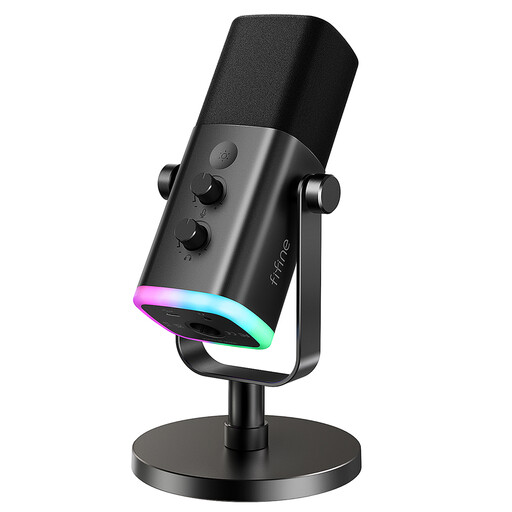 No image available
Described as a dynamic USB microphone with a cardioid polar pattern and desktop stand, it’s worth considering for one person speaking at a storytelling table.
The product description lists a gain control, mute function and headphone socket with volume control.
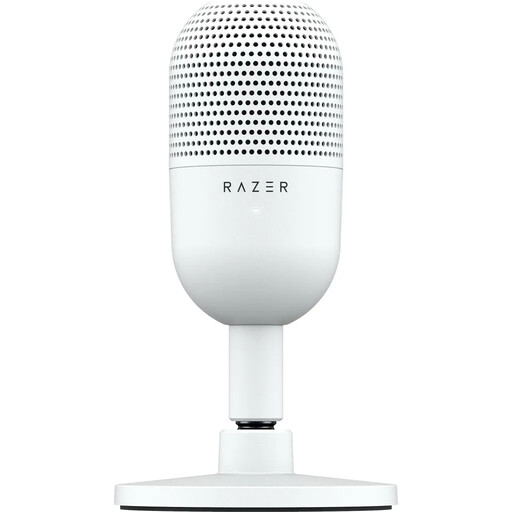 No image available
According to the product description, this compact USB condenser microphone is designed for voice recording with a supercardioid polar pattern.
Features include a tilting stand, built-in shock absorption and tap-to-mute with an LED indicator.
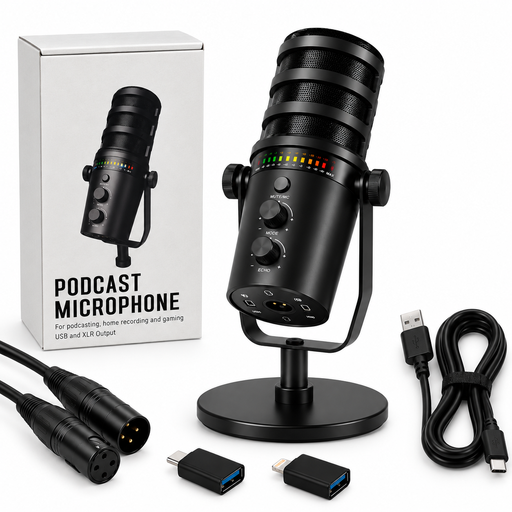 No image available
The product description lists a dynamic microphone with a cardioid polar pattern and desktop stand for recording speech at a table.
It also lists a gain control, mute function and 3.5 mm headphone output with real-time monitoring.
 No image available
For one person speaking while seated, the product description lists a cardioid polar pattern and a scissor arm for positioning on a desk.
It also lists a gain control, mute function and latency-free headphone monitoring.
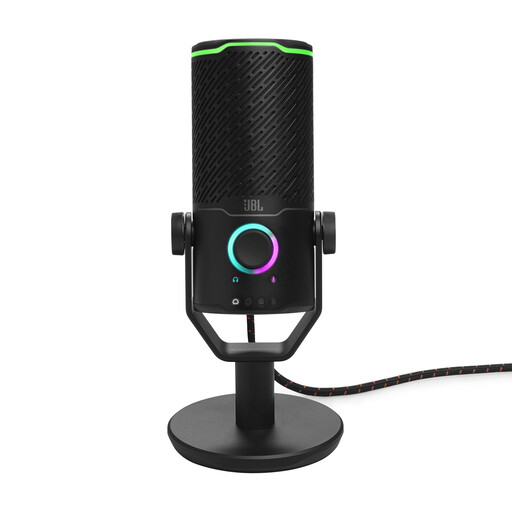 No image available
According to the product description, you can select a cardioid polar pattern for one person telling a story; the model also offers other polar patterns.
Direct monitoring and a flexible mounting option are also listed. Check that the setup you want will suit your desk.
Point the front of a cardioid microphone towards the speaker and make a short test recording from their actual seat. For voiceover with the NT-USB Mini, RØDE recommends a distance of around 10–15 cm. Don’t apply this model-specific guidance to other microphones or an uncomfortable seating position without checking first.
Select the connected microphone as the input source in your sound settings, then choose it in your recording software. RØDE gives these instructions specifically for the NT-USB Mini; for other models, also check the relevant manual and make sure the microphone isn’t muted.
Start with a short test recording, check the input level and listen back through headphones. On the Sennheiser Profile USB, LED rings indicate things including the input level and clipping, while the headphone socket lets you monitor the recording.
Not without the necessary authorisation: Section 201(1) of the German Criminal Code (StGB) covers unauthorised recording of another person’s private spoken words, as well as the unauthorised use or sharing of such a recording. Get permission from the storyteller before recording; this doesn’t amount to a blanket statement about every public event.
No. The fact that a tale is regional or traditional doesn’t, by itself, prove that a particular version of the text can be freely published. According to the German Patent and Trade Mark Office, copyright protection for a work in Germany generally expires 70 years after the author’s death; an individual adaptation or translation may also be protected. So check the rights to the version you’re using before publishing your recording.