What should you look for when buying?
Compact, directional USB condenser microphone
A good fit if: you’re short on desk space and want to deliver quick callouts without extra audio equipment. Razer describes Tap-to-Mute on the Seiren V3 Mini, while RØDE’s NT-USB Mini offers headphone monitoring.
Worth bearing in mind: A directional pickup pattern is no substitute for positioning the microphone well in relation to your voice or testing it with your own keyboard.
Dynamic USB microphone for close-up use
A good fit if: keyboard or room noise is drowning out your callouts and you can place the microphone close to your mouth. Shure lists Auto-Level and an adjustable denoiser for the MV6 Gen 2; FIFINE describes gain control and monitoring over USB for the AM8.
Worth bearing in mind: A dynamic microphone won’t automatically block out background noise either. The MV6 and MV6 Gen 2 are different models.
Compare models based on what matters most for your setup: clear callouts, background-noise rejection, desk space or easy access to the controls.
| What matters |
What to check before buying |
Who is it important for? |
| Clear callouts |
Directional pickup pattern and positioning in relation to your voice; test it in the chat app you use. |
If I want quick positional callouts to be understood without having to repeat myself, I want to test my voice at my usual speaking volume. Around 31% of consumers put clear callouts first. |
| Keyboard and room noise |
Microphone distance and positioning; try out the noise processing with your own keyboard. |
If my keyboard can be heard in voice chat, I want to test my voice against the sound of keystrokes in my own setup rather than relying on a blanket promise. Around 25% of consumers prioritise reducing keyboard and room noise. |
| Space and positioning |
Dimensions of the specific model; room for a desktop stand or boom arm clamp, and the positioning you want. |
When desk space is limited, the microphone needs to leave enough room while still being easy to position for my voice. Around 25% of consumers focus on desk space and positioning. |
| Mute and level control |
Mute indicator and how easy the switch is to reach; gain control or headphone monitoring, if available. |
Between short callouts, I want to be able to quickly check and control whether the microphone is live. Around 19% of consumers pay particular attention to mute and level controls. |
Joybuy products for team callouts
This selection includes compact USB microphones for limited desk space, as well as dynamic USB/XLR models for close-up positioning and easy access to the controls. Depending on your setup, check whether a desktop stand or microphone arm will work better.
 No image available
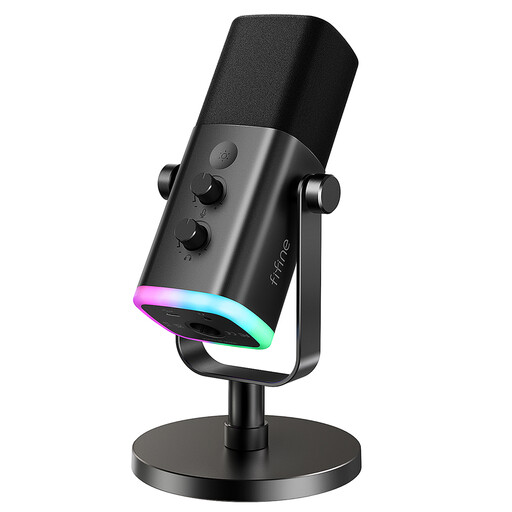
FIFINE AM8 USB/XLR
A good option if you want to position a dynamic microphone close to you and have easy access to the controls over USB.
- Dynamic USB/XLR microphone with unidirectional pickup.
- Desktop stand and Tap-to-Mute with LED indicator.
- Gain control and monitoring are listed for USB use.
- XLR cable not included.
View at Joybuy
 No image available
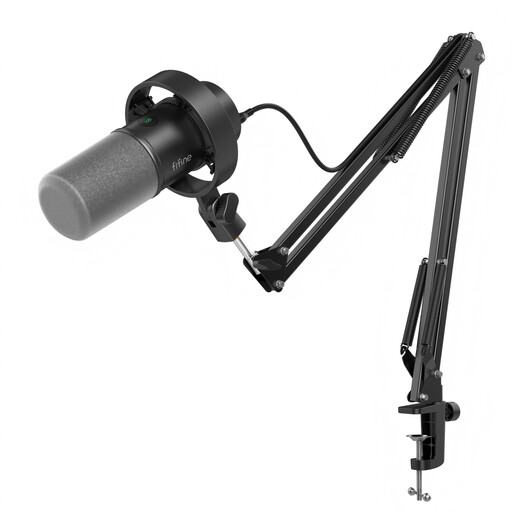
FIFINE K688CT USB/XLR microphone kit
This kit is worth considering if you’d rather use a boom arm than a desktop stand.
- Dynamic USB/XLR microphone with a cardioid pattern.
- Boom arm with desk clamp; according to the description, designed for desktops less than 2 inches thick.
- Mute button, gain control and headphone monitoring are listed.
- XLR cable not included.
View at Joybuy
 No image available
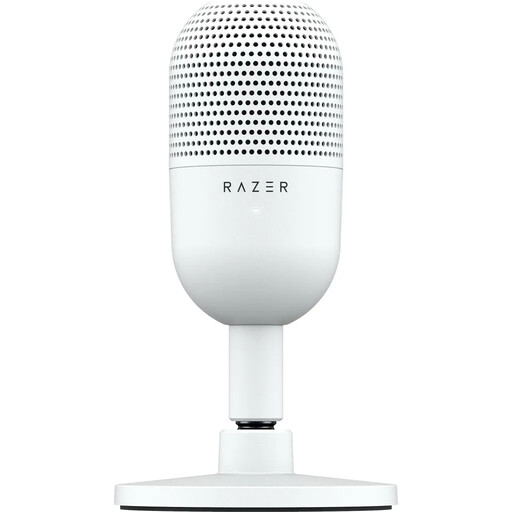
Razer Seiren V3 Mini, white
A compact option if desk space is limited and you want to mute directly on the microphone.
- Compact USB microphone with USB-C connection and supercardioid pickup pattern.
- Adjustable tilting stand.
- Tap-to-Mute with LED indicator.
View at Joybuy
 No image available
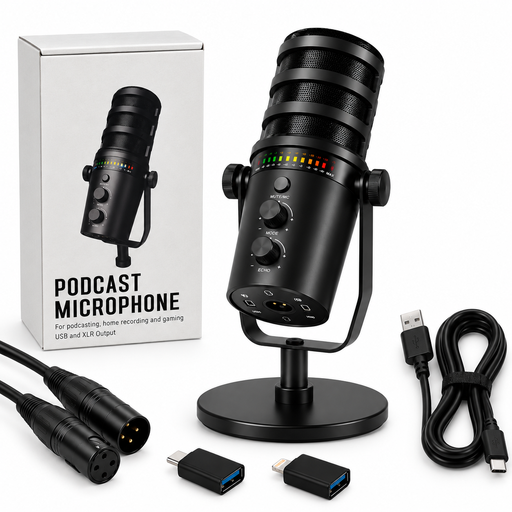
Dynamic USB/XLR microphone kit with desktop stand
This kit is an option if you’re looking for a desktop stand and controls for muting and adjusting the level.
- Dynamic USB/XLR microphone with desktop stand.
- RGB lighting, mute button, gain control and headphone connection are listed.
- The description mentions an echo function; check how it works with your voice chat.
View at Joybuy
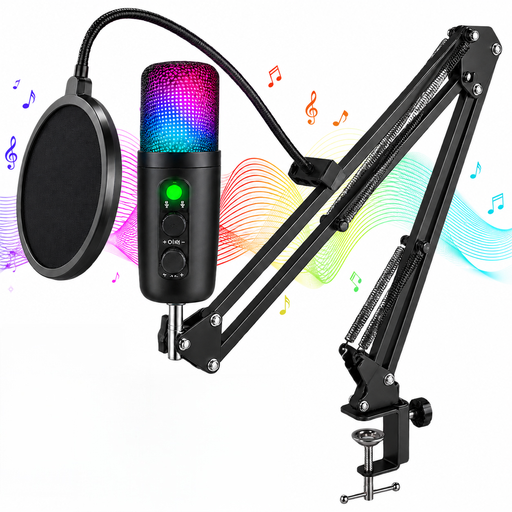 No image available
USB gaming condenser microphone, 7-piece kit
An option if you’re looking for a USB condenser microphone with mute and headphone monitoring.
- USB condenser microphone for gaming and streaming.
- Mute button and headphone connection with monitoring.
- The product title mentions a Type-C adapter and a 7-piece kit.
View at Joybuy
Frequently asked questions
How can I check that my callouts are clear before a match?
If you use Discord on desktop or in a browser, select the correct input device and start the microphone test under ‘Voice & Video’. Speak at your usual volume and type as you would while gaming.
Will noise suppression help instead of changing the microphone position?
Noise suppression is no substitute for testing the microphone’s position. RØDE recommends placing the NT-USB Mini closer to your voice to improve the ratio of voice to background noise; this is the manufacturer’s recommendation for this model, not a guarantee for every room.
What should I check when connecting or changing my setup?
Check that the connection on the specific microphone is compatible with your computer and see which cable is included. RØDE lists a USB-C to USB-A cable and a detachable desktop stand for the NT-USB Mini; according to the manufacturer, some controls on the FIFINE AM8 are only available over USB.
What are my rights if my microphone is faulty?
Under the EU rules explained by Your Europe, if you buy as a consumer from a business seller, you have a legal guarantee of at least two years from receipt of the goods. This is separate from a voluntary manufacturer’s warranty; these rules do not apply in the same way to purchases from private individuals.
Can I simply record team voice chat?
Using a USB microphone for a live chat doesn’t in itself mean you’re recording it. In Germany, recording another person’s privately spoken words on an audio medium without authorisation may fall under section 201 of the German Criminal Code (StGB); make sure you have permission before recording. Whether a particular chat or consent meets the legal criteria cannot be assessed in general terms.


