For a virtual tour with an expressive voice, a directional USB condenser microphone with easily accessible gain controls and headphone monitoring could be a good choice in a quiet room. If background noise is audible, a dynamic model used at close range may be more suitable, but you’ll need to keep your speaking position consistent. Record both a quiet passage and a particularly emphatic one from your planned position, then check that the levels remain clear. Compare the recording with automatic level processing switched on and off to make sure your emphasis comes through.
Who are these microphones suitable for?
Expressive tour guides
If you switch between calm explanations and emphatic highlights, check the gain, louder passages and plosive sounds during a test recording. Sennheiser lists a gain control for the Profile USB, while RØDE describes the NT-USB+ as having a removable pop filter.
Speakers in noisy rooms
If there’s background noise where you record, consider whether you can speak close to the microphone while still moving naturally. RØDE describes the PodMic USB as a dynamic microphone with USB and XLR connections.
Producers recording multiple takes
If you repeat individual sections at your computer, headphone monitoring and accessible controls can help you check your voice and playback during a rehearsal. Sennheiser lists gain, mix and volume controls for the Profile USB; Audio-Technica describes the AT2020USB-X as offering headphone monitoring and mix control.
What should I look for when choosing one?
Start by recording a test at your planned recording position. Then compare the levels, room sound, monitoring options and set-up requirements.
| What matters |
What to look for when buying |
Who is it important for? |
| Levels and emphasis |
Gain control; record and listen back to your loudest passage as a test. |
I want to record quiet explanations and louder emphasis clearly, without the levels clipping. Around 36% of consumers put levels and expression first. |
| Room noise |
Check the pickup pattern and the required speaking distance in the room where you’ll actually record. |
If background noise is audible, I want to find a suitable speaking position without unnecessarily restricting my gestures. Room noise is the main concern for around 29% of consumers. |
| Listening back to repeated takes |
Check for a headphone socket and volume and mix controls. |
When recording multiple takes, I want to listen back to and assess individual sections straight away. Around 21% of consumers prioritise being able to check their takes. |
| Easy set-up |
Check the computer connection and whether a cable and stand are included. |
I want to connect and position the microphone where I plan to use it, without having to guess what’s in the box. An uncomplicated set-up is a priority for around 14% of consumers. |
Which mistakes should I avoid?
-
Assuming automatic level processing preserves natural emphasis
A compressor can lower louder sections, changing the intended differences in volume. OBS Studio describes this function for its Compressor filter.
Compare a quiet passage and an emphatic one with processing switched on and off, and listen for whether your delivery still sounds natural.
-
Assuming directional recording guarantees a quiet room
A directional microphone won’t automatically prevent background noise from being audible where you record. In its buying guide test, BILD noted ambient noise with the Shure MV6 and plosive sounds with the RØDE NT-USB Mini.
Test the specific model where you plan to record, with your usual background noise and natural speaking movements.
-
Assuming similarly named models or connections are the same
The original Shure MV6 and the MV6 Gen 2 are different models. Cables and controls can also vary between USB microphones: RØDE lists a USB-C-to-USB-A cable for the NT-USB Mini, while for the NT-USB+ you should check that your computer connection matches the cable you need.
Check the full model name, connection and what’s included with the specific version.
Which brands are worth considering?
Sennheiser
The Profile USB is a condenser option for voice-over recording from a fixed position.
- Sennheiser lists gain, mix and volume controls, a cardioid pickup pattern and USB-C.
- These features alone don’t tell you how much room sound will be audible where you record.
RØDE
The NT-USB Mini and NT-USB+ are different USB condenser microphones; the PodMic USB also offers an XLR connection.
- RØDE lists a built-in pop filter for the NT-USB Mini and a removable pop filter, headphone output and mix control for the NT-USB+.
- In its buying guide test, BILD noted plosive sounds with the NT-USB Mini. Features and included accessories can vary between models.
Shure
The MV7+ offers USB and XLR; the original MV6 is a different model from the MV6 Gen 2.
- Shure describes automatic level adjustment on both the MV7+ and the MV6 Gen 2.
- In BILD’s buying guide test of the original MV6, background noise remained audible and sibilants sometimes sounded harsh. This test result does not apply to the MV6 Gen 2.
CHERRY
The UM 6.0 ADVANCED is a USB desktop microphone with switchable cardioid and omnidirectional pickup patterns.
- CHERRY lists a gain control, headphone socket and desktop stand.
- The omnidirectional mode picks up sound from every direction, so it isn’t automatically the right choice for a single voice in a noisy room. In its test, BILD’s buying guide described some voices as sounding a little muffled.
Audio-Technica
The AT2020USB-X is a directional USB condenser option for a fixed voice-over recording position.
- Audio-Technica lists headphone monitoring, mix control and a desktop stand.
- The features alone don’t tell you how the microphone will sound in a particular room.
Joybuy products for voice recording
Joybuy product options for USB voice recording on a computer.
 No image available
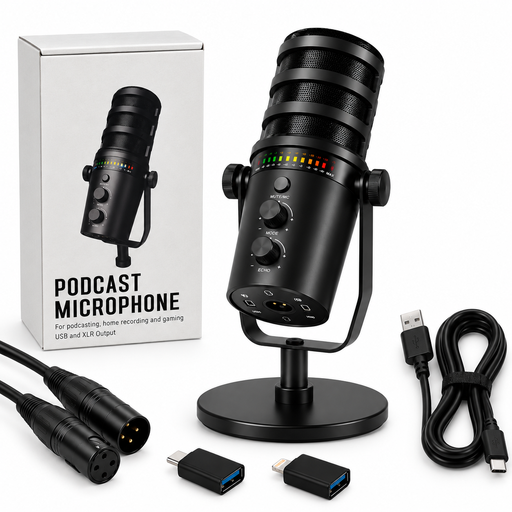
Dynamic USB/XLR microphone set with RGB lighting
This set could be a good fit if you want to create a fixed recording position with the microphone close to you.
The product name lists USB/XLR, gain control, echo, a mute button and a desktop stand.
View at Joybuy
 No image available
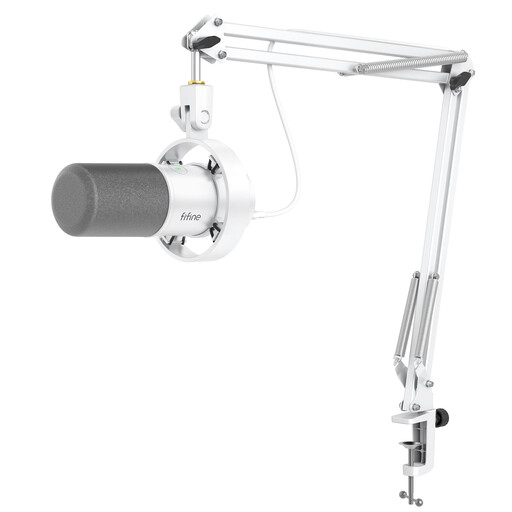
FIFINE K688CTW USB/XLR dynamic microphone, white
The boom arm could suit a fixed recording position if you can keep a consistent distance from the microphone.
The product description recommends a speaking distance of 2 to 6 inches. According to the description, the controls are only active over USB; the desk clamp is specified for desks under 2 inches thick.
View at Joybuy
 No image available
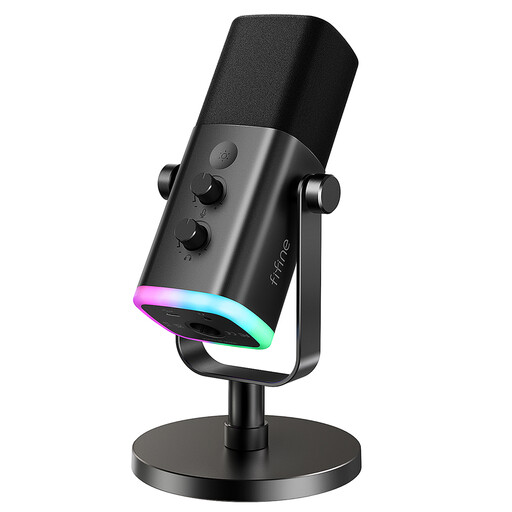
FIFINE AM8 USB/XLR dynamic microphone with RGB
This model could suit close-range voice recording from a fixed position if you can maintain the recommended distance.
The product description recommends a speaking distance of 2 to 6 inches. According to the description, the controls are only active over USB; the set includes a desktop stand and a microphone thread for boom arms.
View at Joybuy
 No image available
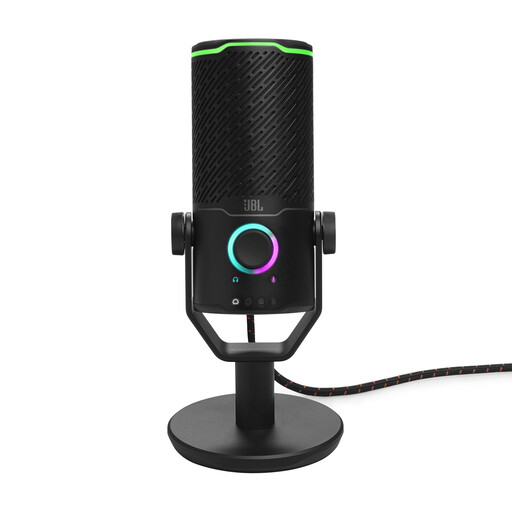
JBL Quantum Stream Studio
The monitoring feature described could be useful during rehearsals if you want to check your voice and playback directly.
The product name describes a wired USB-C condenser microphone with a flexible neck, mute control and LED indicator. Compare an emphatic passage with and without the compressor to preserve the dynamics you want.
View at Joybuy
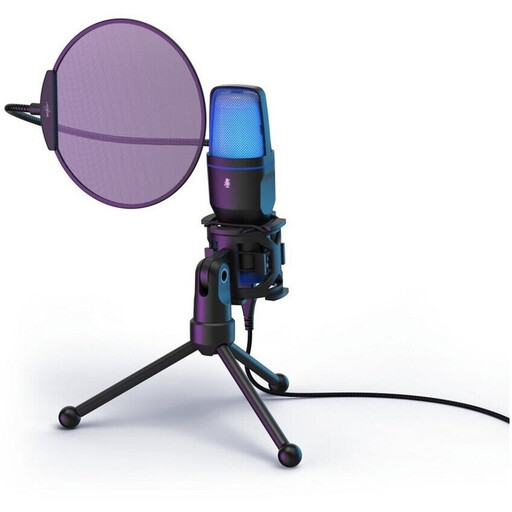 No image available
Stream 410 HD gaming microphone
If you’re recording a single voice in a noisy room, bear in mind that the microphone is described as having an omnidirectional pickup pattern.
The product name identifies this as a gaming microphone. The product description lists a pop filter and a desktop stand or shock mount.
View at Joybuy
Frequently asked questions
How do I test a microphone before recording a longer tour?
Select it as the input in your recording app, record a quiet passage and a particularly loud one, then listen back. If you use OBS, its Compressor filter can reduce peaks; check that your emphasis still sounds natural.
What does a pop filter do when you’re narrating?
A pop filter is designed to reduce bursts of air from sounds such as “p”. RØDE describes the NT-USB+ as having a removable pop filter for voice recording; it’s still worth testing it with your own speaking style.
Is a CE mark an independent test of recording quality?
No, the CE marking isn’t a sound-quality test. According to the European Commission, it is only required for products covered by relevant harmonised EU rules; it says nothing about recording quality.
How should I dispose of an old USB microphone in Germany?
Old electrical equipment shouldn’t go in household waste. The German Environment Agency lists local collection points and retailer take-back schemes as disposal options.


