For carrying notes
If you mainly need to carry folders of documents, look for a compact design and a connector that works with both the shared computer and your own device.


For individual study folders, a USB flash drive with the right connector is usually a good place to start. If you use devices with both USB-A and USB-C ports, a model with both connectors may be more practical. External SSDs or HDDs are options for larger collections of files, while with confidential documents, it’s also important to consider how you unlock the drive and the rules for using the shared computer. The German Federal Office for Information Security recommends keeping a separate backup; no single portable copy can replace one.
If you mainly need to carry folders of documents, look for a compact design and a connector that works with both the shared computer and your own device.
If you switch between USB-A and USB-C devices, or between Windows and Mac, consider the file system as well as the connectors.
If losing your documents would be a particular concern, check that the security and unlocking method are suitable for your devices and for use on the shared computer.
| What you need | What to check before buying | Who will find this especially important? |
|---|---|---|
| Carry documents with ease | Check the ports on both devices and the size of your folders. | If I want to carry individual study folders between a computer and my own device, I need storage that’s compatible and easy to carry. Around 36% of consumers prioritise being able to carry documents with ease. |
| Switch between ports and systems | Check for USB-A and USB-C connectors, as well as the file system you need. Back up your files before formatting. | If I use different ports or both Windows and Mac, the drive needs to connect to and be writable on both devices. Around 29% of consumers pay particular attention to device compatibility. |
| Protect confidential files | Check the unlocking method, the computer’s usage rules and whether the drive is suitable for copying files. | If I carry sensitive documents, I want to limit access to the files stored on the drive without being prevented from copying them on the shared computer. Around 21% of consumers prioritise protecting confidential files. |
| Store larger collections | Estimate how much space your files take up and how much extra capacity you need; plan to keep a separate backup. | If I store larger folders as well as study notes, the capacity needs to be suitable, and I need to be able to keep another copy. Around 14% of consumers prioritise larger collections and a separate backup. |
A USB-A flash drive won’t plug directly into a port that only supports USB-C. Having two compatible connectors also doesn’t automatically mean the file system can be written to on both devices.
Before choosing a model, check the ports on the shared computer and your own device, as well as which file systems they support.
If a storage device is lost or stops working, you could lose the study materials saved on it. The German Federal Office for Information Security recommends making regular backups.
Keep an additional copy separately and check that you can open the files you need from it.
Encryption controls access to files on the storage device, but it doesn’t automatically protect the shared computer. The German Federal Office for Information Security warns that removable media can spread malware. Read-only mode can prevent changes, but it also means you can’t save new copies to the flash drive while it’s enabled.
Check the computer’s usage rules and make sure the unlocking method and operating mode are suitable for copying files.
The DataTraveler Exodia M range is designed for carrying documents via USB-A. IronKey Vault Privacy 50 is a separate range for situations where encryption is needed.
The Ultra Dual Drive Go is designed for switching between USB-C and USB-A ports.
The Portable SSD T7 is an option for larger amounts of data.
Expansion Portable is an external HDD option for larger collections of locally stored files.
The products below include USB flash drives, as well as external HDD and SSD options for carrying study materials and larger collections of files.
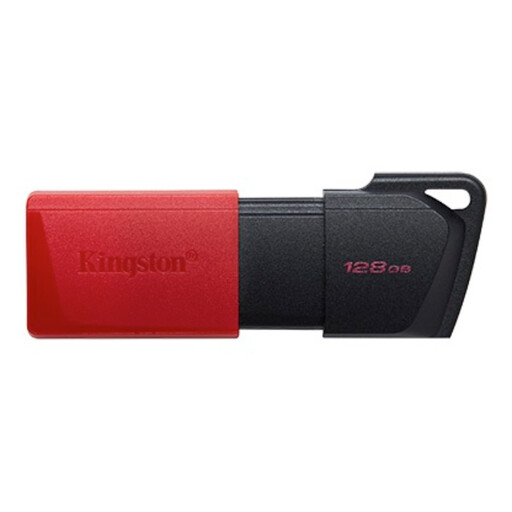 No image available
An option if you want to carry documents between devices with a compatible USB-A port.
128 GB; USB 3.2 Gen 1.
 No image available
An option if you want to carry larger collections of files as well as study notes on an external HDD.
2 TB; USB-C; USB 3.2 Gen 1; 2.5 inches; exFAT. According to the product description, an adapter may be needed for USB-A ports.
 No image available
An option if you want to transfer files between devices with USB-A and USB-C ports.
32 GB per drive; USB 2.0; swivel design; pack of two.
 No image available
An option if you want to use an external SSD for study materials and other files.
256 GB; USB 3.1. The product description states a maximum speed of 500 MB/s.
 No image available
An option if you want to carry study materials and other files on portable external storage.
512 GB; USB 3.1 Type-C. The product description states a maximum speed of 500 MB/s and includes cables and adapters for different ports.
Start by considering the size of your folders and the ports on both devices. A compatible flash drive is a compact option for individual document folders; external SSDs or HDDs are worth considering for larger collections. Choose based on your files, rather than advertised maximum speed alone.
That also depends on the file system. Apple describes ExFAT as a formatting option for drives over 32 GB that you want to use with Windows and Mac. According to Apple, a Mac can read an NTFS drive but can’t edit it by default. Back up any files you need before formatting, as this will delete existing files.
Check that the copied files are on the drive. Microsoft recommends safely ejecting USB drives in Windows before unplugging them to avoid data loss. The German Federal Office for Information Security also warns that removable media can spread malware.
No. Encryption controls access to stored data; keeping a separate backup means you can restore files after data loss. An encrypted drive shouldn’t be the only copy of important documents.
When you buy as a consumer online, you generally have a 14-day right to cancel. Your statutory rights against the seller if the product is faulty are separate from any voluntary manufacturer’s guarantee; the consumer advice centre states that purchased goods generally have a two-year period. The details depend on the specific purchase.