Families with a growing photo archive
If you want to store your entire photo collection and perhaps several backup versions, make sure the specific stick you choose has enough space. Also check that you can open the files again later.


First, choose a USB stick with enough usable capacity for your photo collection and any additional backup versions you want to keep. Then test whether files copied back from it will open. On a shared computer, access permissions and the USB ports actually available are also important. Fast write speeds matter most if you regularly copy large amounts of data. The German Federal Office for Information Security (BSI) advises against relying on a USB stick as the only copy of irreplaceable photos.
If you want to store your entire photo collection and perhaps several backup versions, make sure the specific stick you choose has enough space. Also check that you can open the files again later.
If several people use the same computer but you don’t want everyone to be able to view the backed-up photos, consider the level of protection, how the stick is unlocked and how it can be stored securely.
If you back up photos on a shared computer and may want to restore them on a device with a different USB port or operating system, check the ports and file system on all the devices involved.
First, work out how much space your photo collection needs. Then consider who should be able to access the stick and which devices you might use to restore the backup. Write speed becomes more important if you regularly update large folders.
| What matters | What to check before buying | Who will find this useful? |
|---|---|---|
| Storage space and recovery | Compare the planned photos and backup versions with the specific model’s usable capacity; try copying files back and opening them. | If I want to back up the whole collection and open it again later, I’ll check how much space the archive needs. Around 36% of consumers are likely to prioritise sufficient storage and the ability to recover their files. |
| Access to the photos | Check whether protection covers all the data or just part of it, and how the stick is unlocked. | If I don’t want everyone using the shared computer to be able to view the photos, I’ll check what’s protected and make sure I can manage the access code reliably. Around 29% of consumers are likely to prioritise access protection. |
| Ports and device compatibility | Check the devices’ USB-A and USB-C ports and their file systems. Back up any existing data elsewhere before formatting. | If I want to open the backup on another device, I’ll check its port and file system first. Around 21% of consumers are likely to consider compatibility with multiple devices particularly important. |
| Copying time | Check the write speeds for the exact model and capacity; don’t assume the manufacturer’s maximum speed guarantees a particular copying time. | If I regularly update large photo folders, I’ll want to know how long writing the files is likely to take. Around 14% of consumers are likely to prioritise the time needed for frequent copying. |
Storage devices can fail. A saved copy is only useful if you can actually open the files again.
Keep another copy separately and test that you can restore it. The BSI recommends disconnecting the storage device from your computer when you’re not backing up.
Keeping an additional separate backup requires extra storage space and regular maintenance.
Write speed is what matters when creating a backup. COMPUTER BILD gave the tested models different ratings for write speed; read speed alone doesn’t tell you how long copying will take.
Compare write speeds and, where possible, look for a test of the exact model name and capacity you want. Check whether a figure is quoted as a maximum speed.
Slow write speeds can mean longer waits when you make large backups regularly.
A protected area doesn’t automatically mean that every file on the stick is encrypted. For the Verbatim Keypad Secure #49429, the manufacturer specifies hardware encryption for all data and says the stick must be reformatted after 20 incorrect code entries.
Check what’s protected on the exact model you’re considering and set up access before creating your backup. Verbatim also notes that a security update is available for this model.
With a code-protected stick, you’ll need to manage the unlock code and keep a separate copy of your photos.
A compatible plug doesn’t automatically mean the file system will work. Apple warns that formatting deletes existing files.
Check the port and file system first. Back up any stored data elsewhere before formatting.
The Extreme PRO range offers USB-A options for buyers who also want to consider write speed for the specific model.
The Keypad Secure #49429 is a USB-A option that unlocks with a code.
The High Speed Line is a USB-A range with documented versions in different capacities.
The JetFlash 890 is designed for switching between devices with USB-A and USB-C, provided the specific capacity is sufficient.
The DataTraveler Duo and DataTraveler Kyson are separate product ranges with different port and performance specifications.
This selection includes USB-A sticks, a hardware-encrypted option and a USB-A/USB-C set. Capacity, connectors and level of protection vary by model.
 No image available
A USB-A option if your computer has this port and 256 GB is enough for your measured photo collection.
The Kyson is quoted with read speeds of up to 200 MB/s and write speeds of up to 60 MB/s.
 No image available
A compact capacity option if 64 GB is enough for your planned backup and you use a device with a USB-A port.
This version is quoted with read speeds of up to 220 MB/s and write speeds of up to 100 MB/s.
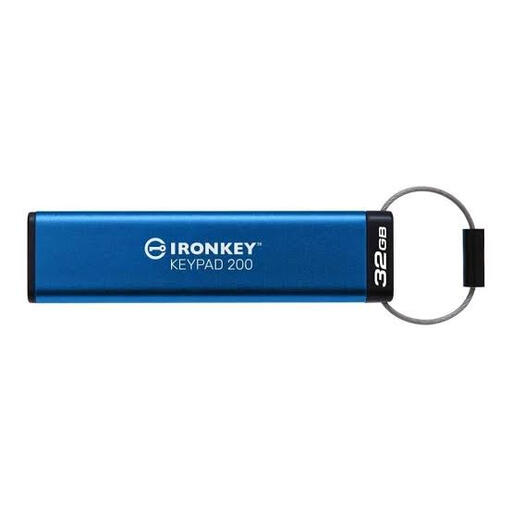 No image available
An option if separate access permissions matter and 32 GB is enough for your planned backup.
This model is described as hardware-encrypted with XTS-AES-256 and an alphanumeric keypad; access is via PIN.
 No image available
A 256 GB USB 3.0 option if this capacity suits your photo archive.
The description mentions SanDisk SecureAccess for a password-protected private storage area. This doesn’t automatically mean that every file on the stick is protected.
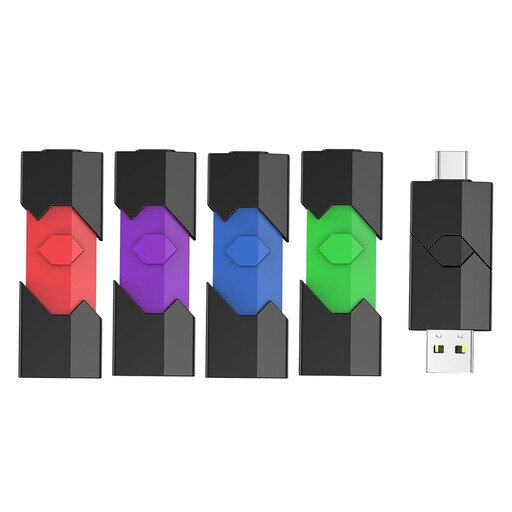 No image available
A set for transferring files between compatible devices with USB-A and USB-C ports, if 32 GB per stick is enough for each use.
The description lists five sticks, each with 32 GB, OTG and USB 2.0.
Don’t rely on just one stick for irreplaceable photos. The BSI notes that it’s impossible to predict exactly how long storage media will last, and backed-up data needs to be recoverable. Keeping another copy separately and testing that you can restore it will help you manage these risks.
Copy the photo folders you want to back up, check that files copied back will open, and disconnect the storage device from the computer when you’re not backing up. The BSI recommends disconnecting it as part of data protection.
Apple describes exFAT as an option for drives over 32 GB used with Mac and Windows. Check the devices involved and back up any existing files elsewhere before formatting, as formatting deletes files. With FAT32, you should also bear in mind the maximum size of 4 GiB for a single file.
Keeping an additional separate backup may require another storage device. Check the warranty and support for the exact model: Kingston offers a five-year limited warranty and technical support for the DataTraveler Kyson. This doesn’t guarantee that lost photos can be recovered.