Collectors of large recipe projects
If you want to keep complete folders of recipe text and project files, first work out their total size and allow for the growth you expect.


First, check the size of your recipe and project folders, including any planned growth, and compare it with the available storage on the specific version of the stick. If you copy files often, the write speed of that version matters. To move between devices, the connectors and file system must also work with your devices. Important or confidential files require separate decisions about backups and access protection.
If you want to keep complete folders of recipe text and project files, first work out their total size and allow for the growth you expect.
If you regularly update large project folders, check the write speed of the specific version rather than relying solely on an advertised read speed.
If you switch between devices with different connectors, or between Mac and Windows, check both the plugs and whether each device can read and write to the file system.
| Buying priority | What to check before buying | Who it matters most to |
|---|---|---|
| Space for growing folders | Compare the folder size, including planned growth, with the storage available after formatting. | If I want to store complete recipe and project folders, including new files, usable storage is my top priority. Around 28% of consumers prioritise having enough space for their folders. |
| Copying time | Check the write speed of the exact version and the computer’s USB port. | If I update large folders often, I want to know how quickly data can be written rather than relying only on a read speed. Around 22% of consumers put copying time first. |
| Access across multiple devices | Test the connectors and read and write access to the file system on all the devices you plan to use. | If I want to open and edit the same files on devices with different connectors, the plugs and file system need to work together. Around 22% of consumers prioritise switching between devices. |
| A recoverable copy | Choose a separate location for a second copy and check that you can open the files you need from it. | If I don’t want to lose important recipe and project files, I need a separate copy in addition to the stick. Around 17% of consumers prioritise being able to recover their files. |
| Confidential files | Check that a protection solution works on the devices you use and how the access key is managed. | If I carry files that need protecting, I want to make them harder to access if they’re lost, while still being able to open protected data myself. Around 11% of consumers prioritise protecting confidential documents. |
A high read speed doesn’t tell you how quickly large folders can be written to the stick. If you update files frequently, this could mean longer waits.
Compare write speeds or tests for the exact capacity version, and take the computer’s port into account.
A compatible port doesn’t guarantee that a device can read and write to the file system as needed. Formatting erases existing files.
Test the connectors and file access on all your devices before putting your only copy on the stick.
If the only storage device is lost or damaged, you won’t be able to recover your files from it. The Federal Office for Information Security recommends keeping backup copies to protect against data loss.
Keep another copy separately and check that you can open the files you need from it.
Encryption can protect access to files, but it won’t recover them if they’re lost or damaged. The Federal Commissioner for Data Protection and Freedom of Information describes encryption as part of a wider set of technical and organisational measures.
Plan access protection for confidential files and a separate backup as two different tasks.
The JetFlash 930C is an option if you switch between devices with USB-A and USB-C. Transcend offers versions with 128, 256 and 512 GB.
The DataTraveler Max is aimed at people looking for a USB-C or USB-A version with performance-focused specifications.
The Ultra Dual Drive Luxe is another range with USB-A and USB-C connectors.
The PinStripe is a USB-A option if you don’t need an integrated USB-C connector.
The JumpDrive P30 is worth considering if you’re also looking for a password-protected area.
The models below cover USB-A storage and switching between USB-A and USB-C devices. Compare the capacity with the size of your folders and check that the exact version works with your devices.
 No image available
The two connector types suit switching between USB-A and USB-C devices. The drive is listed as USB 2.0, so bear that in mind if you regularly copy large files.
Capacity: 32 GB per stick. Interface: USB 2.0. Pack size: 2.
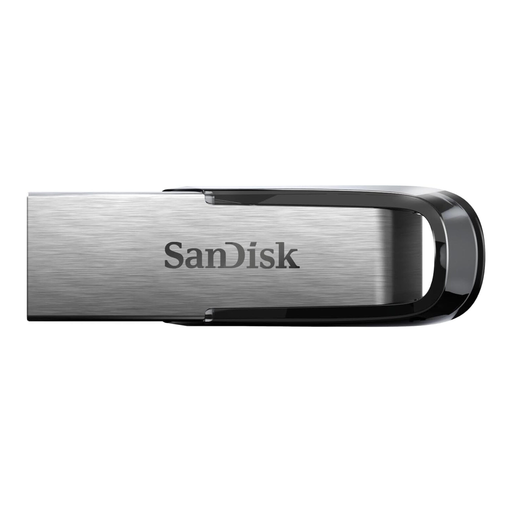 No image available
The 128-GB version is an option if you’re looking for a USB-A model and its capacity suits the size of your folders.
Capacity: 128 GB. Interface: USB 3.0. The title quotes read speeds of up to 150 MB/s; a write speed of 4 MB/s is listed, which may be relevant if you regularly copy large files.
 No image available
The two connector types are designed for switching between compatible USB-A and USB-C devices.
Capacity: 128 GB. Listed interfaces: USB 3.2 Gen 1 and Type-C. The product title quotes read speeds of up to 570 MB/s.
 No image available
The 256-GB version combines two connector types with quoted read and write speeds. Check that the protected area suits the way you access your files.
Capacity: 256 GB. Listed interfaces: USB 3.2 Gen 1 and Type-C. The product title quotes speeds of up to 550 MB/s for reading and 500 MB/s for writing. According to the product information, if both the password and fingerprint recognition fail, the encrypted data cannot be recovered.
 No image available
The two connector types can make it easier to switch between compatible USB-A and USB-C devices.
Capacity: 128 GB. Listed interface: USB 3.2 Gen 1. The model is described as having a metal casing and swivel design.
No. Check the size of your largest individual file too. Microsoft lists a maximum file size of 4 GiB for FAT32. Apple Support notes that formatting deletes existing files, so back them up first and test access on the devices you plan to use.
Kingston explains that the difference is partly due to how capacity is calculated, as well as space used for formatting and other functions. Plan around the free space actually shown and compare it with the size of your folders, including expected growth.
Keep another copy separately from the stick and check that you can open the files you need from it. The Federal Office for Information Security describes backups as protection against device failure, accidental deletion or loss of a device.
No. Encryption can protect access to confidential files, but it won’t recover lost or damaged data. The Federal Commissioner for Data Protection and Freedom of Information describes encryption as one measure that works alongside other safeguards, so make a separate backup too.