Studio archive managers
If you organise the letter archive, you need a separate copy and should check that you can restore the scanned files from it. The BSI recommends testing backups.


A USB stick shouldn’t be the only copy of an archive of scanned letters. The Federal Office for Information Security (BSI) recommends making backups and checking that you can restore them. For confidential letters, it’s also important to manage access properly; the Federal Commissioner for Data Protection and Freedom of Information (BfDI) generally recommends encrypting data stored on USB drives. Choose a connector to suit the devices you actually use, and assess capacity and transfer speed based on your files. A stated read speed tells you nothing about write speed.
If you organise the letter archive, you need a separate copy and should check that you can restore the scanned files from it. The BSI recommends testing backups.
If several people share the same space, you should agree responsibilities and access rights for confidential scans. The BfDI generally recommends using encrypted USB drives.
If you transfer scans between several devices, check their USB ports and whether they support external storage. SanDisk and Transcend offer USB-A and USB-C models; whether they work will also depend on the device you’re connecting to.
| Priority | What to check before buying | Who is it most important to? |
|---|---|---|
| Recoverability | Choose a separate storage location for the second copy; test restoring a selection of scans. | If I want to archive letters permanently, I need a separate copy and want to be able to restore it if something goes wrong. Around 36% of consumers prioritise recoverability. |
| Confidentiality and access | Check how the drive is unlocked, who is responsible for PINs or keys, and which user roles are needed. | If confidential letters are stored in a shared studio, I want to decide who can unlock the stick. Around 29% of consumers name confidentiality as their main priority. |
| Connections and device access | Check the USB ports on all the devices you plan to use; open a scan file on the target device. | If I need to access scans on different studio computers, I want to be able to open them on every device I plan to use. Around 21% of consumers prioritise device compatibility. |
| Storage capacity and transfer speed | Compare the size of your scan folders and how much they’re likely to grow; distinguish between write and read speeds. | If my collection of scans is growing or I often copy lots of files, I need enough usable storage and want to know how long transfers will take. Around 14% of consumers prioritise storage space and transfer speed. |
Storage media can fail. The BSI points out that their lifespan cannot be predicted precisely, and that backed-up files still need to be readable later.
Make a separate copy and test by opening files restored from it.
Keeping another copy and carrying out regular restore tests takes extra storage and time.
Encryption protects access to a locked drive, but it doesn’t give you another copy of your files. On the models reviewed, repeated incorrect entries may trigger a lockout or deletion, depending on the model.
Agree how PINs and keys will be managed, and back up the letters separately from the protected stick.
SanDisk and Samsung quote high read speeds for the respective models. These figures don’t tell you how long it will take to write lots of scans, or whether they’ll remain readable in the long term.
Check both read and write speeds, confirm the exact model variant, and choose storage capacity based on your collection of scans.
A stick may not work with a device, even if the connector fits, if the device doesn’t support external storage or can’t open the files.
Check the connections on all the devices you plan to use, then try opening a scan file on the target device. Transcend notes that mobile devices need to support USB OTG.
The IronKey range offers different ways to control access to confidential files.
The Keypad Secure #49429 is a USB-A model with 128 GB and an on-device code keypad.
The Ultra Dual Drive Luxe is designed to transfer files between USB-C and USB-A devices, provided they support external storage.
The JetFlash 930C is a dual-connector option for devices with USB-A and USB-C.
The BAR Plus MUF-256BE4/APC is a 256 GB USB-A option for compatible devices.
This selection includes USB-A sticks for a fixed set of devices, models with password protection, and USB-A/USB-C options for transferring files between devices.
 No image available
For a fixed set of devices: the product description says the stick is designed for documents and offers 256 GB of capacity.
USB 3.2 Gen 1; write speeds of up to 60 MB/s and read speeds of up to 200 MB/s. These figures should be considered separately.
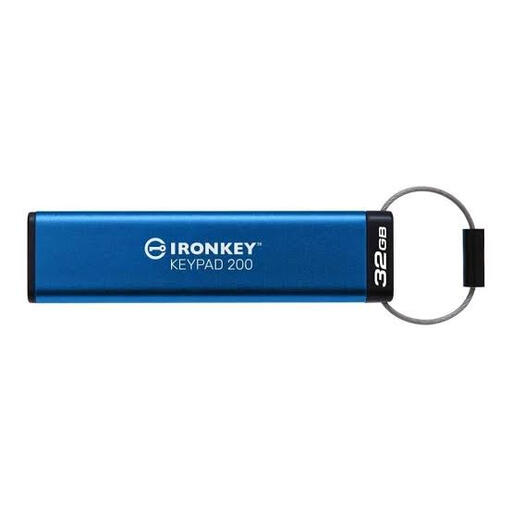 No image available
For confidential letters when you want to control access with a PIN entered on the stick; Kingston specifies hardware encryption and separate admin and user PINs.
USB 3.2 Gen 1; the product description lists write speeds of up to 115 MB/s. Repeated incorrect entries may trigger a lockout or deletion, depending on the model, so a separate backup is still essential.
 No image available
For a larger collection of scans on a PC or laptop with USB-A, if software-based password protection suits your workflow.
The product description lists 256 GB and SecureAccess software with 128-bit AES encryption. Software encryption requires suitable set-up and key management.
 No image available
For transferring files between compatible devices with USB-A and USB-C; the product description lists OTG support for transfers between Android devices and computers.
USB 2.0; two drives, each with 32 GB. Check that the target device supports external storage, then try opening a scan file.
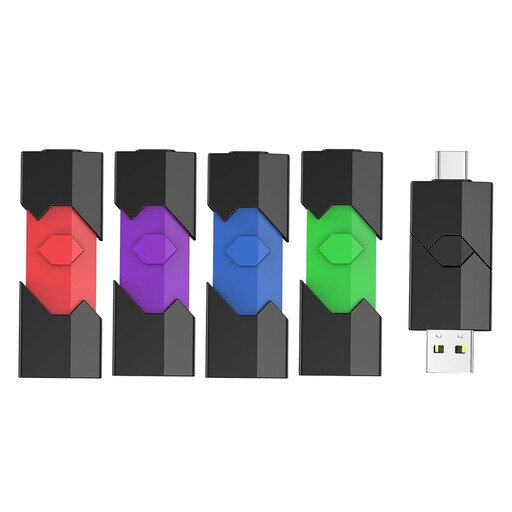 No image available
For keeping files separate across several drives, if your devices support USB-A or USB-C.
The product description lists five drives with 32 GB each, USB 2.0 and OTG file transfers between USB-C devices and computers. A set does not replace a separate, tested backup.
No, not if you want to keep your scans if the drive is damaged or lost. Keep a separate copy and check that you can restore files from it; the BSI says the lifespan of storage media cannot be predicted precisely.
Decide who will manage PINs or keys and how authorised people can access the files. Encryption protects a locked drive, but not files that are accessible on a device that has already been unlocked; keep a separate backup of the scans as well.
A separate backup needs extra storage, and regular restore tests take time. For the specific model, also check the warranty terms, whether your devices are supported and whether security updates are available.
The BfDI’s recommendation to encrypt USB drives as a general rule does not specify a particular model. Whether any additional data protection or retention requirements apply to your studio depends on the contents of the letters and how they’re used. Check the requirements for your specific situation rather than assuming that choosing an encrypted stick alone fulfils them.