What should you look for when buying?
Start by calculating the size of your complete collection and planning a separate backup. Then you can check that the connector, write performance and, where needed, access protection suit your devices and files.
| Consideration |
What to check before buying |
Who it matters most to |
| Recoverability |
Plan a separate copy and check that you can open important files. |
If I need to access manuscripts and different versions after a loss, I need an independent way to recover them. Around 28% of consumers say recoverability is their top priority. |
| Space for your collection |
Include folders, attachments and planned versions in your calculations; compare the usable capacity of the specific variant. |
If several plays and versions are going on the same copy, it needs to fit the entire collection. Around 28% of consumers say having enough storage is their main concern. |
| Access on your devices |
Check the ports and file system on the devices you’ll use; try opening a copy on one of them. |
If I need to share or open project files on different computers, I need compatible connectors and a file system they can read. Around 17% of consumers say device access is their main concern. |
| Write time |
Compare write speeds and tests for the exact model and capacity, not just the read speed. |
If I make full copies regularly, I want to know how long they might take; read-speed figures don’t tell me that. Around 16% of consumers focus on copying time. |
| Confidentiality |
Consider the level of protection needed, how you’ll unlock the stick and how you’ll access a separate backup. |
If I’m carrying unpublished or personal data, access protection needs to fit my workflow without putting access to the only copy at risk. Around 11% of consumers say confidentiality is their main concern. |
USB sticks at Joybuy
This selection includes USB sticks for project folders, with models for USB-A as well as variants with both USB-A and USB-C connectors.
 No image available
Kingston DataTraveler 256 GB Kyson
A USB-A option for project folders if your devices have this type of port.
256 GB. For Kyson variants from 128 to 512 GB, Kingston quotes read speeds of up to 200 MB/s and write speeds of up to 60 MB/s.
View at Joybuy
 No image available
SanDisk Ultra 256 GB USB 3.0
A 256 GB option if this capacity suits the size of the project folders you need to back up.
256 GB; described as a USB 3.0 flash drive.
View at Joybuy
 No image available
MOVESPEED YSUSP05-128GSR, 128 GB
A dual-interface option for switching between devices with the corresponding ports.
128 GB; the product name describes it as USB 3.2 Gen 1 and Type-C, with read speeds of up to 570 MB/s.
View at Joybuy
 No image available
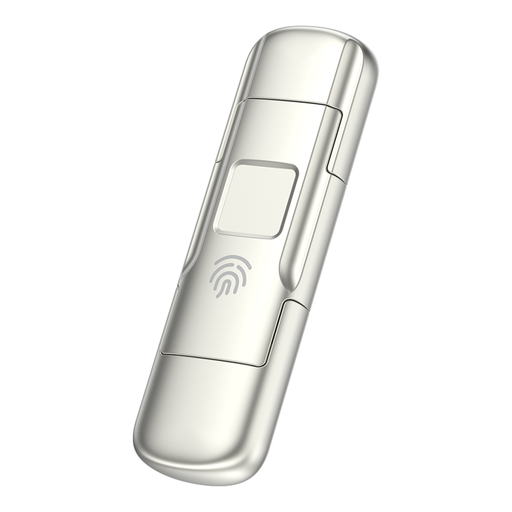
MOVESPEED YSUYC-256GSN, 256 GB
A 256 GB variant with fingerprint access, if this feature suits how you plan to access your project files.
USB 3.2 Gen 1 and Type-C; the product name quotes write speeds of up to 500 MB/s and fingerprint encryption. According to the product warning, encrypted data cannot be recovered if both the administrator password and fingerprint access fail.
View at Joybuy
 No image available
Lexar D40E 128 GB, LJDD40E128G-BNSNG
A 128 GB option with USB-A and USB-C connectors for transferring files between devices with these ports.
128 GB; the product description quotes transfer speeds of up to 100 MB/s.
View at Joybuy
Frequently asked questions
Is a USB stick enough as the only long-term archive for a theatre?
No, not if you need to keep accessing your files after they’re lost or damaged. Germany’s Federal Office for Information Security recommends making regular backups. So keep a separate copy and check that you can open the versions you’ve saved.
How do I prepare a stick for Mac and Windows?
Check which ports and file system your devices need. Apple Support describes exFAT as a formatting option for drives larger than 32 GB that will be used with both Mac and Windows. Back up any existing files first, as formatting erases them. Then test a project folder on the computers you’ll actually use.
What are my rights if a USB stick stops working?
For consumer purchases in the EU, the seller is generally liable under a statutory guarantee for at least two years; this is separate from any additional manufacturer’s warranty. If the purchase is made by a theatre organisation rather than a consumer, check the contract terms separately.
Do theatre scripts need to be encrypted on a USB stick?
This depends, among other things, on whether you’re processing personal data and the risks involved in transporting it. Under the GDPR, data controllers must use appropriate technical and organisational measures based on the level of risk. Germany’s Federal Commissioner for Data Protection and Freedom of Information explains that encryption is an important measure, particularly for storage devices used to transport data.
Can I simply copy other people’s plays to an archive and share them?
Not just because they fit on a USB stick. Section 16 of the German Copyright Act (UrhG) covers making copies of works. Whether a particular archive copy or sharing is permitted depends, among other things, on the usage rights or any applicable statutory exception. Check the position separately for the texts in question and the access you’re planning to allow.


