Choose a USB stick based on the ports and file systems supported by your studio equipment, the size of your project files, and whether you simply need to transfer files or want to protect them too. If you copy files frequently, the write speed of the specific model matters. A USB stick should never be the only backup of a recording. Check your recorder’s manual first: the Zoom H6essential, for example, records to an SD card.
Who uses USB sticks in a shared studio?
People who switch between devices
If you transfer sessions between a studio computer and your own device, the ports and file system need to be compatible with both. Kingston and Verbatim offer USB-A/C models for switching between devices with the corresponding ports.
Producers working with large sessions
If you regularly copy recording and project folders, capacity, individual file sizes and the write speed of the specific model all matter. Microsoft states that FAT32 has a maximum file size of 4 GiB.
People responsible for confidential recordings
If several people have access to shared files, you should consider access permissions and a separate backup. The Federal Office for Information Security recommends saving data regularly and backing it up externally. The Federal Commissioner for Data Protection and Freedom of Information considers encryption one of a range of technical and organisational measures.
What should you look for when choosing one?
First, check that the USB stick and its file system work with every device in your studio. Then use your project size, write speed, backup needs and access protection to narrow down the options.
| Consideration |
What to check before buying |
Who is most affected? |
| Ports and compatibility |
Check USB-A and USB-C ports, as well as file system support on all the devices you plan to use; try opening a sample file. |
If I edit sessions on both a studio computer and my own device, the ports and file system need to work with both. Around 28% of consumers say switching between devices is a key buying consideration. |
| Recoverability |
Decide where to keep a second copy, and check some files to make sure they open properly. |
If I need to carry on working on a session after losing the USB stick or it stops working, I need a separate copy. Recoverability is a priority for around 22% of consumers. |
| Write speed |
Compare the write speed for the exact model and capacity, and distinguish manufacturer claims from independent test results. |
If I copy large project folders after every session, the time it takes to write files matters more to me than read speed alone. Around 22% of consumers prioritise shorter copy times. |
| Storage space and file size |
Check the total folder size and the largest individual file. Microsoft states that FAT32 has a limit of 4 GiB per file; any other file system must be supported by all your devices. |
If my projects contain lots of files or some particularly large ones, I need enough space and a file system that can handle them. Around 17% of consumers prioritise the storage needs of their projects. |
| Confidentiality and access |
Work out who needs access, whether the USB stick can be unlocked on the devices you plan to use, and how access details and a separate backup will be managed. |
If recordings or related files shouldn’t be accessible to everyone, access needs to be managed reliably. Confidentiality is the main buying consideration for around 11% of consumers. |
What mistakes should you avoid?
-
Using the USB stick as the only copy of a recording
Loss, damage or an interrupted write process can put files at risk. The Federal Office for Information Security recommends regular external backups.
Keep another copy separately and test whether you can restore the files from it.
-
Assuming read speed or the USB version tells you the write speed
Read and write speeds are different specifications. In a published test by COMPUTER BILD, the Intenso High Speed Line USB 3.0 with 128 GB performed poorly for writing; this result doesn’t automatically apply to other models.
Compare the write speed for the exact capacity and check whether it’s a manufacturer claim or an independent test result.
Longer write times can slow down the process of copying files after a session.
-
Checking only the capacity in gigabytes
The total size of a project folder won’t tell you whether an individual file can be copied to the USB stick. Microsoft gives 4 GiB as the maximum file size for FAT32.
Check the largest file and the file system. Only use a different format if all the devices you plan to use support it, and back up any existing data before reformatting.
-
Using encryption without a plan for access
For the Kingston IronKey Locker+ 50, the manufacturer describes lock and erase rules after repeated incorrect password entries. So don’t share access details between several people without first agreeing how they’ll be managed.
Before sharing the USB stick, decide who is authorised to use it, who will manage the access details and how a separate backup will remain accessible.
Which brands are worth considering?
Kingston
The DataTraveler Duo range is designed for switching between USB-A and USB-C devices. IronKey is a separate product line for protecting files.
- Kingston lists capacities of 128 and 256 GB for the DataTraveler Duo, along with a five-year limited warranty.
- Hardware encryption and rules for incorrect passwords apply to the IronKey Locker+ 50, not the DataTraveler Duo.
Verbatim
The Dual QuickStick is a USB-A/C model for transferring files between devices with different ports.
- For the 128-GB version, Verbatim quotes write speeds of up to 460 MB/s and a two-year limited warranty.
- The write speed is a manufacturer claim, not the result of an independent long-term test. According to Verbatim, the Nero Backup software included is for Windows only.
SanDisk
When comparing performance claims for Extreme PRO USB sticks, check the exact range and generation.
- SanDisk publishes its own read and write speed figures for one Extreme PRO USB 3.2 range.
- You can’t automatically apply these figures to a differently named Extreme PRO model.
Intenso
According to the manufacturer, write speed for the High Speed Line varies by capacity.
- Intenso quotes write speeds of up to 100 MB/s for the 128 and 256 GB versions.
- For the 64 GB version, the manufacturer quotes a write speed of 50 MB/s. COMPUTER BILD gave the tested 128-GB version a poor write-speed rating; consider the model specifications and test result separately.
Samsung
The USB Flash Drive Type-C MUF-256DA/APC is designed for devices with a USB-C port.
- Samsung Germany lists a capacity of 256 GB and sequential read speeds of up to 400 MB/s for this model.
- The read speed figure tells you nothing about write speed. You’ll also need to check the connection if you’re using it with a USB-A device.
Joybuy products
The Joybuy products below include options for switching between USB-A and USB-C devices, as well as models for frequent copying or secure storage.
 Image unavailable
Kexin 2-in-1 USB 2.0, 32 GB per drive, pack of 2
The product details list USB-A and USB-C for switching between compatible devices.
USB 2.0; two drives, each with 32 GB; OTG support according to the product description.
View at Joybuy
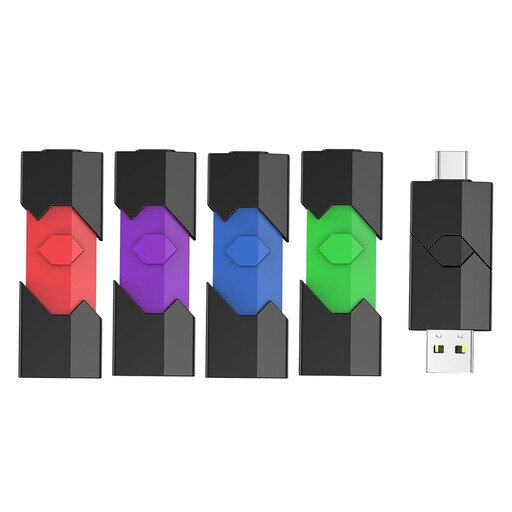 Image unavailable
Kexin 2-in-1 USB flash drives, 32 GB per drive, pack of 5
The product details list USB-A and USB-C with OTG functionality for transferring files between compatible devices.
Five drives, each with 32 GB; USB 2.0.
View at Joybuy
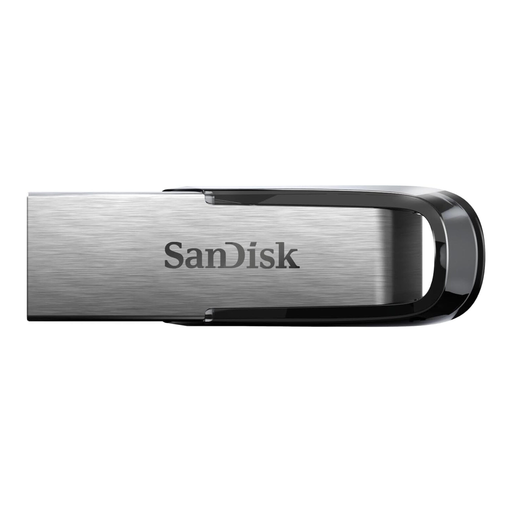 Image unavailable
SanDisk Ultra Flair USB 3.0, 128 GB
The product details mention a software feature for password-protecting private files; check that it works with the devices you plan to use.
128 GB; read speeds of up to 150 MB/s; write speed of 4 MB/s according to the product description.
View at Joybuy
 Image unavailable
MOVESPEED YSUSP05-128GSR, 128 GB, USB-A and Type-C
The product details list USB-A and Type-C, as well as a write speed for frequent copying; these figures are provided by the manufacturer.
USB 3.2 Gen 1; read speeds of up to 570 MB/s and write speeds of up to 520 MB/s.
View at Joybuy
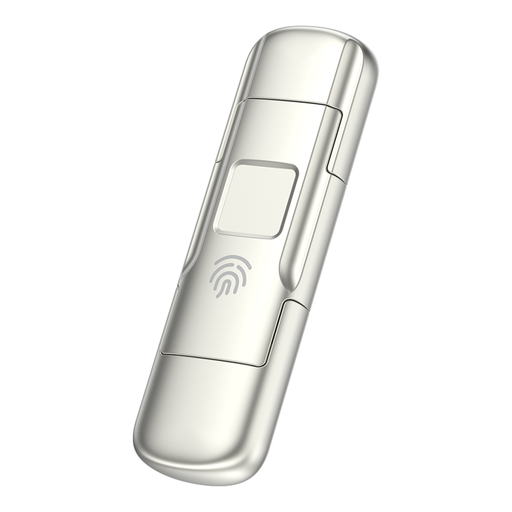 Image unavailable
MOVESPEED YSUYC-256GSN, 256 GB, fingerprint encryption
The product details list USB-A and Type-C, as well as fingerprint encryption for secure file transfers. Keep your access details safe: the security notice says encrypted data can’t be recovered if both the administrator password and fingerprint access are unavailable.
USB 3.2 Gen 1; read speed of 550 MB/s and write speeds of up to 500 MB/s according to the product details.
View at Joybuy
Frequently asked questions
Can I record directly to a USB stick from any audio recorder?
No, you can’t assume that. Zoom says the H6essential records to an SD card; its USB-C port is used, among other things, to connect to a computer. Check your recorder’s manual before buying.
Why can’t I copy a large session even though there’s enough free space?
Check the size of the individual file and the file system. Microsoft gives 4 GiB as the maximum file size for FAT32. You can only use a different file system if all the devices involved support it; back up any existing data before reformatting.
Is a USB stick enough as the only archive for my recordings?
A single USB stick shouldn’t be the only copy of a session. The Federal Office for Information Security recommends regular external backups. Keep another copy separately and check that you can open the files from it. Warranty terms vary by model: Kingston lists a five-year limited warranty for the DataTraveler Duo, while Verbatim lists two years for the Dual QuickStick.
Is a hardware-encrypted USB stick required for studio recordings in Germany?
Official guidance doesn’t impose a blanket requirement to use a particular USB stick model or hardware encryption. If you process personal data, you must have a legal basis for doing so, and those responsible must implement appropriate technical and organisational safeguards. The Federal Commissioner for Data Protection and Freedom of Information considers encryption one measure among several. The safeguards required will depend on the circumstances.


