
Lieferung heute & morgen

Qualitätsgarantie

Willkommens-Angebote freischalten: KOSTENLOSE Lieferung | Bis zu 80 % RABATT | Kostenlose 30-Tage-JoyPlus-Testphase
App herunterladen
A faulty or slow USB-C charging cable can be a major daily disruption. But the market is flooded with products whose marketing promises often suggest more than the technology can deliver. Many users invest in cables that wear out quickly, don't provide the expected charging speeds, or fail during data transfers. To help you avoid a bad purchase, we'll highlight the crucial features and show you what to look for when making your selection.
Before we dive into the technical details, it's important to understand the most common issues that lead to unsatisfying purchases:
To avoid these pitfalls, you should check three core parameters. These objective criteria will help you realistically assess a cable's performance and durability.
A cable's charging power is specified in watts (W) and amps (A). For modern fast charging, two protocols are crucial:
Therefore, a fast-charging cable must not only physically fit but also support the correct electronic protocol to achieve maximum speed.
A cable's lifespan largely depends on its construction. A braided charging cable made of nylon or similar durable textiles generally offers better protection against kinks and abrasion than a standard cable with a simple TPE or PVC jacket. Equally important are reinforced connector housings and strain relief elements, which reduce stress at the connection points.
If you also plan to use the cable for syncing data, the transfer rate is a key factor. Most standard cables support USB 2.0 with speeds of up to 480 Mbps. This is sufficient for occasional photo uploads. However, if you regularly transfer large video files or backups, you should look for cables with USB 3.1 (up to 10 Gbps) or Thunderbolt support.
Based on these objective criteria, we have identified a few models suitable for different user profiles.
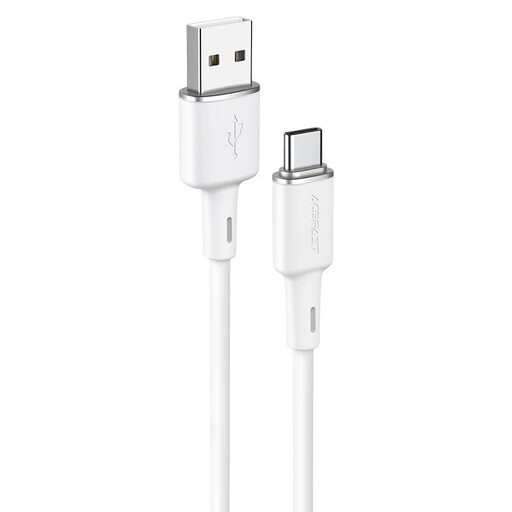
Why This Fits Their Persona: Ideal for users who need a reliable and affordable phone charging cable for daily use. It connects older USB-A power adapters to modern USB-C devices and is a solid basic setup for home or the office.
This cable clearly specifies a current of 3A, ensuring solid charging performance without exaggerated promises. The PVC construction is sufficiently durable for normal use.
Good value for money and a practical length of 1.2 metres for flexible use.
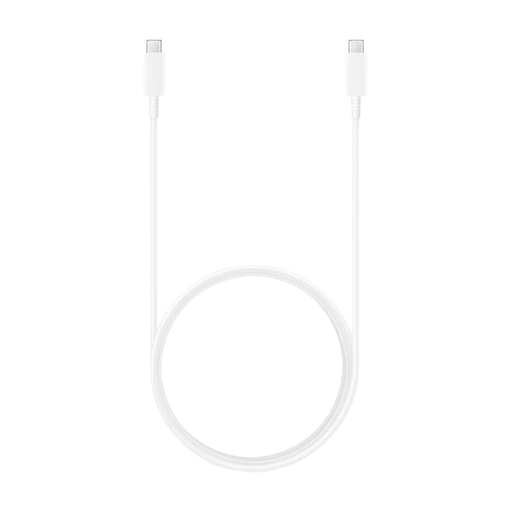
Why This Fits Their Persona: Perfect for users looking for a single USB C to USB C cable for all their high-performance devices, including laptops like the MacBook. The high power output and generous 1.8m length offer maximum flexibility.
This cable delivers the specified high power for true fast charging of demanding devices. According to Samsung, it supports Power Delivery up to 100 watts, thus avoiding the trap of underpowered "fast-charging" cables.
Supports high charging power (up to 100W PD) and offers a convenient 1.8m length. The robust construction promises a long lifespan.
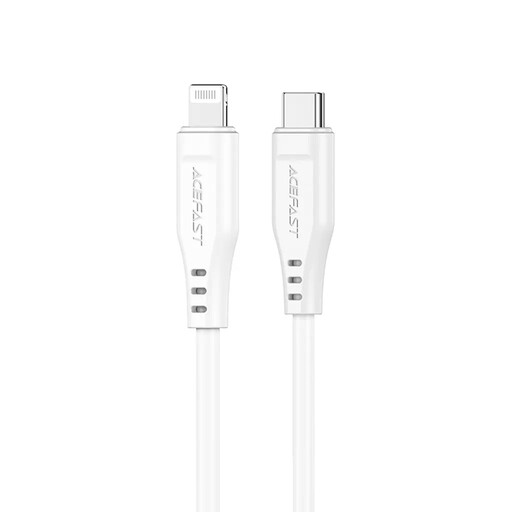
Why This Fits Their Persona: Designed specifically for the Apple ecosystem, this is an ideal iPhone charging cable for users who want to fast-charge their devices with a modern USB-C power adapter. It supports Power Delivery for efficient charging.
This cable provides clear specifications for PD fast charging on Apple devices, which avoids the compatibility issues or reduced charging speeds often found with non-specific cables.
Supports 30W Power Delivery for fast charging of iPhones and iPads, while also allowing data transfers at 480 Mbps.
We have compiled a complete, up-to-date list of products that fully meet these strict selection criteria and safety standards.
Physically, any USB-C plug fits into any USB-C port. However, this doesn't mean that every cable will work optimally with every device. Charging power and data transfer speeds depend on the compatibility between the cable, power adapter, and the end device. For example, a basic charging cable cannot power a laptop, even if the plug fits.
Pay attention to the material and build quality. A braided charging cable made of nylon is often more resistant to wear and tear. Reinforced joints between the cable and connector (strain relief) are another indicator of higher durability, as this is where most mechanical stress occurs.
This is a common problem that usually has three causes: