
Lieferung heute & morgen

Qualitätsgarantie

Willkommens-Angebote freischalten: KOSTENLOSE Lieferung | Bis zu 80 % RABATT | Kostenlose 30-Tage-JoyPlus-Testphase
App herunterladen
A well-chosen children's bookshelf not only keeps the room tidy but can also foster your child's independence and love of reading. However, the market is flooded with models that seem practical at first glance but prove unsuitable in daily use. Many parents invest in furniture that either ends up unused in a corner or even poses safety risks. Before you make a decision, it's crucial to know the most common pitfalls to avoid a poor purchase.
This guide focuses on the decisive criteria that define a functional and safe children's shelf, helping you find a long-lasting solution for your child's room.
The selection can be overwhelming, and often, well-intentioned purchases lead to frustration. Pay special attention to these three common problems:
To ensure your new piece of furniture is both practical and safe, you should check three key aspects. These form the basis for a good purchasing decision.
Safety in a child's room is the top priority. A good storage shelf for a child's room must be stable and robustly built. Look for the following features:
A children's bookshelf should be tailored to their needs. Ergonomics play a crucial role in daily use.
The needs of a child's room change quickly. A flexible shelf adapts to these changes.
Based on the criteria mentioned, we have identified some models that are suitable for different needs and room situations.
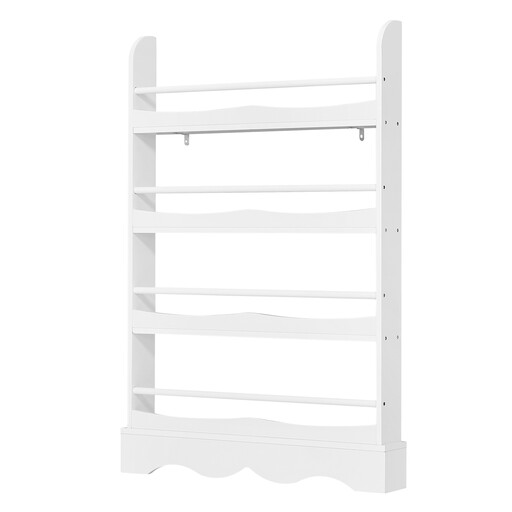
Why this model is a great fit: Ideal for smaller children's rooms where floor space is valuable. With a shallow depth of only 12 cm, it takes up hardly any space and makes optimal use of the wall area.
The front-facing book display and child-friendly height solve the problem of inaccessibility. The included anti-tip kit addresses the safety risk of unstable constructions.
Maximum space efficiency thanks to its slim, wall-mounted design. Promotes independence through the visible display of book covers.
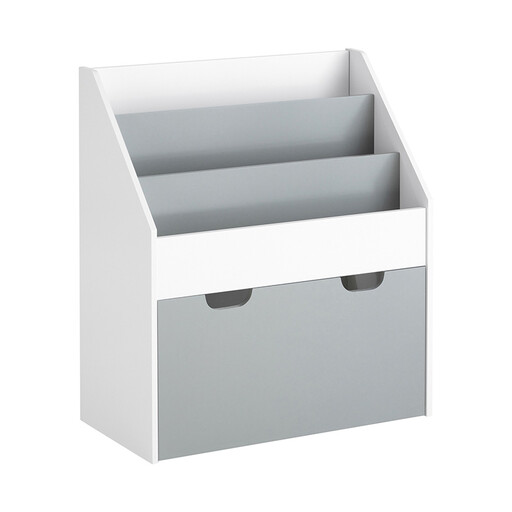
Why this model is a great fit: A multifunctional solution for anyone wanting to organise books and toys in one place. The combination of book compartments on top and a large toy chest on wheels below is extremely practical.
The low height of 70 cm is ideal for toddlers. The combination of book and toy storage solves the problem of impractical compartment layouts. Rounded corners enhance safety.
A 2-in-1 solution for books and toys. The mobile toy chest makes tidying up after playtime significantly easier.
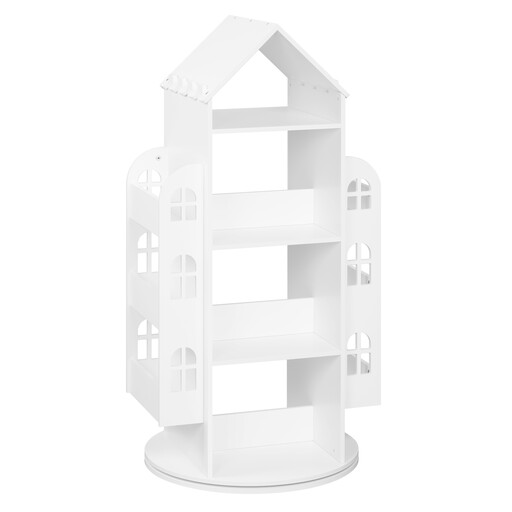
Why this model is a great fit: For families with a growing collection of books and toys. The 360° rotating function makes access from all sides easy and fun, while the high capacity ensures long-lasting organisation.
The rotating function solves the accessibility problem in an innovative way. The wide, stable base and high load capacity of 40 kg (according to the manufacturer) address the issues of stability and practicality.
Very high storage capacity on a small footprint. The 360° rotation offers easy access and turns tidying up into a playful activity.
We have compiled a complete, up-to-date list of products that fully meet these strict selection criteria and UK safety regulations.
Every freestanding shelf intended for a child's room should come with an anti-tip kit. This usually consists of one or more brackets or straps that are screwed to the shelf and the wall. Strictly follow the manufacturer's assembly instructions. For wall mounting, use wall plugs and screws that are appropriate for your wall type (e.g., concrete, plasterboard). This fastening is an essential safety step.
A Montessori bookshelf, where books are displayed with their covers facing forward, is useful for children from around 18 months to 2 years old. At this age, children begin to consciously recognise pictures and develop an interest in books. Since they can select the books themselves, their decision-making skills and interest in reading are encouraged from an early age.
The ideal height depends on the child's age. For toddlers (approx. 2-4 years), the shelf should be no higher than 80 cm, so they can reach all compartments without help. For children of preschool and early primary school age (approx. 5-8 years), a shelf can be up to 120 cm high. It is important that the most frequently used books and toys are always placed on the lowest, most easily accessible level.