
Lieferung heute & morgen

Qualitätsgarantie

Willkommens-Angebote freischalten: KOSTENLOSE Lieferung | Bis zu 80 % RABATT | Kostenlose 30-Tage-JoyPlus-Testphase
App herunterladen
Living space is at a premium in many cities. Clutter can quickly pile up, making rooms feel even more cramped. Storage furniture promises a solution, but not every piece delivers on its promise. Often, impulse buys lead to frustration when the new furniture wobbles after a few months, shoes don't fit inside, or it's simply impractical.
As your Joybuy Product Recommendation Officer, I'll help you spot the common pitfalls. Instead of falling for marketing hype, we'll focus on the facts. Here are the three most common problems to avoid when buying furniture with storage:
To prevent a costly mistake, you should check three core parameters before making a decision. These will help you objectively assess the quality and practical value of a piece of furniture.
The longevity of a piece of furniture depends directly on its material. Pay close attention to the detailed material description:
An indispensable figure is the maximum load capacity in kilograms (kg). This specification, often found in the fine print, indicates how much weight the furniture or individual compartments can safely support. A bench, for example, should hold at least 100–120 kg.
Don't be fooled by the exterior dimensions. What matters is the space inside. Before buying, measure the items you plan to store.
The smartest space-saving furniture pieces are those that adapt to your needs. Look for features that increase their utility over time:
Based on the criteria above, we have selected a few products that address specific living situations and cleverly avoid the common pitfalls.
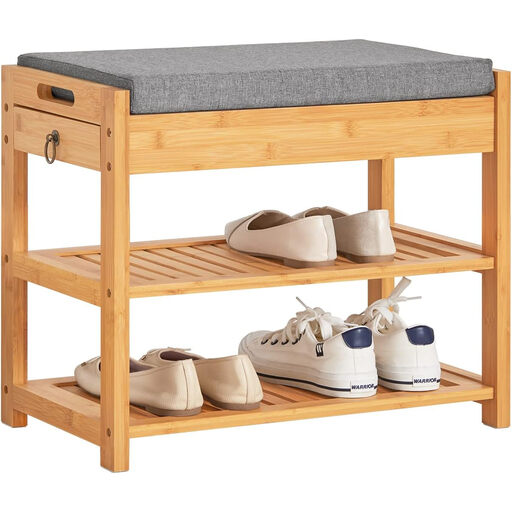
Why This Fits Their Persona: Ideal for small hallways or alcoves. This bench combines seating and shoe storage in a minimal footprint, solving the typical problem of entryway clutter.
Avoids the material trap by using robust, moisture-resistant bamboo. The sturdy construction, with a stated load capacity of up to 150 kg, ensures durability.
Combines three functions: a shoe rack, a drawer for accessories, and a padded seat. Its compact dimensions (55x46x30 cm) are optimised for tight spaces.
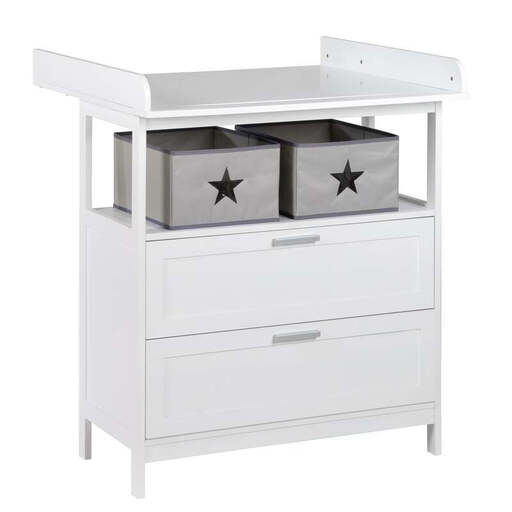
Why This Fits Their Persona: Perfect for young families looking for a sustainable, long-term furnishing solution. The dresser adapts to different life stages and won't need replacing after just a few years.
Escapes the single-purpose dead end thanks to its removable changing top. After the nappy phase, it becomes a fully functional dresser with no visible screw holes on the top panel.
Features a back-friendly changing height of 92 cm. The included anti-tip kit for wall mounting provides essential safety in a child's room. Two drawers and open compartments offer ample storage.
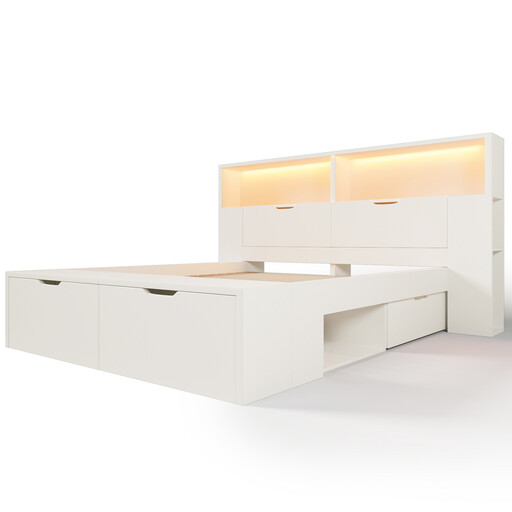
Why This Fits Their Persona: For tech-savvy teens or young adults living in small apartments or rooms who need a piece of furniture that combines a sleeping area, storage, and a tech hub in one.
This is the antithesis of the single-purpose dead end. As the ultimate storage bed, it integrates shelves, drawers, a lift-up bench, LED lighting, and USB charging ports.
Maximum space utilisation with storage in the headboard, side drawers, and the bench at the foot of the bed. Integrated USB-A and USB-C ports eliminate the need for separate charging cables by the bed.
We have compiled a complete, up-to-date list of products that fully meet these strict selection criteria and safety standards.
Measure not only the width and height of the alcove but also its depth. Remember to account for baseboards, door frames, or radiators that might limit the space. Plan for extra room to open doors and drawers. A good rule of thumb is to leave at least 50-60 cm of free space in front of a drawer or cabinet door.
An anti-tip kit is a restraint (usually a bracket or strap) used to secure a piece of furniture to the wall. It is essential for tall, narrow furniture like shelving units or a slim shoe cabinet, especially in households with children. It prevents the furniture from tipping forward if a drawer is pulled out too far or if someone tries to climb on it. While not always legally required, installation is strongly recommended for safety.
Care depends on the material. For most painted or coated MDF and particleboard surfaces, a soft, slightly damp cloth is sufficient. Avoid harsh cleaning agents. For solid wood furniture, you should follow the manufacturer's specific care instructions; treatment with a suitable wood care oil is often recommended occasionally to protect the material.