
Lieferung heute & morgen

Qualitätsgarantie

Willkommens-Angebote freischalten: KOSTENLOSE Lieferung | Bis zu 80 % RABATT | Kostenlose 30-Tage-JoyPlus-Testphase
App herunterladen
A UV400 folding sunglasses needs to meet several requirements at once: it must protect against UV radiation, reduce glare in everyday life, sit comfortably, and take up little space when you’re on the go. On product pages, claims like “ultra-light”, “scratch-resistant” or “suitable for driving” don’t always carry much weight. What really matters are the specific materials, measurements and coatings.
As Joybuy’s Product Recommendation Officer, I’ll break down the most important buying criteria and show which models suit different usage profiles.
UV400 describes the stated protection range against ultraviolet radiation up to 400 nanometres. However, the term alone doesn’t tell you how well a pair of sunglasses reduces visible light or reflections. That depends on factors such as the tint, light transmission and any anti-reflective coating.
A pair of sunglasses with UV400 protection can therefore be suitable for everyday wear, walks and travel, without automatically being ideal for every driving situation. In twilight or darkness, tinted glasses should generally not be worn while driving.
The hinges on a folding pair of sunglasses are regularly put under strain. Models with very thin arms or stiff hinges can be impractical in daily use. So pay attention to the intended folding mechanism, the frame construction and the care instructions.
A flexible TR90 frame is often used for lightweight, folding sunglasses. The Beneunder models featured here list TR90 as the frame material. Even so, the glasses should be opened and closed at the designated points and not twisted.
Frame width, bridge width and arm length affect the fit far more than the style name alone. An oversized pair of sunglasses can slip on narrow faces; a narrow frame can press uncomfortably on wider faces.
Compare the product measurements with a pair of glasses that fits you well. The most important aspects are:
For a pair of sunglasses with UV400 protection, the relevant information should be clearly stated in the product details. For extra everyday usability, anti-reflective and other coatings can be relevant. According to product information, several of the following models feature OAR anti-reflective coating. The percentages quoted are manufacturer claims and not a general guarantee for every use situation.
For driving, a balanced tint also matters. A pair of sunglasses for driving should reduce reflections without unnecessarily impairing your perception of traffic signs, instruments or changing light conditions. If you’re specifically looking for this use, you’ll find more options under glare-reducing glasses for drivers.
TR90 is a thermoplastic material used in the models mentioned for a flexible and lightweight frame. A low weight can be more comfortable for longer wear, but it doesn’t replace a suitable arm length or nose pad.
The FD421 models are described in the product information as weighing 26 g with a folded thickness of 35 mm. The Boston models FD01h are listed with a frame weight of 0.97 oz, which is approximately 27.5 g.
A foldable pair of sunglasses for travel should fit into a case or small interior pocket when folded. At the same time, the mechanism must be operated as the manufacturer intends. An oleophobic coating can reduce fingerprints; a coating described as scratch-resistant lowers the risk of wear marks but doesn’t completely prevent scratches.
Clean the lenses with a soft microfibre cloth and store the glasses in a case whenever possible. This applies even to a pair of scratch-resistant sunglasses.
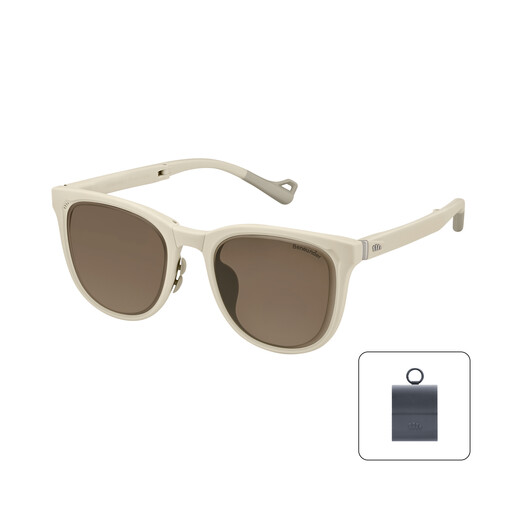
Why this product fits the profile: The Boston silhouette suits a classic everyday look. The frame is listed as a universal size F and, according to the product description, features adjustable arm positions and adjustable nose pads.
The product data lists UV400 protection, OAR anti-reflective coating, oleophobic and scratch-resistant coatings, as well as specific measurements. This makes the selection easier to judge than by design alone.
TR90 frame, foldable construction, 2.17-inch lens width and 0.83-inch bridge width according to product information.
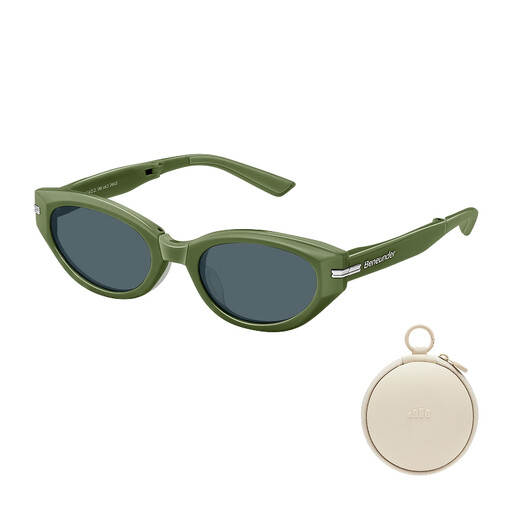
Why this product fits the profile: The cat-eye sunglasses combine a bolder shape with a foldable TR90 frame. Air-cushion nose pads and soft arm grips are designed, according to the product information, for a more slip-resistant fit.
The five-point elastic hinges and the stated frame measurements make the folding mechanism and fit more transparent than a blanket claim like “fits everyone”.
UV400 nylon lenses, at least 99.8% UV blocking according to product information, and OAR anti-reflective coating.
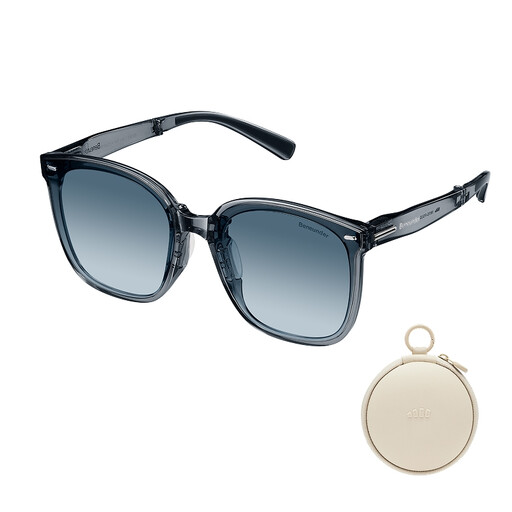
Why this product fits the profile: The oversized sunglasses are aimed at people who prefer a larger lens area and compact storage for travel, city walks or outdoor activities.
The product description states the folded size of 35 mm, the weight of 26 g, UV400 protection and an OAR coating. This means the key travel and usage criteria are clearly specified.
Tri-fold construction, 2.48-inch lens length and, according to product information, at least 99.9% UV blocking and at least 99.6% reflection reduction.
We’ve put together a complete, regularly updated list of products that fully meet these strict selection criteria and the safety regulations in force in the EU.
To keep a folding pair of sunglasses working well for as long as possible, follow a few simple tips:
UV400 refers to the stated protection against UV radiation up to 400 nanometres. When choosing, you should also consider the tint, light transmission, fit and, if applicable, anti-reflective coating. UV400 alone doesn’t describe the level of glare protection.
That depends on the tint, light conditions and product information. In bright daylight, a pair of sunglasses with glare protection can be practical. At night or in twilight, heavily tinted glasses should not be worn. For frequent driving, clear measurements, a stable fit and a tint that isn’t excessively dark are important selection criteria.
It’s impossible to give a fixed lifespan. It depends on the hinges, materials, how often you fold them, storage and care. A TR90 frame can be flexible, but the glasses should not be overstretched or carried loose in a bag.