
Lieferung heute & morgen

Qualitätsgarantie

Willkommens-Angebote freischalten: KOSTENLOSE Lieferung | Bis zu 80 % RABATT | Kostenlose 30-Tage-JoyPlus-Testphase
App herunterladen
UV400 sports glasses should sit securely and protect your eyes from ultraviolet radiation during long bike rides, mountain biking, motocross or snow sports. In practice, however, it is not enough to focus solely on the term “UV400”. Lens colour, fit, ventilation and intended use determine whether cycling glasses remain comfortable in changing weather conditions.
The Joybuy Product Recommendation Officer filters the most important product details and shows which features really matter when buying.
UV400 describes the range of protection the lenses provide against ultraviolet radiation up to a wavelength of 400 nanometres. On its own, however, this says nothing about how well a lens can withstand stones, branches or falls. For road cycling, MTB and motocross, it is also important to look for details about impact-resistant polycarbonate lenses or a comparable construction.
Sports glasses with UV400 protection are not intended for looking directly at the sun or at a solar eclipse. Damaged or heavily scratched lenses should be replaced.
A silver or coloured mirror coating can affect how you perceive light, but it does not replace choosing the right tint level. A darker lens can be useful on sunny stretches of road, while a lighter lens offers better visibility in woodland, at dusk or in snowfall.
If you frequently move between different light conditions, you could consider photochromic sports glasses or ski goggles with interchangeable lenses. The actual level of darkening depends on the model, UV intensity and surroundings.
Anti-fog sports glasses generally need effective ventilation and an intact coating. The inside of the lens should not be rubbed dry or treated with harsh cleaning products. Sweat, breath and high humidity cannot be completely ruled out by a coating alone.
Look for clearly stated UV400 sunglasses or product details confirming full UV protection. Polycarbonate lenses are common in cycling and MTB glasses because they can be designed to be lightweight and impact-resistant. Polarised cycling glasses also reduce reflections from wet roads, bodies of water or bright road surfaces. However, they are not automatically suitable for every situation: displays and certain vehicle instruments may be harder to read depending on their orientation.
A secure fit is achieved through adjustable nose pads, non-slip temple tips and a suitable frame width. A low weight can improve comfort on long rides. As a guide, product details for several models specify approximately 25.5 to 30 grams.
A large, curved lens expands your peripheral field of vision and can be advantageous at higher speeds. The key point is that the frame must not press against your cheeks and that the glasses remain stable when worn with a helmet and cycling or motorcycle clothing.
Air channels between the lens and frame help remove warm, moist air. A motocross goggle may also feature a nose guard, foam padding and an adjustable strap. If you wear glasses, look for an OTG model. “Over The Glasses” means that the protective goggles can be worn over prescription glasses. Before buying, compare the measurements of your own glasses with the model’s internal dimensions.
The following recommendations are based on the published product details for materials, lens technology, weight and intended use. They are assigned to different everyday situations and do not represent a general ranking.
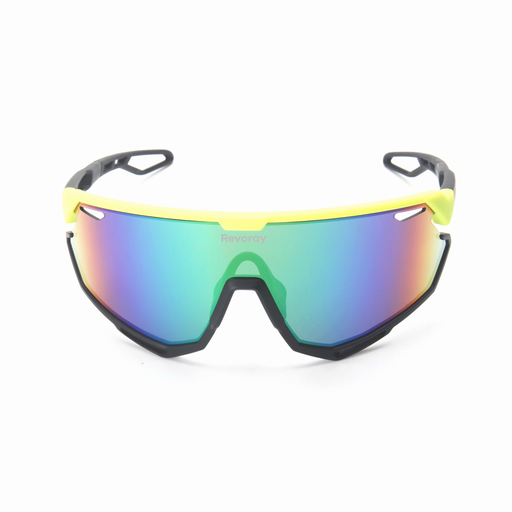
Why this product suits this profile: These cycling glasses are designed for road cycling, mountain biking and other outdoor activities. They weigh approximately 30 g, while the TR90 frame and one-piece PC lens provide a straightforward basic setup.
The product details specify UV400 protection, non-slip elements and an impact-resistant PC lens. This means the key buying criteria are not described solely by the lens colour.
TR90 frame, one-piece field of vision and UV400 specification; according to the product details, a cleaning cloth and storage case are also included.
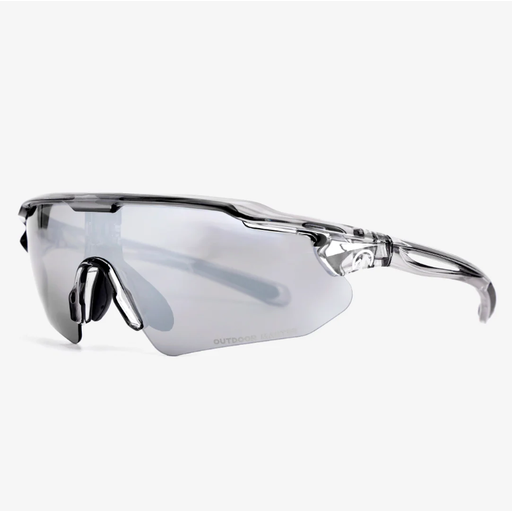
Why this product suits this profile: This model combines photochromic and polarised PC lenses. It is designed for cyclists who move between sunny stretches, shade and changing cloud cover.
Rather than simply using a dark lens, the product description specifies automatic tint adjustment as well as polarisation. The stated adjustment range is from category 0 to 3.
TR90 frame, adjustable nose pads, UV400 specification and a weight of 26 to 29 g according to the product details.
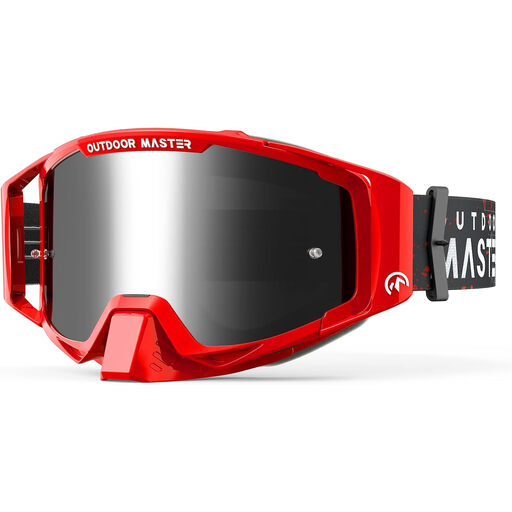
Why this product suits this profile: These motocross goggles are intended for dirt biking, ATV and off-road riding. The OTG design is also suitable for glasses wearers who need protective goggles to fit over prescription glasses.
The specifications explicitly state OTG compatibility, ventilation and an anti-fog coating. An adjustable strap helps keep the goggles secure over a helmet or prescription glasses.
PP frame, three-layer foam padding, nose guard and, according to the product details, UV protection, scratch resistance and impact resistance.
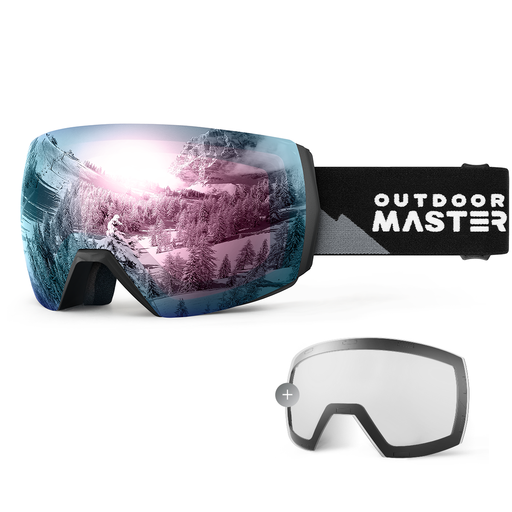
Why this product suits this profile: These ski goggles come with a grey lens, a Revo Pink replacement lens and an OTG design. This makes them appealing to skiers and snowboarders who want to cover different light conditions.
The set is not limited to a single tint. A magnetic interchangeable system and ventilation help adapt to changing visibility and moisture levels.
Toric lens, magnetic lens-changing system, three-layer anti-fog foam and 100% UV protection according to the product details.
Lifespan depends greatly on use, cleaning and storage. For consistently clear vision, the following steps are recommended:
We have put together a complete, regularly updated list of products that fully meet these strict selection criteria and the safety regulations applicable in the EU.
UV400 describes protection against ultraviolet radiation up to 400 nanometres. For cycling, you should also consider a suitable tint, a secure fit and, ideally, impact-resistant lenses. Protective goggles for motocross or ATV have different requirements from lightweight cycling glasses for road use.
It depends on how you use them. Polarised lenses can reduce reflections from bright or wet surfaces. Photochromic lenses change their tint depending on UV exposure and are suitable for changing light conditions. If you frequently move between very different conditions, you can choose a model with combined technology or an interchangeable lens system.
A good fit, sufficient ventilation and a correctly positioned helmet help prevent the airflow from being blocked. The inside of the lens should not be touched with your fingers or cleaned dry. For ski and motocross models, an anti-fog coating, ventilation and foam padding are particularly important product features.