
Lieferung heute & morgen

Qualitätsgarantie

Willkommens-Angebote freischalten: KOSTENLOSE Lieferung | Bis zu 80 % RABATT | Kostenlose 30-Tage-JoyPlus-Testphase
App herunterladen
A pair of UV400 sports sunglasses should stay securely in place in changing weather, on long bike rides and during fast descents. At the same time, many people want a lightweight model that's also suitable for travelling, going for walks or driving. There's a huge selection available, but product names and marketing claims don't always make it easy to compare them.
If you only focus on a dark tint or a sporty design, you might overlook important details. Key factors include the actual UV protection, the fit, the lens material and your intended use.
A heavily tinted lens doesn't automatically protect against ultraviolet radiation. That's why you should look for the UV400 label and clear product information. UV400 describes protection up to a wavelength of 400 nanometres. When buying, you should also look for information on the CE marking, the manufacturer, and the responsible person in the EU.
Polarised sunglasses can reduce reflections from wet roads, bodies of water or bright road surfaces. This can make viewing certain surfaces more comfortable when cycling or playing golf. However, polarisation can be less practical for reading digital displays or viewing some in-car screens. Therefore, you should check whether the glasses are actually a good fit for your daily life.
Photochromic sunglasses change their tint depending on the level of UV exposure. This effect can be limited behind a windscreen, as the glass in vehicles filters out some UV radiation. If you're looking for sunglasses for driving, you shouldn't rely solely on the photochromic feature.
Besides UV400, light transmission, often indicated as the VLT value, is also relevant. A low VLT value means that less visible light passes through the lens. A darker tint can be suitable for sunny days, while a lighter lens may be more practical in overcast weather or when passing through wooded areas.
Photochromic lenses are a good option for changing light conditions. Models with interchangeable lenses offer another solution: a dark lens can be used in the sun, and a clear replacement lens in diffused light. This is particularly useful for cyclists who ride at different times of the day.
A lightweight pair of TR90 sunglasses has a thermoplastic frame, often described in product details as flexible and dimensionally stable. However, weight alone doesn't determine comfort. You should also check:
Sports models often weigh around 26 to 30 grams. Impact-resistant sports glasses with polycarbonate lenses can be a good choice for cycling and outdoor activities. However, they are not automatically approved for industrial work, grinding or other activities with a high risk of impact.
Good cycling glasses shouldn't slip easily when you're getting on and off your bike, when you're sweating, or on uneven paths. Adjustable nose pads and flexible arms help you get the right fit. For travelling and everyday use, foldable sunglasses are a great option because they can be stored compactly.
For one-size-fits-all models, pay attention to the specified dimensions. A frame width of around 140 to 147 millimetres won't fit every face equally well. Product images can be misleading when it comes to judging the actual size.
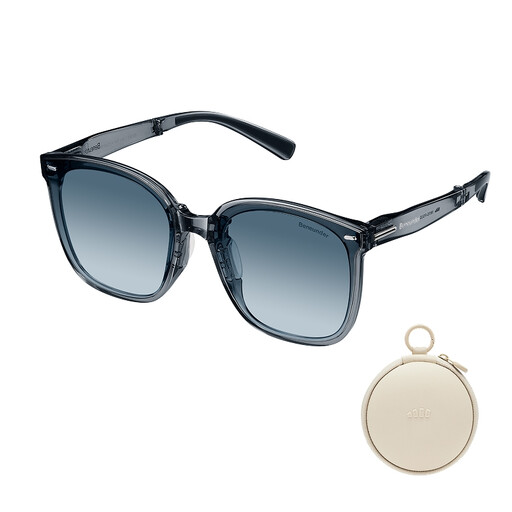
Why this product is a good match: These foldable sunglasses are suitable for everyday use, travelling and occasional outdoor activities. According to the product details, they weigh 26 g and can be folded down to a thickness of about 35 mm.
The UV400 label and the details about the anti-reflective coating are more specific than a purely visual marketing claim. The folding design makes them easy to store in your luggage.
TR90 frame, nylon lenses with UV400 protection, compact tri-fold design and low weight.
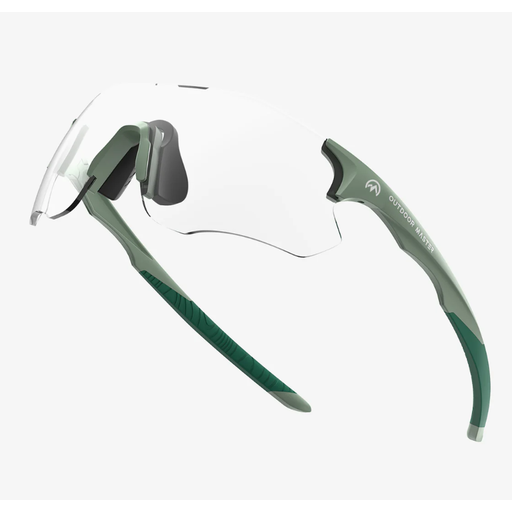
Why this product is a good match: The photochromic HD lenses are ideal for cyclists, runners and outdoor enthusiasts who move between sun and shade. According to the product details, the tint ranges from Category 0 to Category 3.
The specified tint range makes the feature easier to understand. When in a vehicle, you should bear in mind that the lenses' ability to adapt will be limited behind the windscreen.
TR90 memory frame, UV400 protection, impact-resistant HD lenses and adjustable nose pads.
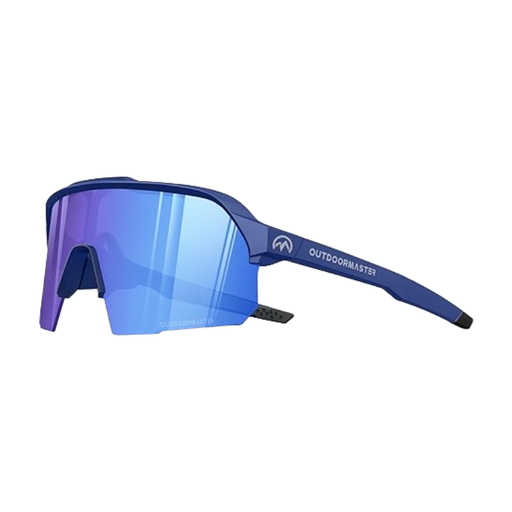
Why this product is a good match: The combination of polarised lenses and a clear replacement lens is aimed at users who want to cover different light conditions when cycling, golfing or sailing.
The replacement lens reduces your reliance on a single tint. Before buying, you should check if the lens-changing mechanism suits your needs.
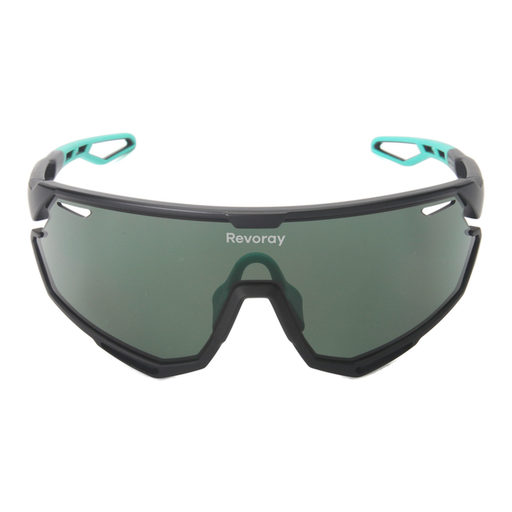
Why this product is a good match: The one-piece PC lens, anti-slip nose bridge and aerodynamic design are geared towards road cycling and mountain biking.
The details on material, weight and fit are more specific than vague claims of "professional quality". Nevertheless, the glasses are not intended for industrial impact hazards.
Approx. 30 g weight, TR90 frame, one-piece PC lens, UV400 rating and anti-slip elements.
Even a robust pair of cycling glasses needs proper care. First, rinse off any dust with clean water, then use a soft microfibre cloth. Kitchen roll, rough fabrics and harsh cleaning agents can scratch or damage the coatings.
Store the glasses in a case and don't put them down with the lenses facing downwards. Scratches can impair your vision and are a reason to replace the glasses. It's not possible to give a general lifespan, as it is affected by factors like UV exposure, sweat, folding and how they are cared for.
We have put together a complete, continuously updated list of products that fully meet these strict selection criteria and the safety regulations applicable in the EU.
UV400 indicates the specified protection up to 400 nanometres. You should also check the fit, coverage, lens quality and product labelling. For activities with specific impact risks, approved safety glasses are required.
Photochromic sunglasses can adapt their tint to the level of UV exposure. Alternatively, sunglasses with interchangeable lenses allow for manual adjustment. When driving, the photochromic reaction can be limited behind the windscreen.
That depends on the tint, field of vision and the permitted use of the respective category. Very dark or highly reflective lenses are not suitable for all driving conditions. Check the product details and choose a pair that provides adequate vision in changing light when you're driving.