
Lieferung heute & morgen

Qualitätsgarantie

Willkommens-Angebote freischalten: KOSTENLOSE Lieferung | Bis zu 80 % RABATT | Kostenlose 30-Tage-JoyPlus-Testphase
App herunterladen
Whether it's the seasonal switch from winter to summer clothes, storing bulky duvets, or packing for a trip – limited storage space is a common problem. Wardrobes are overflowing and suitcases can barely close. Vacuum bags offer a practical solution here by significantly reducing the volume of textiles through air removal.
This article serves as a guide. It explains the key features of different types of vacuum bags and presents a selection of models for various applications to help you make an informed purchasing decision.
Choosing the right model depends on your specific needs. Three criteria are particularly important: the material and seal, the method of creating the vacuum, and the shape and size of the bags.
The durability and airtightness of a vacuum bag are largely determined by its material. A proven material combination is Polyamide (PA) and Polyethylene (PE). This multi-layer structure offers high tear resistance and reliably protects the contents from moisture, dust, and odours. An equally important aspect is the seal. A double-zip closure ensures a secure seal and prevents air from re-entering after the vacuuming process. Some models feature colour-changing zips that visually indicate whether the bag is properly sealed.
There are several methods for removing the air from the bags:
The shape of the bag should suit the storage location and the contents:
Here you will find a collection of different vacuum bags designed for various requirements and use cases.
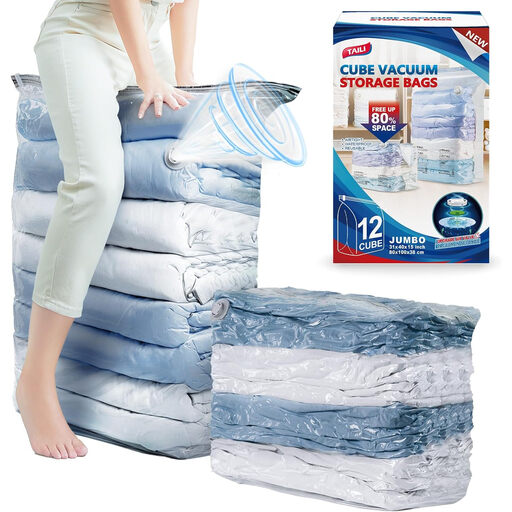
Why It Stands Out This set is distinguished by its large capacity and cubic shape. The bags stand on their own, making it easier to fill them with bulky textiles. According to the manufacturer, one cube bag replaces up to four conventional flat vacuum bags.
Advantages
Who It's For For households that want to store large quantities of seasonal bedding, blankets, or winter clothing in a space-saving manner in closets, the basement, or the attic.
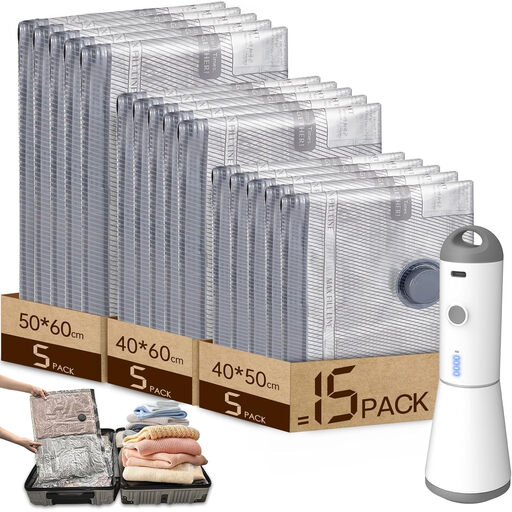
Why It Stands Out This set includes a cordless, battery-powered vacuum pump that completes the compression process in about 30 seconds. This makes the system independent of a vacuum cleaner and ideal for travel.
Advantages
Who It's For For travellers and people looking for a quick and hassle-free solution without a vacuum cleaner. Ideal for packing suitcases, moving, or organising vacuum bags for clothes.
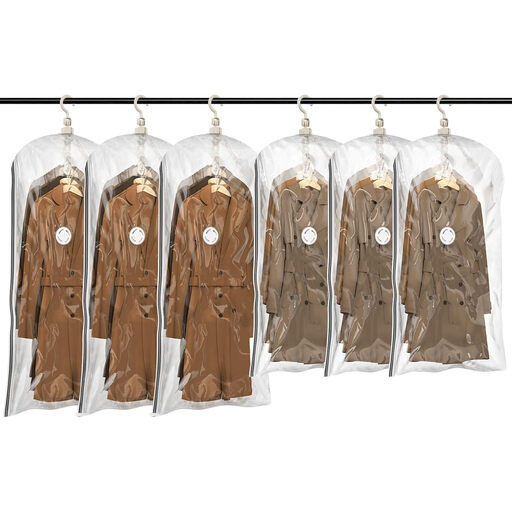
Why It Stands Out These hanging vacuum bags are specially designed for vertical storage in a wardrobe. They feature an integrated hook that can hold up to five garments before the air is extracted.
Advantages
Who It's For For individuals who want to store long garments like coats, suits, jackets, or dresses directly in the wardrobe in a wrinkle-free and space-saving way.
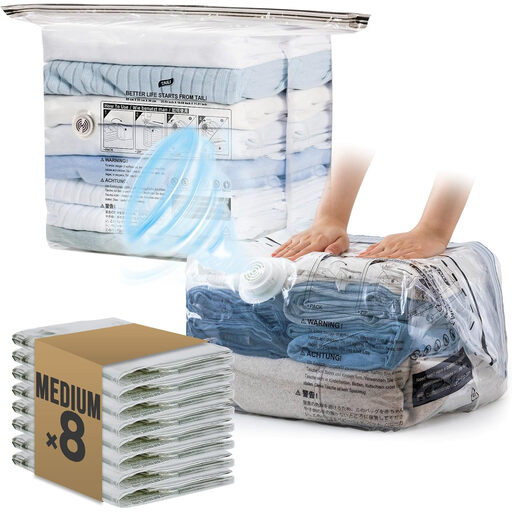
Why It Stands Out These compression bags require neither a pump nor a vacuum cleaner. Thanks to a patented valve, the air can be easily removed by manual pressing. Their dimensions are tailored to the size of carry-on suitcases.
Advantages
Who It's For Ideal as vacuum bags for travel, for backpackers, or anyone looking for a simple, tool-free solution to compress clothing in their luggage.
If the models presented here don't exactly meet your requirements or if you are looking for other space-saving solutions, you can find more products in our category.
Discover our selection of Teddy Storage Bag to find more options for your home.
The length of time a vacuum bag remains airtight depends on the quality of the material, the valve, and the zip seal. High-quality bags made of PA+PE material with a tight double-zip closure can hold the vacuum for several months, which is usually sufficient for seasonal storage. It is recommended to check the condition of the bags every few months.
Most vacuum bags are equipped with universal valves that fit the round nozzles of the most common household vacuum cleaners. Problems can arise with vacuums that have special nozzle shapes (e.g., triangular or oval) or with some cordless models that have lower suction power. When in doubt, check the manufacturer's compatibility information.
When used correctly, vacuum bags do not damage most textiles. However, delicate materials such as down or feathers should not be compressed too much, as this can affect their loft in the long term. It is advisable not to compress the bag 100%, but to leave about 20% of the volume. Leather and fur clothing should not be stored in vacuum bags, as these materials need to breathe.