
Lieferung heute & morgen

Qualitätsgarantie

Willkommens-Angebote freischalten: KOSTENLOSE Lieferung | Bis zu 80 % RABATT | Kostenlose 30-Tage-JoyPlus-Testphase
App herunterladen
Limited storage space is a common problem, whether in the wardrobe, the basement, or while travelling. Seasonal clothing, bulky duvets, and unused pillows take up valuable room. Vacuum bags are an efficient method for space-saving clothes storage. They can significantly reduce the volume of textiles while protecting the contents from dust, moisture, and odours.
This guide is designed to help you understand the different types of vacuum bags and make an informed decision that meets your specific needs. We will present objective criteria and a selection of models for various use cases.
Choosing the right product depends on several factors. To find the perfect solution, you should consider the material, size, and the method of air removal.
The durability and seal of a vacuum bag are largely determined by its material. A common and robust combination is Polyamide (PA) and Polyethylene (PE). This multi-layer structure offers high tear resistance and reliably protects the contents. Look for a double zipper (Double-Zip Seal) that ensures an airtight seal. Some models feature colour-changing zippers that visually indicate whether the bag is correctly sealed.
Vacuum bags are available in various formats optimised for specific purposes:
Air can be removed from the bag in several ways. The choice depends on the tools you have available and where you plan to use the bags.
Based on the criteria mentioned, we have compiled a selection of products for different needs.
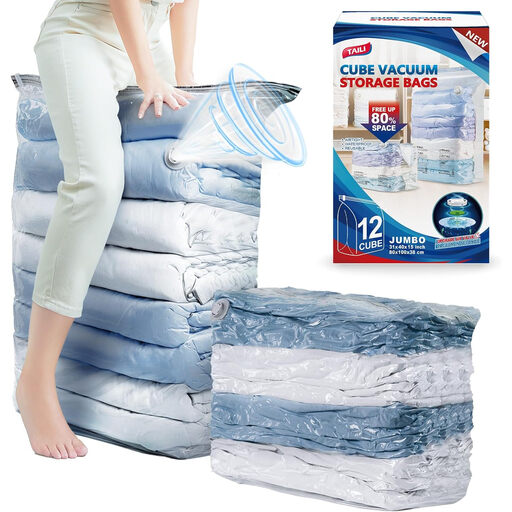
Why it stands out: The cubic design with a stable base maximises storage capacity and makes filling and stacking easier. A single bag can hold the equivalent of four conventional flat bags.
Advantages:
Who it's for: Individuals who need to store very large and bulky textiles like duvets, pillows, and thick winter blankets, while optimising space in wardrobes, attics, or basements.
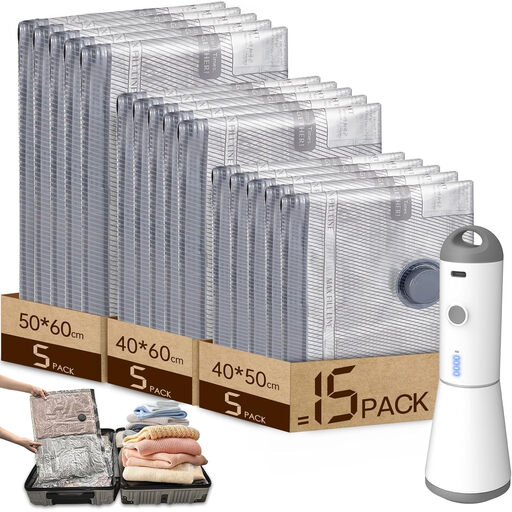
Why it stands out: This set includes a cordless, rechargeable vacuum pump that removes the air in about 30 seconds—without needing a vacuum cleaner.
Advantages:
Who it's for: Travellers and anyone looking for a flexible, mobile solution. Ideal for organising clothes in a suitcase or for storing textiles in places without a vacuum cleaner outlet.

Why it stands out: The integrated hooks allow you to hang suits, coats, or dresses directly on the clothes rail in their compressed state, potentially quadrupling your wardrobe space.
Advantages:
Who it's for: People who want to store high-quality or seasonal hanging clothes like coats, suits, and dresses in a space-saving and protected manner in their wardrobe.
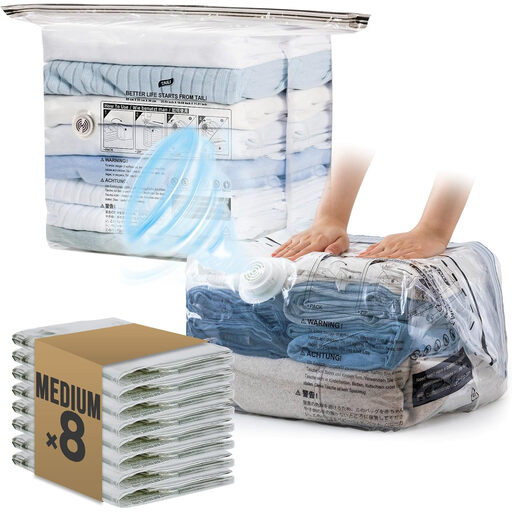
Why it stands out: These bags require no pump or vacuum cleaner. Thanks to the patented ESY SHRINK air valve, the air can be removed simply by manual pressing.
Advantages:
Who it's for: Travellers, especially backpackers or those travelling with only carry-on luggage, who want to maximally reduce the volume of their clothing.
The products featured cover common use cases. However, the market offers an even greater variety of sizes, sets, and special formats. If you are looking for more alternatives or specific solutions, you can find a wider selection in our category.
Discover more Fabric Bag Organisers and find the perfect solution for your needs.
1. How long do vacuum bags hold the air? The length of time a vacuum bag remains airtight depends on the quality of the material, the sealing mechanism, and correct usage. High-quality bags made of PA+PE with a double zipper can hold a vacuum for several months, which is generally sufficient for seasonal storage.
2. Are vacuum bags reusable? Yes, most vacuum bags available on the market are designed for multiple uses. To maximise their lifespan, they should be handled carefully, not overfilled, and protected from sharp objects.
3. Which textiles should not be stored in vacuum bags? Textiles made from delicate natural fibres such as down, feathers, or high-quality wool should only be vacuum-sealed with caution. Excessive compression can permanently damage the fibre structure and reduce its volume after unpacking. Leather and fur are also unsuitable for vacuum storage, as the material needs to breathe.