
Lieferung heute & morgen

Qualitätsgarantie

Willkommens-Angebote freischalten: KOSTENLOSE Lieferung | Bis zu 80 % RABATT | Kostenlose 30-Tage-JoyPlus-Testphase
App herunterladen
When winter coats, duvets or bed linen are taking up all the space in your wardrobe, vacuum bags for clothes with a pump offer a space-saving solution. The air is removed from the bag, compressing the textiles so they can then be stored under the bed, in the wardrobe or in your suitcase.
However, the systems vary considerably. Some bags are better suited to travel, while others are designed for seasonal storage. If you only look at the stated volume reduction, you can easily overlook important details relating to the closure, material and pump connection.
A simple zip can be convenient when filling the bag, but it will not necessarily maintain the vacuum over a long period. Particularly when bags are heavily filled, the seams can become distorted or the closure may be placed under strain.
Look for a double zip closure and a clearly described valve design. With reusable vacuum bags, it is also important that the closure can be opened and closed repeatedly without damaging the sealing lip.
The external dimensions of a bag do not, on their own, indicate how much clothing it can hold. A 50 × 60 cm bag may be suitable for jumpers and trousers, while long coats or dresses may require a dedicated garment bag.
Before buying, check:
Overfilled bags often cannot be sealed evenly. Sharp-edged zips, belt buckles or clothes hangers can also damage the material.
A sealed bag can largely keep out dust and ambient air. However, this will not protect textiles if clothing is still damp or not completely dry when stored. All items should be clean and dry before packing. For longer-term storage, a dry, temperature-controlled location is recommended.
Product descriptions may state that a product protects against moisture, dust or bacteria. Such claims relate to the design of the individual product and should not be interpreted as a guarantee of medical or hygienic effectiveness.
For frequent use, material combinations made from polyamide and polyethylene, or comparable films explicitly described as tear-resistant, are a sensible choice. The material should mould itself around the textiles during vacuuming without quickly tearing at the edges.
For storing clothes without vacuum compression, PEVA or vinyl garment covers may also be suitable. These are generally more transparent and allow you to check the contents at a glance, but they do not necessarily compress what is inside.
A cordless vacuum pump is particularly convenient when there is no socket nearby or when the bag is being used while travelling. Key points include:
According to the product description, the HOMOH sets include a cordless pump. The stated vacuuming time is approximately 30 seconds. The actual time depends on factors including how full the bag is, its size and the position of the valve.
Smaller sizes such as 40 × 50 cm are practical for clothes in a suitcase. Medium-sized 40 × 60 cm bags are suitable for several jumpers, pairs of trousers or smaller piles of textiles. Larger 50 × 60 cm versions provide more room for jackets, bed linen or seasonal clothing.
Long dresses, suits and coats should not be forced into a small vacuum bag. Airtight garment bags in suitable lengths or sturdy garment covers are more appropriate.
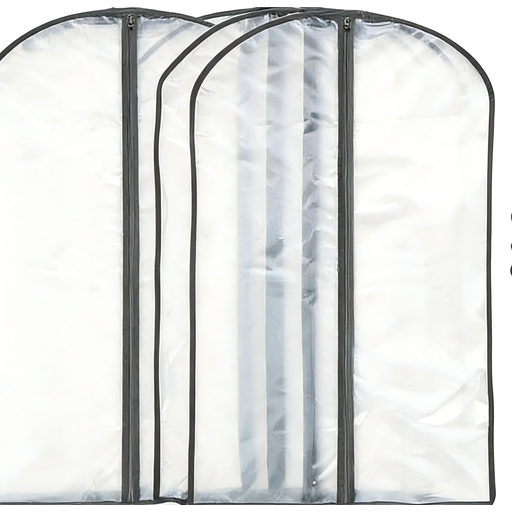
Why this product suits this profile: The three transparent PEVA garment covers are ideal for people who want to keep clothes visible and protected from dust in the wardrobe or while travelling, without needing a vacuum pump.
The transparent design makes it easier to check the contents. The full-length zip can be used without a valve or any additional equipment.
PEVA material, a transparent surface and three bags for clothes, luggage or seasonal items.
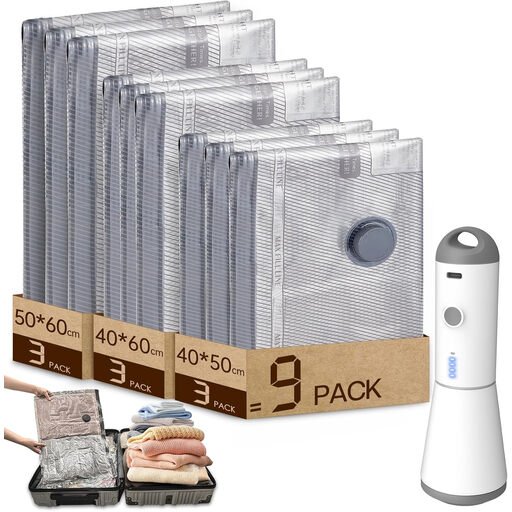
Why this product suits this profile: The set combines several sizes with a cordless pump, making it suitable for households that want to compress and reuse clothes regularly.
The stated combination of a double zip closure and specialised valve addresses the common problem of bags that do not seal properly.
Nine bags in three sizes, polyamide and polyethylene material, plus a supplied lithium-polymer battery according to the product information.
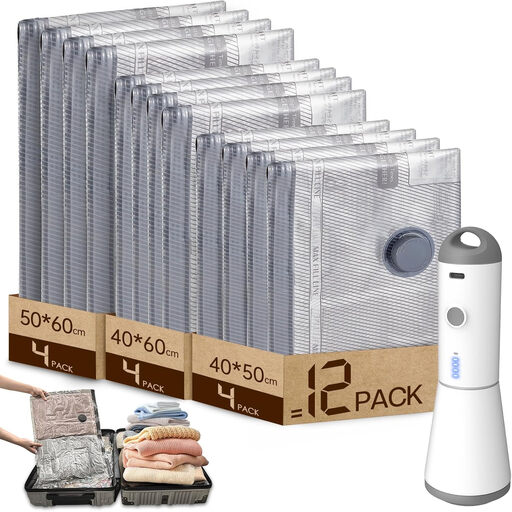
Why this product suits this profile: Families and frequent users receive twelve bags in small, medium and large sizes for seasonal clothing, bed linen and organising luggage.
The three sizes reduce the risk of storing small quantities of textiles in oversized bags. The double zip closure also helps limit unnecessary strain when sealing the bag.
Twelve reusable bags, a cordless pump and sizes from 40 × 50 cm to 50 × 60 cm according to the product description.
For clothes made from delicate fibres, the compression pressure should not be increased unnecessarily. Depending on the care instructions, leather, down and heavily textured garments may not be suitable for long-term vacuum storage. The care instructions for the individual textile always take precedence.
We have compiled a complete, regularly updated list of products that fully meet these strict selection criteria and the safety regulations applicable in the EU.
The clothes are placed in the bag and the zip closure is sealed. The pump is then attached to the valve. It removes the air from inside, allowing the bag to mould itself around the textiles. You should then check that the closure and valve are properly sealed.
Their lifespan depends on the material, how they are used and how they are stored. Frequent overfilling, sharp objects and failing to close the bag properly can cause damage. Store the bag clean and dry, without sharp folds. Before each reuse, check the film, zip closure and valve for tears or deformation.
With a rechargeable pump, the main requirement is recharging it. The exact operating time and charging time vary by product and should be checked in the technical specifications before buying. According to the product description, the HOMOH sets mentioned include a battery. Traditional garment covers without vacuum technology, on the other hand, require no power, but they do not reduce the volume in the same way.