
Lieferung heute & morgen

Qualitätsgarantie

Willkommens-Angebote freischalten: KOSTENLOSE Lieferung | Bis zu 80 % RABATT | Kostenlose 30-Tage-JoyPlus-Testphase
App herunterladen
Choosing a new vacuum cleaner can quickly become overwhelming. Manufacturers advertise high wattages, futuristic designs, and a multitude of features. But not every innovation is a genuine improvement, and some marketing promises prove impractical in daily use. As your Joybuy Product Recommendation Officer, I'll help you identify the crucial features and avoid common purchasing traps, so you can find a device that truly fits your needs.
Before we dive into the important technical specifications, let's clear up three common misconceptions that often lead to the wrong purchasing decision.
To make an informed decision, you should focus on a few, but crucial, technical features. These determine the efficiency and longevity of your new household helper.
Suction power, measured in Pascals, is the most important indicator of cleaning performance. It specifies the strength of the vacuum pressure the device can generate.
A good filtration system is crucial, especially for households with children, pets, or allergy sufferers.
The choice of form factor depends on your living situation and primary cleaning tasks.
Here are some models that represent a considered choice for specific user profiles, based on their objective features.
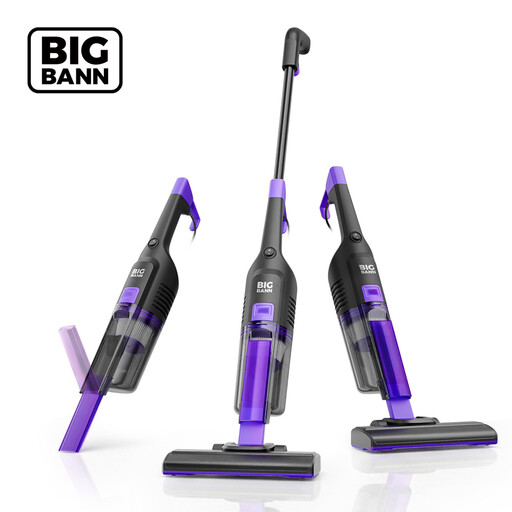
Why This Fits Their Persona: This corded model is a practical solution for smaller apartments or as a secondary device. It's flexible for use as a stick or handheld vacuum and is very lightweight at approx. 1.2 kg. Ideal for hard floors, stairs, and quick clean-ups.
Being corded, it eliminates the problem of limited battery runtime. The suction power of 18 kPa (according to the manufacturer) is a transparent specification and is perfectly adequate for its intended use on hard floors and for light dirt.
3-in-1 flexibility; upright parking function for space-saving storage; washable HEPA filter.
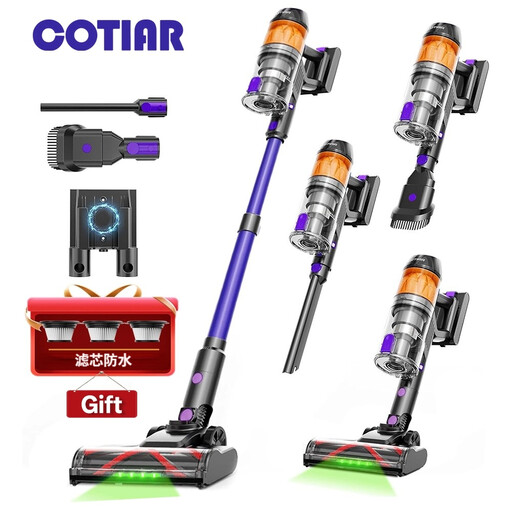
Why This Fits Their Persona: This model is specifically aimed at households with pets. The combination of high suction power, a HEPA filtration system, and a special brush design is engineered to effectively remove pet hair and allergens.
The device provides a clear specification for suction power (up to 50 kPa, according to the manufacturer) and features a multi-stage HEPA filtration system. The anti-tangle brush directly addresses the problem of tangled hair that occurs with many standard brushes.
Anti-tangle brush head; 180° lay-flat design for cleaning under furniture; LED light to spot dust.
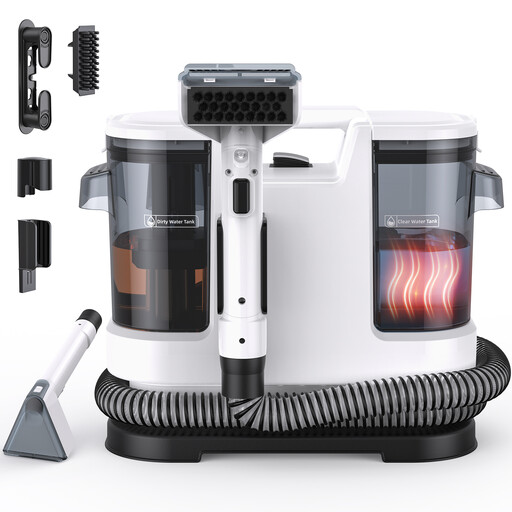
Why This Fits Their Persona: This device is not an all-purpose vacuum but a specialised upholstery cleaner and spot remover. It is ideal for targeted wet cleaning of sofas, car seats, carpet stains, and other textile surfaces where a normal vacuum is not enough.
It doesn't promise an all-in-one solution but focuses on a clearly defined task: wet cleaning. The combination of a hot water function (according to the manufacturer), brushes, and suction is designed for this niche and is not compared to a dry vacuum.
Combines water spray, brushing, and suction (15,000 Pa according to the manufacturer); large water tanks for longer cleaning sessions; long cord for excellent reach.
We have compiled a complete, up-to-date list of products that fully meet these strict selection criteria and German safety regulations.
1. How often should the HEPA filter in a vacuum cleaner be changed or cleaned? That depends on the frequency of use and the type of dirt. For washable filters, cleaning every 1-2 months is recommended. Ensure the filter is completely dry before reinserting it. Non-washable filters should be replaced according to the manufacturer's instructions, typically every 6-12 months, to ensure optimal filtration performance and suction power.
2. What is the difference between motor power (Watts) and suction power (Pascals)? Motor power in Watts (W) indicates how much electrical energy the motor consumes. It is not a direct indicator of cleaning performance. Suction power in Pascals (Pa) measures the vacuum pressure the cleaner generates. A higher Pa value generally means the device can more effectively lift dirt and dust from the floor. Therefore, you should primarily pay attention to the Pascal rating.
3. Are cordless vacuums now as powerful as corded models? Modern, high-quality cordless vacuums have made significant strides in recent years and often achieve suction power levels comparable to those of corded models. The main difference lies in the consistent availability of power. A corded model delivers maximum power continuously, whereas with a cordless vacuum, the power can diminish as the battery depletes, and the runtime in Turbo mode is limited.