
Lieferung heute & morgen

Qualitätsgarantie

Willkommens-Angebote freischalten: KOSTENLOSE Lieferung | Bis zu 80 % RABATT | Kostenlose 30-Tage-JoyPlus-Testphase
App herunterladen
A good vacuum flask is a simple everyday essential: it keeps your morning coffee hot for hours at the office, your iced tea refreshingly cool at the lake, and ensures a warm drink is always ready at a family gathering. But the market is flooded with models whose advertising claims often don't hold up in practice. A leaky seal in your bag or lukewarm coffee after just two hours are the frustrating consequences of a poor purchase.
As your Joybuy Product Recommendation Officer, I'm here to help you separate the wheat from the chaff. Instead of falling for marketing hype, we'll focus on the facts. Here are the most common pitfalls and what you should look for instead.
The 3 most common traps when buying a vacuum flask:
To avoid a bad purchase, you should check three core aspects that determine the longevity and functionality of your new insulated flask.
The heart of every vacuum flask is its vacuum-insulated inner container. The choice of material has a direct impact on taste, durability, and maintenance.
The seal is the most critical component when it comes to leak-proof performance and ease of use.
Insulation performance depends heavily on the volume and the quality of the vacuum insulation. As a rule, a larger flask will maintain temperature longer than a smaller one. To achieve the performance stated by the manufacturer, it's recommended to pre-heat or pre-cool the flask with hot or cold water before filling. For daily coffee needs in a home office, a 1L coffee carafe is often sufficient, while a more compact 0.5L to 0.75L insulated bottle is more practical for on the go.
Based on these objective criteria, we have selected a few models for different user profiles.
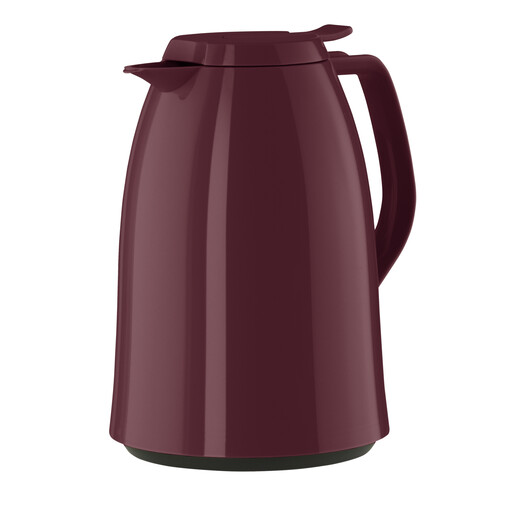
Why this model is a good fit: Ideal for use at home or in the office. The focus is on preserving taste and ease of handling for serving, not on extreme portability.
The glass liner avoids the pitfall of flavour distortion that can occur with some metal flasks. The Quick-Tip seal is optimised for drip-free pouring at the table, not for transport in a backpack.
Completely taste-neutral glass liner. Convenient one-handed operation for pouring. According to the manufacturer, it is 100% sealed when closed.
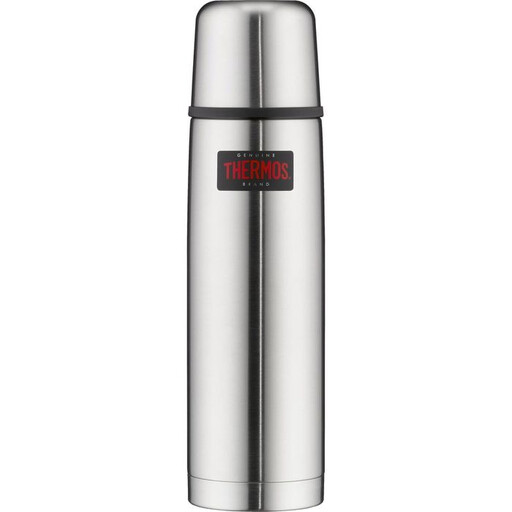
Why this model is a good fit: Designed for mobile use. The robust stainless steel construction and secure seal make it a reliable companion on the go.
The disassemblable automatic seal is specially designed for transport, avoiding the pitfall of a leaky lid. Its high insulation performance (up to 18h hot, according to the manufacturer) is due to high-quality vacuum technology.
Shatter- and impact-resistant stainless steel body. Disassemblable seal for easy cleaning. Includes a drinking cup.
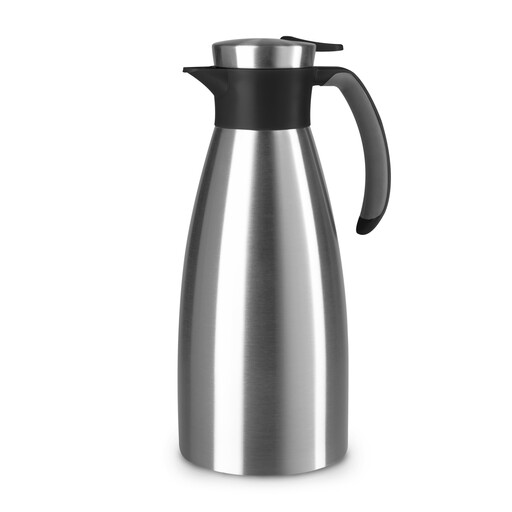
Why this model is a good fit: With a 1.5-litre capacity and a robust stainless steel body, this jug is ideal for supplying several people with hot drinks over an extended period.
The stainless steel inner container is unbreakable and therefore more durable than glass, which is an advantage in a hectic office environment or a family household. The soft-grip handle ensures secure handling at full weight.
Large capacity (approx. 12 cups). Double-walled stainless steel vacuum liner. Non-slip handle for secure pouring.
We have compiled a complete, up-to-date list of products that fully meet these strict selection criteria and all relevant safety regulations.
To remove stubborn coffee or tea residues and odours, fill the flask with hot water and add a spoonful of baking soda or a splash of concentrated vinegar. Let the mixture sit for a few hours (do not seal the lid) and then rinse it thoroughly. For mechanical cleaning, special bottle brushes are suitable. Avoid aggressive scouring agents to prevent damaging the inner surface.
The decision depends on the primary use case.
No. The pressure created by carbonation can damage the seals and lead to leaks. Only a few models are explicitly designed for this purpose. Always check the manufacturer's specifications before filling an insulated bottle with carbonated drinks. Bottles with a simple screw-top lid are often safer in this case than those with complex push-button mechanisms.