
Lieferung heute & morgen

Qualitätsgarantie

Willkommens-Angebote freischalten: KOSTENLOSE Lieferung | Bis zu 80 % RABATT | Kostenlose 30-Tage-JoyPlus-Testphase
App herunterladen
Double-walled glasses have become a staple in many homes. Not only do they look elegant, with beverages appearing to float inside, but they also offer functional benefits. However, the market is flooded with options, and not every glass delivers on its promise. Before you make a decision, it's crucial to understand the common pitfalls that can lead to disappointment and unnecessary expense.
This guide will help you separate the wheat from the chaff. We'll highlight the most common defects and explain the quality features that truly matter, so you can find the perfect double-walled glasses for your coffee, tea, or cold drinks.
At first glance, many thermo glasses look identical. The crucial differences, however, lie in the details—often invisible and only noticeable with use.
To avoid the issues mentioned above, you should check three key aspects before buying. These will help you make an informed choice.
The term borosilicate glass refers to a type of glass that is highly resistant to chemicals and, most importantly, sudden temperature changes, thanks to the addition of boron oxide. This makes it the ideal material for insulated glasses. However, pay attention to adequate wall thickness. A solid, well-made glass feels more premium and is less prone to breaking in daily use. Products declared as microwave-safe often indicate higher material quality.
The functionality of a glass depends heavily on its size and shape. Consider what you will primarily use the glasses for:
A set of 2 is often a good starting point to test the glasses in your daily routine.
If possible, inspect the seal on the base of the glass. It should be flush and cleanly finished. Manufacturers who explicitly label their glasses as dishwasher-safe generally have more confidence in the durability of their seal. Handmade, mouth-blown glasses can be a sign of high craftsmanship, but they are also subject to natural variations in shape and thickness.
Instead of making a one-size-fits-all recommendation, we have curated products for different needs and preferences.
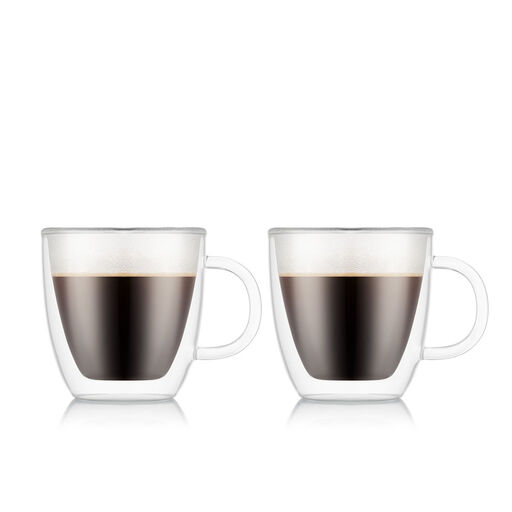
Why it's a good fit: Ideal for those who want to enjoy their espresso or a small coffee with style and without fuss. The minimalist design and compact size are perfect for coffee machines with limited cup clearance.
Bodum is an established brand in coffee-ware, which suggests reliable quality control for the seal, minimising the risk of water ingress.
Optimal size for espresso and a proven, functional design. The insulating effect keeps the small shot at the right temperature for longer.
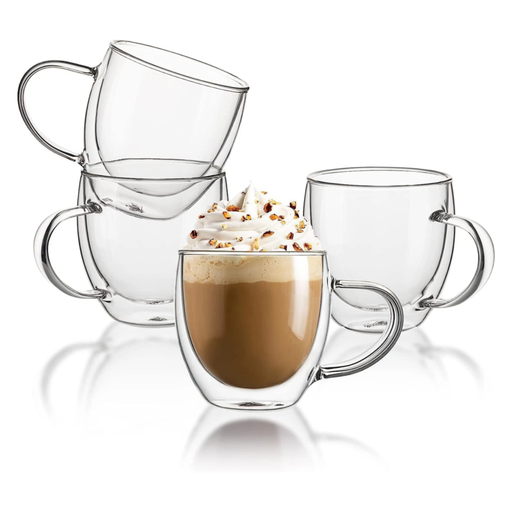
Why it's a good fit: For anyone looking for a versatile glass for their daily coffee, cappuccino, or tea. The handle provides comfort and safety, especially with hot beverages.
The design with a handle directly addresses the issue of uncomfortable handling with hot drinks. The dishwasher-safe claim suggests robust construction.
The combination of a 250ml capacity and an ergonomic handle makes this glass a practical all-rounder for many hot drinks.
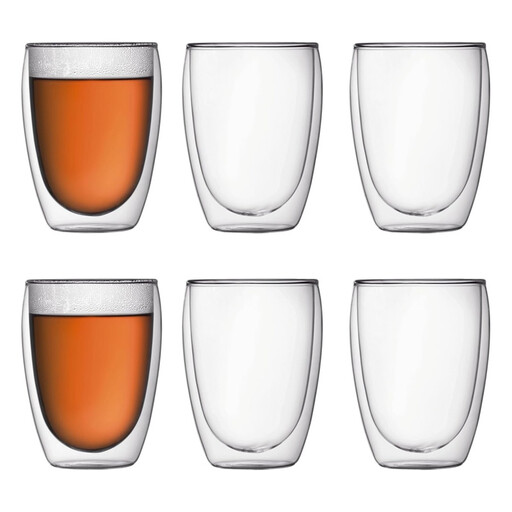
Why it's a good fit: Perfect for lovers of large, layered coffee drinks. The tall, slender shape and generous 350ml volume are ideal for showcasing the appearance of a latte macchiato or iced coffee.
The design is specifically tailored for presenting layered drinks. The description as "mouth-blown" suggests artisanal production, which often involves greater care in material processing.
The large capacity and tall shape are optimal for latte macchiato and other large beverages. The clear design enhances the aesthetics of the contents.
We have compiled a complete, up-to-date list of products that fully meet these strict selection criteria and rigorous safety standards.
Whether a double-walled glass is dishwasher-safe depends on the manufacturer's specifications. The main risk is water entering the space between the walls through the seal at the base. Look for products explicitly marked as dishwasher-safe. To maximise their lifespan, hand washing is often the gentler alternative.
Condensation between the walls is a clear sign that the glass's seal is defective. This allows air and moisture to enter the insulating layer, compromising its function and appearance. This is typically a manufacturing defect or the result of damage.
Yes, the principle is based on sound physics. The layer of air between the two glass walls acts as an insulator. It significantly slows down the heat exchange between the hot beverage and the surrounding environment. As a result, the drink stays warm for considerably longer compared to a single-walled glass. The same effect keeps cold drinks cool for longer.