
Lieferung heute & morgen

Qualitätsgarantie

Willkommens-Angebote freischalten: KOSTENLOSE Lieferung | Bis zu 80 % RABATT | Kostenlose 30-Tage-JoyPlus-Testphase
App herunterladen
The idea of vacuuming and mopping in a single step is a tempting prospect for many households. A vacuum mop promises exactly that: significant time savings and clean floors with less effort. However, the market is filled with devices whose marketing promises don't always hold up in practice. Before you make a purchasing decision, it's crucial to know the common pitfalls and understand which technical features truly matter.
As your Joybuy Product Recommendation Officer, I'm here to help you separate fact from advertising hype. This guide focuses on the three most common problems that lead to disappointment with vacuum mops and shows you what to look for.
To avoid a bad purchase, you should focus on objective, technical parameters rather than marketing buzzwords. The following three aspects are central to the performance and user-friendliness of a vacuum mop.
For a cordless vacuum mop, the battery specifications are critical. Don't just look at the maximum runtime in minutes advertised by the manufacturer. More important are the battery capacity (in milliampere-hours, mAh) and the voltage (in volts, V). A higher capacity and voltage generally indicate longer and more consistent power delivery, even on higher suction settings. Check if the runtime is specified for different power modes to get a realistic estimate for your home.
The station's functionality is a key differentiator, especially for robot vacuums with a mopping function. Basic models only offer a charging function. High-end devices, often described as vacuum mops with an auto-empty dock, go much further. They not only empty the robot's dustbin but also clean the mopping pads. Features like hot water mop washing (e.g., at 70°C or higher) followed by hot air drying are crucial to prevent the growth of bacteria and odours and to truly minimise manual maintenance.
The design of the main brush determines how well the device handles different types of dirt and flooring. For households with pets, effective anti-tangle technology is essential to avoid constantly removing hair from the brush roll. Also, pay attention to the design of the cleaning head. Some models have special extendable side brushes or mops that enable cleaning right up to the baseboards, solving the problem of poor edge cleaning. Such devices are excellent as a comprehensive hard floor cleaner.
Instead of making a one-size-fits-all recommendation, we have identified models that are tailored to specific user profiles and purposefully avoid the pitfalls mentioned earlier.
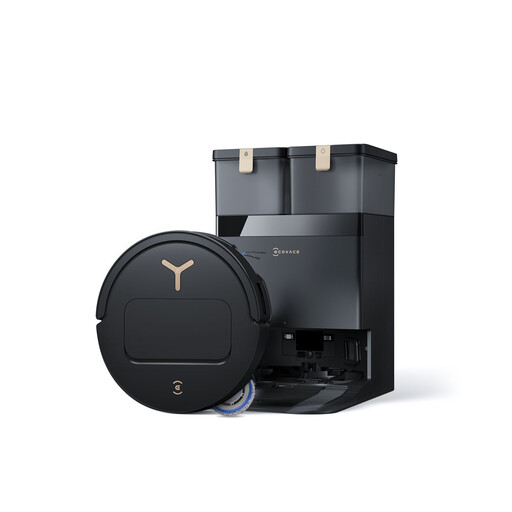
Why it's a match: Ideal for tech-savvy users who want maximum automation. The all-in-one station handles emptying, hot water mop washing, and drying, reducing daily maintenance to a minimum.
The adaptive edge cleaning (TruEdge 2.0) ensures cleanliness right to the edges. The OMNI station with hot water washing provides hygienic and thorough self-cleaning that goes beyond simple rinsing.
According to the manufacturer, it has a suction power of up to 25,000 Pa. The system automatically lifts the mopping pads on carpets (9 mm).
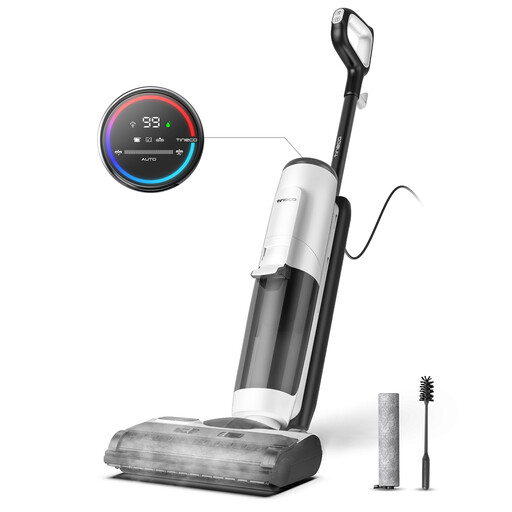
Why it's a match: This manually operated device is designed for users who need a powerful solution for targeted cleaning of sealed hard floors like tile, laminate, or vinyl. It is ideal for removing sticky and stubborn messes.
As a corded wet-dry vacuum, the problem of limited battery life is eliminated. Its design is focused on effective floor cleaning, not complex automation, allowing for precise edge cleaning through manual control.
Combines suction with a steam function that, according to the manufacturer, disinfects and loosens dried-on dirt. Features a self-cleaning function for the brush roll in its station.
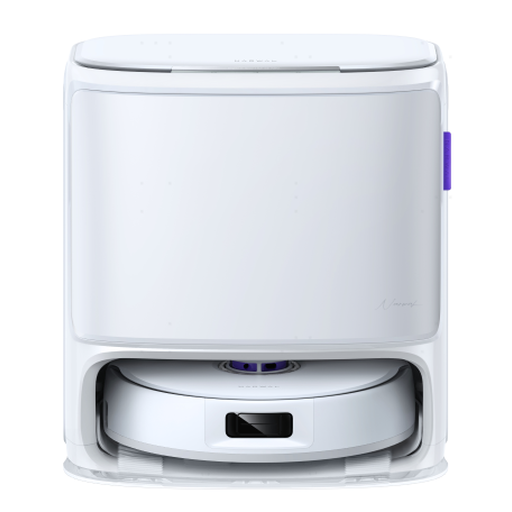
Why it's a match: This model is a great choice for pet owners looking for a vacuum mop for pet hair. Its high suction power and special brush system are designed to pick up hair, while its intelligent navigation keeps even complex homes tidy.
The "DualFlow Tangle-Free System" is designed to minimise hair tangles in the brushes. The mop automatically lifts 12 mm on carpets to prevent them from getting wet—a common problem with combo devices.
According to the manufacturer, it has a suction power of 15,000 Pa. The station washes the mop with adaptive hot water and can store dust for up to 120 days.
We have compiled a complete, up-to-date list of products that fully meet these strict selection criteria and local safety regulations.
The frequency depends heavily on the tank size and the area being cleaned. With manually operated wet-dry vacuums, the tanks (often under 1 litre) usually need to be emptied and refilled after each major cleaning session, or even during it. For robot vacuums with a mopping function and a fully automatic station, the tanks in the station are significantly larger (often 3-5 litres). Here, intervention is only necessary every few days to once a week, depending on usage frequency.
That depends on the model. Most upright vacuum mops are designed exclusively for hard floors. However, many modern robot vacuums with a mopping function have carpet detection. They automatically lift their mopping plates or pads when they drive onto a carpet to only vacuum it and not get it wet. Check for this feature in the product specifications if you have mixed flooring.
Even a fully automatic station is not completely maintenance-free. Regular tasks include emptying the dirty water tank and refilling the clean water tank in the station. Depending on the model, the dust bag in the station needs to be changed every few weeks or months. It is also recommended to manually check and clean the station's wash basin, the robot's sensors, and the brushes for residue at regular intervals to ensure consistently high performance.