
Lieferung heute & morgen

Qualitätsgarantie

Willkommens-Angebote freischalten: KOSTENLOSE Lieferung | Bis zu 80 % RABATT | Kostenlose 30-Tage-JoyPlus-Testphase
App herunterladen
The idea is tempting: vacuuming and mopping in a single step to save precious time on household chores. A vacuum mop promises just that. But the market is flooded with devices making bold advertising claims that often don't hold up in practice. Many buyers quickly discover that their new appliance leaves dirty edges along baseboards, the battery dies mid-clean, or the self-cleaning function is more style than substance.
As your Joybuy Product Recommendation Officer, I'm here to help you spot these common pitfalls. This guide focuses on the critical technical features that define a great hard floor cleaner, so you can make an informed decision and find a device that genuinely makes your daily life easier.
Before we dive into the key specifications, let's highlight the three most common issues that lead to disappointment and buyer's remorse.
To avoid the problems mentioned above, you should focus on three core technical features during your research, for example, when evaluating a vacuum mop test. These largely determine the performance and user convenience in daily use.
For a cordless vacuum mop, it's not just the advertised runtime in minutes that matters, but also the voltage (specified in Volts, V). A higher voltage, such as 25.9 V, often indicates more powerful motor performance. Always check the product specifications for the runtime under maximum load (e.g., "Runtime with powered brush (high speed)"). For larger living spaces or households with heavy cleaning needs (e.g., due to pets), a corded model can be the more reliable choice, as it offers consistent power without a time limit.
A fundamental difference from simple mops is the two-tank system, which is what makes a wet-dry vacuum truly hygienic.
The effectiveness of a vacuum mop depends directly on its brush roll. For households with pets, a vacuum mop for pet hair with a specially designed brush that picks up hair without immediately getting tangled is worth considering. Even more important, however, is the design of the cleaning head. Look for models that explicitly advertise "borderless" or "edge-to-edge" cleaning. This is the only way to ensure that the hard floor cleaner works effectively right up to baseboards and furniture edges.
Instead of making a one-size-fits-all recommendation, we have selected models tailored to specific user profiles and their requirements.
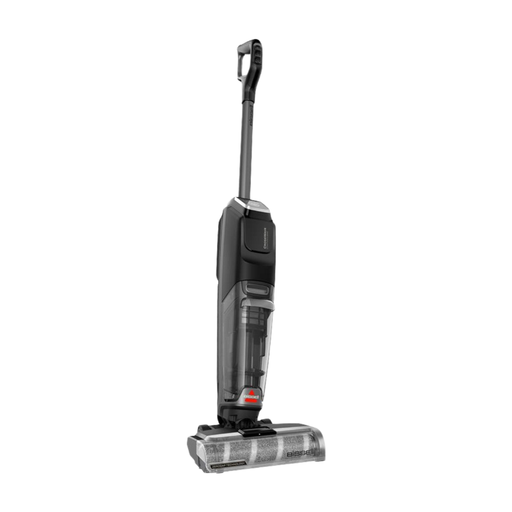
Why it's a good fit: This model is designed as a cordless all-rounder. With its battery life and two-tank system, it's ideal for quick, daily clean-ups of spills, food debris, and pet hair without being tied to a cord.
The product name "Edge Select" already indicates enhanced edge cleaning to minimise the typical dirt strips. The stated runtime of up to 18 minutes in high-power mode is a realistic figure for intensive cleaning.
The device combines vacuuming and mopping and is suitable for hard floors as well as area rugs. The two-tank system (0.63 L clean water, 0.44 L dirty water) ensures a hygienic clean.
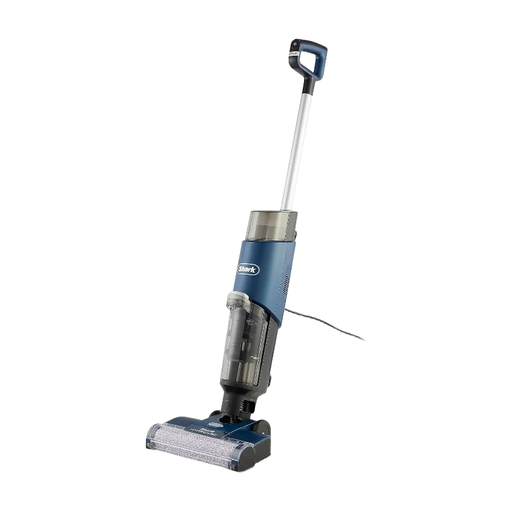
Why it's a good fit: For users who want to clean large areas without interruption, a corded model is the top choice. This device offers constant vacuuming and mopping power without you having to worry about a dead battery.
The cord completely eliminates the pitfall of unrealistic battery runtimes. The self-cleaning function, combined with an antimicrobial brush roll, aims to simplify maintenance and reduce odours.
As a 3-in-1 cleaner, this model vacuums, mops, and cleans itself simultaneously. The long cord (approx. 7.6 m) allows for a large operating radius. The special cleaning solution with an odour neutraliser is a plus for pet households.
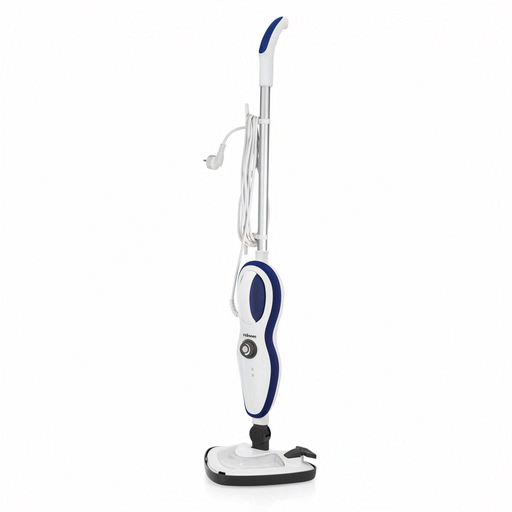
Why it's a good fit: For anyone who prefers a deep, chemical-free clean, a steam mop is an excellent alternative. It uses hot steam to dissolve dirt and, according to the manufacturer, eliminates 99% of bacteria—ideal for households with small children or allergy sufferers.
This device isn't a classic vacuum mop, but it bypasses the pitfalls of complex brush and tank maintenance. Cleaning is done with water only, there are no rotating parts to get tangled, and the water tank is easy to fill and clean.
The 2-in-1 function as an upright and handheld unit makes it extremely versatile. With 1500 W of power and 1 bar of steam pressure, it's ready to use quickly and can be used on floors, tiles, windows, and other surfaces.
We have compiled a complete, up-to-date list of products that fully meet these strict selection criteria and rigorous safety standards.
1. How often do I need to clean the filters and brush roll on a vacuum mop? For optimal performance and to prevent odours, it is recommended to empty and rinse the dirty water tank after each use. The brush roll and filters should be thoroughly cleaned according to the manufacturer's instructions—typically weekly with regular use—and allowed to dry completely before being reinserted. Using the self-cleaning function after each session can reduce this effort.
2. Can I use any type of cleaning solution in a vacuum mop? No. It is important to only use cleaning solutions recommended by the manufacturer or those explicitly designated for vacuum mops. Conventional floor cleaners can foam excessively and damage the device's electronics or interfere with its sensors. They can also leave streaks on the floor. For specific floor types, there are suitable care products, such as Emsal Bioprotect Parquet Care for sealed wood floors.
3. Is a vacuum mop suitable for delicate floors like unsealed wood or laminate? Caution is advised. Most vacuum mops are designed for sealed hard floors such as tile, vinyl, sealed parquet, and sealed laminate. On unsealed wood floors or laminate with non-waterproof seams, the moisture can lead to swelling damage. Always check the manufacturer's recommendations for both your flooring and the vacuum mop. When in doubt, test the device on an inconspicuous area or use special cleaners developed for such floors, like Emsal Floor Care for Cork & Laminate.