
Lieferung heute & morgen

Qualitätsgarantie

Willkommens-Angebote freischalten: KOSTENLOSE Lieferung | Bis zu 80 % RABATT | Kostenlose 30-Tage-JoyPlus-Testphase
App herunterladen
Proper food storage is crucial for preserving freshness, reducing waste, and maintaining flavour. Vacuum sealer bags promise an effective solution, but not every product delivers on its promise. Many buyers invest in bags that lose their seal after a short time, tear in the freezer, or are unsuitable for special applications like sous vide cooking. This guide will help you navigate the common pitfalls and find the right bags for your needs.
Before you make a purchasing decision, you should be aware of the three most common problems that lead to frustration and wasted money:
To avoid a bad purchase, focus on three objective criteria. These determine the functionality and durability of your bags.
The quality of the film is the most important feature. Pay attention to the following points:
The choice between rolls and pre-cut bags depends on your usage habits:
Not every bag is suitable for every purpose. While simple food storage bags or freezer bags are sufficient for short-term storage, special methods require specific properties:
Instead of making a one-size-fits-all recommendation, we have identified products tailored to specific use cases.
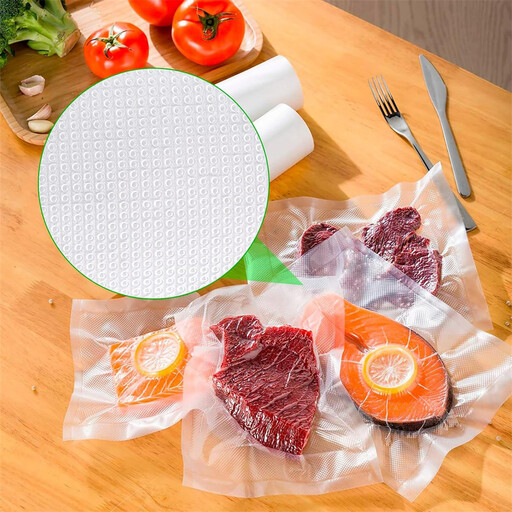
Why this product is a great fit: Ideal for people who prepare large quantities of meals weekly. The pre-cut size and large quantity allow for fast and systematic portioning of vegetables, meat, or entire dishes.
The bags are designed for a reliable seal with common household sealers, thus bypassing the problem of leaky seams, which is particularly frustrating when processing large batches.
The 50-piece pack offers great value for money and ensures that enough bags are always available for extensive cooking projects.
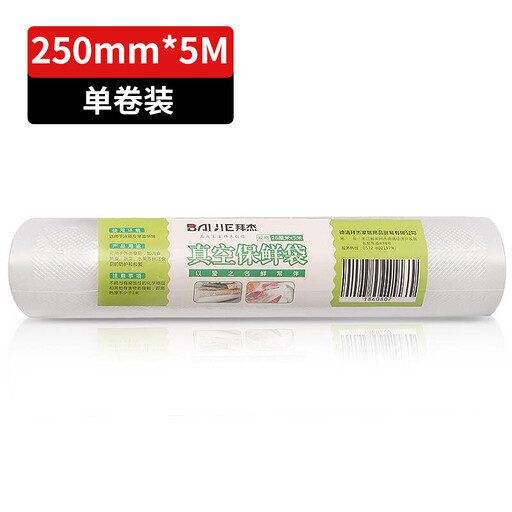
Why this product is a great fit: The roll format is indispensable for home cooks who love to experiment with sous vide. It allows for the creation of custom-fit bags for large roasts, salmon fillets, or ribs, which wouldn't be possible with standard sizes.
The material is designed for use with most vacuum sealing systems and is durable enough for the conditions of sous vide cooking. This prevents the bag from tearing or softening during the cooking process.
The 5-meter roll offers maximum flexibility in sizing and reduces waste, as the bag length can be individually adjusted.
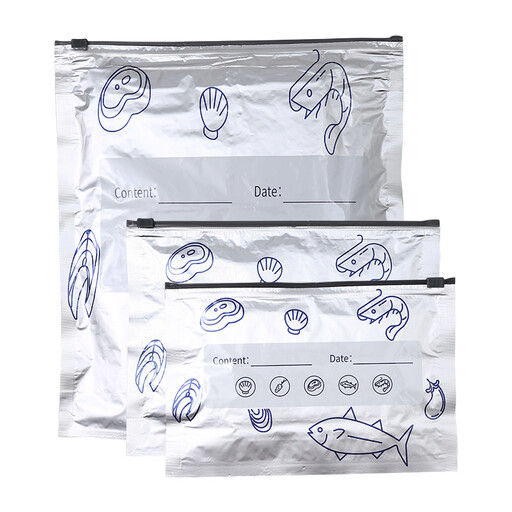
Why this product is a great fit: For anyone looking to reduce single-use plastic. These bags are washable and reusable. The set of three sizes and the stand-up bottom make them a versatile solution for organizing supplies in the pantry and refrigerator.
These bags bypass the need for a vacuum sealer and its associated compatibility issues. The robust zip closure and aluminum layer provide excellent protection against air and light.
Reusability reduces waste and long-term costs. The opaque aluminum foil effectively slows down the oxidation of food.
We have compiled a complete, up-to-date list of products that fully meet these strict selection criteria and safety standards.
Reusability depends on the material and the previous contents. Thick, high-quality bags used for dry foods like nuts or grains can often be reused after a thorough cleaning. To do this, cut off the old sealed edge and reseal the bag. For bags that contained raw meat, fish, or greasy foods, reuse is not recommended for hygiene reasons. A better alternative is products explicitly labeled as reusable food bags.
The decision is a trade-off between flexibility and convenience. Rolls allow you to customize the bag size, which saves material and is ideal for bulky foods. Pre-cut bags are ready to use and speed up the process if you regularly pack similar portion sizes.
For a true vacuum seal, where nearly all the air is removed, a vacuum sealer is essential. However, there are alternatives for simple food preservation: high-quality freezer bags with a zip closure or simple sandwich bags secured with sealing clips can be sufficient for many everyday purposes. The analogy is simple: just as you need the right vacuum cleaner bag for your machine to achieve optimal suction, you also need the right vacuum sealer bag for your sealer to protect food effectively.