
Lieferung heute & morgen

Qualitätsgarantie

Willkommens-Angebote freischalten: KOSTENLOSE Lieferung | Bis zu 80 % RABATT | Kostenlose 30-Tage-JoyPlus-Testphase
App herunterladen
Reducing food waste, preserving flavours, and extending the shelf life of your pantry staples—the benefits of a vacuum sealer are compelling. Yet, the market is flooded with devices whose performance claims often don't hold up to reality. Many buyers discover after a short time that their new vacuum sealer fails to reliably protect their food, leading to disappointment and unnecessary expense.
As your Joybuy Product Recommendation Officer, I'll help you identify the typical pitfalls. Instead of falling for marketing hype, we'll focus on the crucial features that define a functional and durable heat sealer.
The 3 Most Common Problems with Unsuitable Vacuum Sealers:
To avoid a bad buy, you should check three core technical aspects before making a decision. These determine whether a device will reliably perform its job.
Vacuum pressure, often specified in Bar or Kilopascal (kPa), is a measure of how much air the device can remove from the bag. A higher negative value means a stronger vacuum.
The quality of the seal is just as important as the vacuum itself. A wide and stable seal ensures the bag remains permanently airtight. Look for devices that create a seal at least 2-3 mm wide. Some models even offer a double seal for extra security, which is particularly beneficial for foods with liquid content or for freezing.
Foods have different consistencies. A good vacuum sealer should be able to accommodate this.
Here is a selection of devices tailored to specific user profiles, all of which meet the criteria mentioned above.
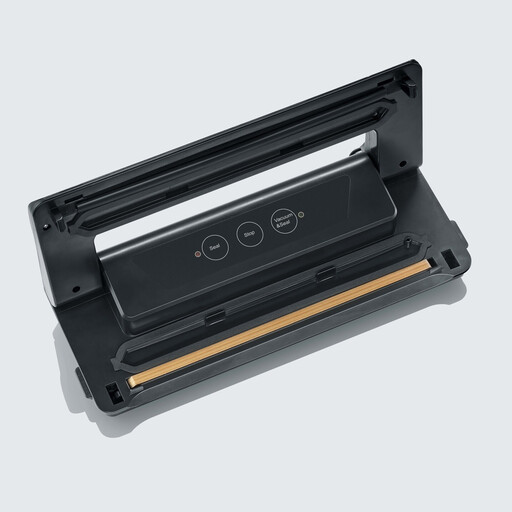
Why This Fits Their Persona: Ideal for users seeking a straightforward and reliable solution for basic vacuum sealing food without having to deal with complex settings. The operation is streamlined to the essentials.
The "Stop" function allows for manual control, preventing the crushing of delicate foods—a common problem with simple automatic devices. As a product from an established German brand, it offers more reliable construction than no-name alternatives.
Fully automatic vacuuming and sealing with a one-touch function. An integrated cutter and the included bags make it a practical vacuum sealer kit for getting started right away.
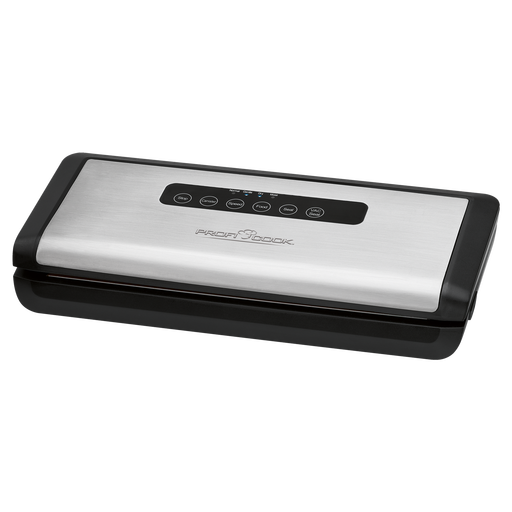
Why This Fits Their Persona: Perfect for food enthusiasts and users of a sous vide cooker who need precise control over the vacuuming process and value robust construction for frequent use.
The electronic, 4-stage vacuum regulation solves the problem of insufficient control found in standard devices. The extra-wide, durable seal minimises the risk of leaky bags, one of the biggest weaknesses of many models.
High suction power of 12 L/min and a strong vacuum of approx. -0.8 Bar. The stainless steel housing and sensor-touch control panel underscore its focus on durability and precise operation.
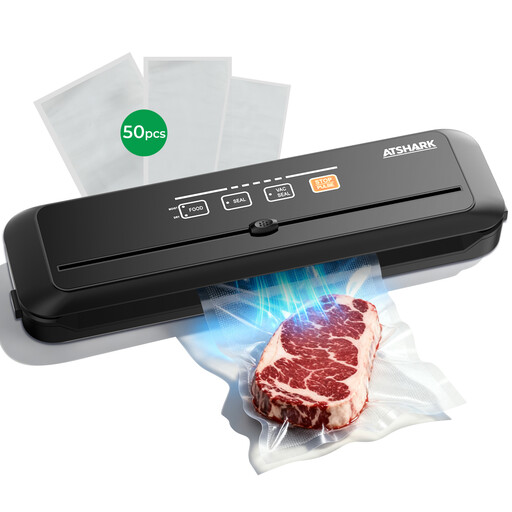
Why This Fits Their Persona: Suitable for households that regularly process large quantities, whether from bulk shopping, garden harvests, or for general pantry stocking. The versatility and large accessory package are key here.
With 50 included bags in various sizes, this model bypasses the trap of high initial follow-up costs. The 5-in-1 functionality (incl. Dry/Moist, Pulse, Canister Vacuum) offers a level of flexibility that simpler devices lack.
Intuitive touchscreen operation with a progress indicator. The vacuum pressure of -60 kPa (equivalent to -0.6 Bar) is a solid, verifiable performance metric for reliable results.
We have compiled a complete, up-to-date list of products that fully meet these strict selection criteria and German safety regulations.
By removing oxygen, the growth of bacteria and mould is significantly slowed. Food stored in the refrigerator can have its shelf life extended by 3 to 5 times. In the freezer, shelf life is extended from months to years, and vacuum sealing is a very effective method for preventing freezer burn.
No, and this is an important point. For most external vacuum sealers (where the bag is placed outside the device), you need special textured or embossed vacuum bags. The fine-grooved structure ensures that air can be reliably extracted from the bag. Smooth bags generally do not work with these devices. Look for this feature when buying refill bags.
A vacuum sealer is highly recommended for sous vide cooking. It ensures that the bag fits snugly against the food, which guarantees even heat transfer in the water bath. Additionally, the vacuum prevents the bag from floating on the water's surface. While alternative methods exist (e.g., the water displacement method), vacuum sealing delivers the most reliable and consistent results.