
Lieferung heute & morgen

Qualitätsgarantie

Willkommens-Angebote freischalten: KOSTENLOSE Lieferung | Bis zu 80 % RABATT | Kostenlose 30-Tage-JoyPlus-Testphase
App herunterladen
Preserving food by reducing oxygen is an established method for extending its shelf life. A vacuum sealer removes the air from a specialised bag and then hermetically seals it. This process slows down oxidation and the growth of microorganisms, resulting in significantly longer-lasting freshness for your food. Applications range from simple storage in the fridge or freezer and reducing food waste to preparing meals for sous vide cooking.
This article analyses the technical parameters relevant to selecting a vacuum sealer for home use and presents two models based on their specifications.
Choosing the right appliance depends on your individual needs. The following technical criteria are crucial for making an informed decision.
Vacuum pressure is one of the key performance metrics of a vacuum sealer. It is typically measured in kilopascals (kPa) and describes the maximum negative pressure the device can achieve. A higher negative value (e.g., -60 kPa or -80 kPa) means more air is removed from the bag. This leads to better preservation, as less residual oxygen remains. For most household applications, including preparation for sous vide cooking, a value of -50 kPa or higher is sufficient. The suction speed, measured in litres per minute (L/min), indicates how quickly the device evacuates the air.
Foods differ in their consistency and moisture content. Modern vacuum sealers therefore often offer separate modes for dry and moist foods (wet and dry).
Some devices also feature a Pulse Function, which allows for manual control of the vacuuming process. This is particularly advantageous for delicate foods like pastries or berries.
The housing of a vacuum sealer is often made of ABS plastic (Acrylonitrile Butadiene Styrene). This material is known for its high impact resistance, surface hardness, and scratch resistance. It is also easy to clean. The quality of the sealing bar and gaskets is critical for long-lasting and reliable performance. Silicone gaskets offer good flexibility and resistance to temperature fluctuations.
Some models offer practical additional features that streamline your workflow:
Based on the technical criteria mentioned above, we present two models that stand out for their specifications and range of functions.
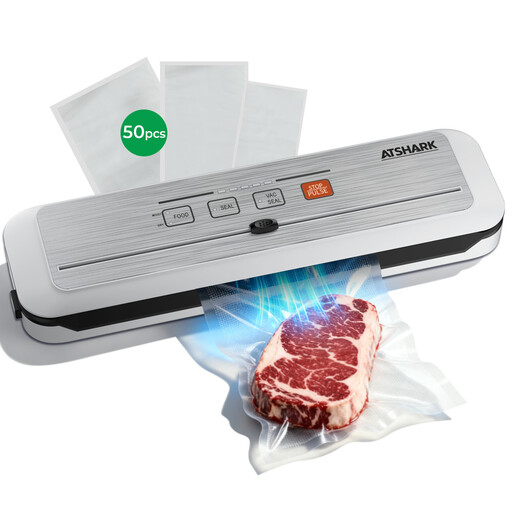
Why we're featuring this product: The VS6621 model stands out with its touchscreen interface, which allows for precise control of its 5-in-1 functions. The combination of a -60 kPa vacuum pressure and a 5 L/min suction speed positions it as a powerful device for various preservation tasks, including preparation for sous vide cooking.
Pros:
Who It's For: This device is suitable for users who value a modern user interface and precise control. Its extensive range of functions and included accessories make it an all-in-one solution for households that regularly vacuum seal food and use various preservation methods.
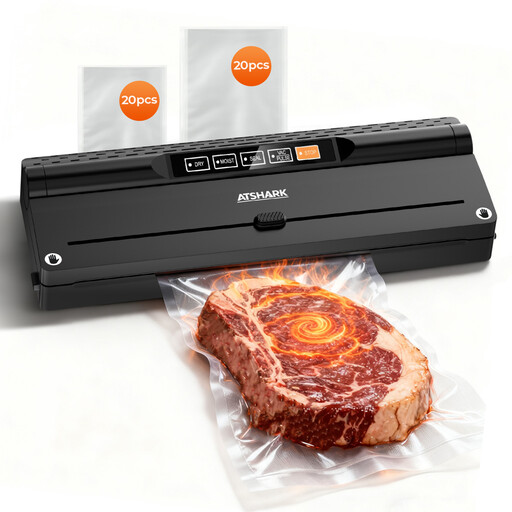
Why we're featuring this product: The VS6615H model integrates a convenient cutter, allowing for custom-sized bags to be made directly on the device. This promotes a more economical use of materials. With identical performance specs of -60 kPa vacuum pressure and 5 L/min suction speed, it offers comparable performance to the VS6621 but focuses more on practical handling and efficiency in bag creation.
Pros:
Who It's For: This model is a great choice for budget-conscious consumers and users with limited kitchen space who appreciate high functionality. The integrated cutter is particularly beneficial for those who frequently process different food sizes and want to use bag material efficiently.
The featured models cover a broad spectrum of requirements for home use. For users looking for specialised devices or complementary kitchen gadgets, the market offers further solutions. You can find a curated selection of high-quality kitchen appliances in our Designer Kitchen category.
1. What is the difference between a vacuum sealer and a heat sealer? A simple heat sealer only seals plastic bags with a heated sealing strip, without removing the air first. A vacuum sealer, on the other hand, is a combination device: it first sucks the air out of the bag (vacuuming) and only then seals it. This air removal is the crucial step for extending the shelf life of food.
2. Can any vacuum sealer be used for sous vide cooking? In principle, yes, as long as the device creates a reliable and airtight seal. For sous vide cooking, it is essential that no water can enter the bag. Devices with a solid vacuum pressure (e.g., -60 kPa) and a high-quality seal are well-suited for this cooking method.
3. What kinds of food can be vacuum sealed? Almost all types of food can be vacuum sealed. This includes meat, fish, vegetables, fruit, cheese, baked goods, and dry products like coffee or nuts. For certain vegetables (e.g., cabbage varieties), it is recommended to blanch them briefly before vacuuming, as they can release gases. Very soft or liquid-rich foods require special care or the use of the wet or pulse mode.