
Lieferung heute & morgen

Qualitätsgarantie

Willkommens-Angebote freischalten: KOSTENLOSE Lieferung | Bis zu 80 % RABATT | Kostenlose 30-Tage-JoyPlus-Testphase
App herunterladen
A vacuum sealer can package portioned food in a space-saving way, protect it from freezer burn when frozen and be used for sous vide recipes. In practice, however, the result depends less on advertising claims than on suitable bags, a reliable seal and controls that are appropriate for your needs.
Important details are often mentioned only in passing, especially with budget offers. If you focus solely on maximum suction power or an impressive freshness claim, you may overlook limitations when handling moist foods, different film sizes or cleaning requirements.
Figures such as “12 litres per minute” or “up to 90% vacuum” describe technical performance values. On their own, they do not indicate how reliably the appliance works with different foods. It is also important to consider whether the vacuum strength can be adjusted and how well the pump copes with liquids or delicate ingredients.
With berries, bread or soft fruit, excessive suction can deform the food. Adjustable vacuum control is therefore more practical in a household than a setting that only operates at maximum power.
Many external vacuum sealers require embossed film bags or rolls. The ribbed structure helps transport air out of the bag. Smooth bags, such as those used with some chamber vacuum sealers, are often unsuitable for these appliances.
Before buying, you should check:
A vacuum sealer with bags can be a practical choice for getting started. In the long term, however, running costs remain an important consideration, as each portion requires a suitable bag or section of film.
Vacuum sealing places stress on the packaging because of the negative pressure. If the seal is too narrow, becomes dirty or is not heated fully, air can get back in. A wide, even seal provides a clear structural safety margin when storing food.
With marinated foods in particular, make sure that liquid does not enter the suction area. A removable drip tray makes cleaning easier and can protect the appliance from residual moisture.
Pump performance is usually stated in litres per minute. A higher figure can speed up the process, but it is not the only relevant factor. For a mixed household, several vacuum settings, a separate sealing function and controlled operation are useful features.
A sous vide vacuum sealer should also be compatible with bags and film designed for the intended heating method. Always check the relevant bag manufacturer’s information regarding temperature, microwave use, freezer use and cooking applications.
A traditional film sealer closes the film using heat. For food, it is important that the seal runs evenly across the entire width. Appliances with a maximum film width of 30 cm can accommodate many standard household portions. Larger cuts of meat or sizeable family portions may require a wider format.
The film should be clean, dry and positioned straight in the sealing area. Creases, traces of fat or liquid on the seal can affect its airtightness.
A food vacuum sealer should be checked for residue after every use. A removable drip tray, easily accessible seals and straightforward controls are all helpful. A sensor touch control panel can make selection easier, but it does not replace correct preparation of the bag.
You should also check for:
Before packaging, food should be portioned and patted as dry as possible. For liquids, briefly freezing them first or leaving a sufficiently large empty area above the contents is recommended. The edge of the bag must remain clean so that the seal can close securely.
For organised food storage, it is worth labelling each pack with its contents and packaging date. Vacuum sealing does not replace refrigeration or freezing and is not a guarantee against spoilage. Maintaining the cold chain, observing best-before information and following hygienic working practices remain essential.
When freezing food, packaging with less air can reduce contact with oxygen. Whether, and for how long, this keeps food fresher depends on the product, temperature, packaging and storage period. The claim “up to 8x fresher for longer” for the ProfiCook appliance is a manufacturer’s statement and is not a general guarantee for every type of food.
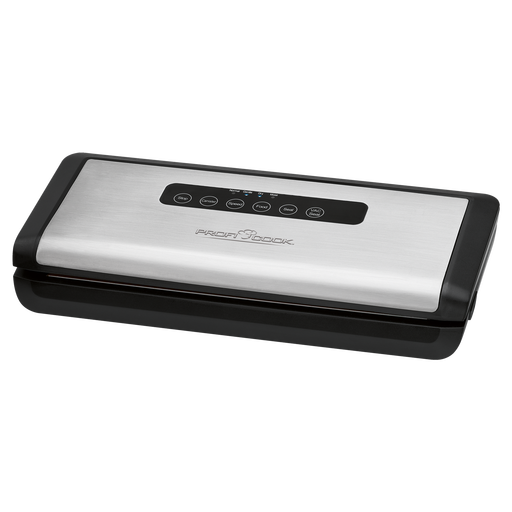
Why this product suits this profile: The package includes 18 embossed bags in two sizes. This makes it easier to get started without having to plan for additional accessories straight away.
The four-stage vacuum control allows you to adapt the setting for delicate and firmer foods. According to the product information, the maximum film width is 30 cm.
Suction power of 12 litres per minute, approx. 90% vacuum according to the product information, and an extra-wide seal.
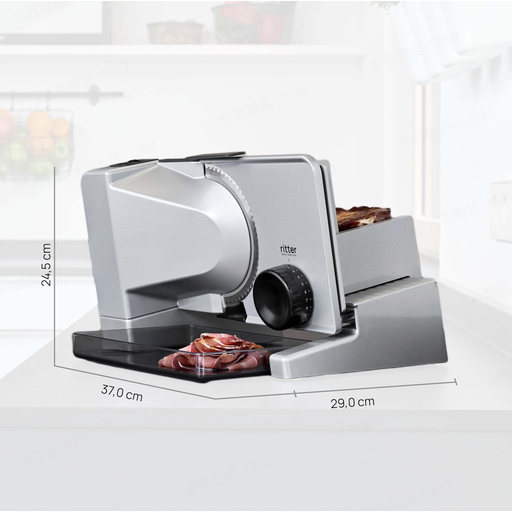
Why this product suits this profile: As a complement to a vacuum sealer, the electric food slicer helps you prepare evenly sized portions for storage.
The continuously variable electronic speed control and angled design make it easier to prepare larger quantities of food in a controlled way.
All-metal construction, 24 cm cutting length and two included blades.

Why this product suits this profile: For users who want to cook vacuum-packed ingredients gently or in individual portions afterwards, a separate cooking appliance can be a useful addition.
The appliance is not presented as a vacuum sealer, but clearly positioned as a complementary slow cooker with a separate inner pot.
2.5-litre inner pot, four additional 0.4-litre inner pots and a power rating of 600 to 715 W according to the product information.
We have put together a complete, regularly updated list of products that fully meet these strict selection criteria and the safety regulations applicable in the EU.
Choose an appliance with adjustable vacuum strength, a drip tray and a separate sealing function. Liquids should not be allowed to reach the suction channel. With very liquid ingredients, briefly freezing them first is a practical preparation method.
Its service life depends on how frequently it is used, cleaning, the seals and overheating protection. If you process many portions one after another, you should observe the recommended breaks. Wear parts such as seals or cutting strips may be available separately, depending on the model.
In addition to electricity consumption, the main costs are for embossed bags or film rolls. Rolls can save material when preparing different-sized portions, while pre-cut vacuum sealer bags are quicker to use. So do not compare only the purchase price; also consider film width, bag price and the portion size required.