
Lieferung heute & morgen

Qualitätsgarantie

Willkommens-Angebote freischalten: KOSTENLOSE Lieferung | Bis zu 80 % RABATT | Kostenlose 30-Tage-JoyPlus-Testphase
App herunterladen
A vacuum sealer can help you store food more compactly, reduce freezer burn and simplify meal preparation. However, not every budget-friendly vacuum sealer will deliver the right results. What really matters isn't just the price or a flashy suction power figure, but the combination of ease of use, bag width, sealing quality and cleaning.
A high suction power alone doesn't tell you whether a device is suitable for delicate foods, moist ingredients or sous-vide preparations. If liquid is drawn in too quickly, it can enter the vacuum channel. Practical features like a stop button, manual control or a suitable drip tray are often more important than a single advertised number.
Many vacuum sealers only work with a specific maximum bag width. If you want to pack large cuts of meat, casseroles or multiple portions, you should check this measurement before buying. For smaller households, narrow bags may be sufficient; but if you regularly stock up, a device that works with rolls or bags up to around 28 cm is more flexible.
A vacuum sealer often sits in the kitchen and comes into contact with food. A hard-to-reach vacuum chamber can make cleaning difficult. Additionally, many devices need a break between several sealing cycles. For occasional use, this is usually fine, but heavy users should look for intuitive controls, an easily accessible chamber and built-in cord storage.
An automatic vacuum sealer should reliably suck the air out of the open side of the bag and then seal it shut. For dry foods like rice, cheese or nuts, an automatic process is practical. For delicate items, bread or soft fruits, a controllable suction is sensible so the contents aren't crushed.
Look for the following features:
A vacuum sealer with vacuum bags is practical for beginners because the right consumables are included straight away. Nevertheless, check whether the device is also compatible with standard vacuum bags or rolls. An even, wide seal is important so that the packaging stays closed during freezing or sous-vide cooking.
The bags should be labelled for their intended use. Not every plastic bag is automatically suitable for hot water, the freezer or the microwave. When vacuum sealing food, also leave a margin at the top of the bag: the opening must stay clean and dry so that the seal isn't compromised by fat or liquid.
For small kitchens, a compact design is key. At the same time, the device should sit stably and offer enough space for the bag opening. Technical details like 220–240 V at 50 Hz, the maximum bag width and the power consumption help with classification. However, electrical power in watts is not the sole measure of quality.
When using the device:
Vacuum packaging does not extend shelf life indefinitely. Chilled and perishable foods must still be stored correctly. If in doubt, follow the instructions on the food packaging.
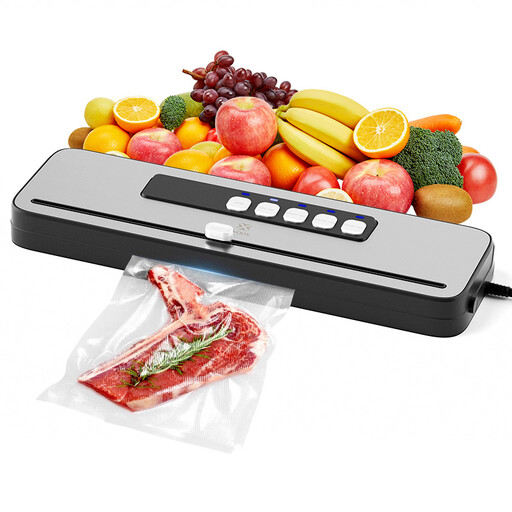
Why this product fits the profile: The included vacuum bags make it easier to get started when you want to pack smaller quantities for the fridge, freezer or meal prep.
The accessories make it clear which bag size belongs to the device before you buy additional consumables.
Vacuum sealer with included bags; ideal for a straightforward introduction to vacuum packaging.
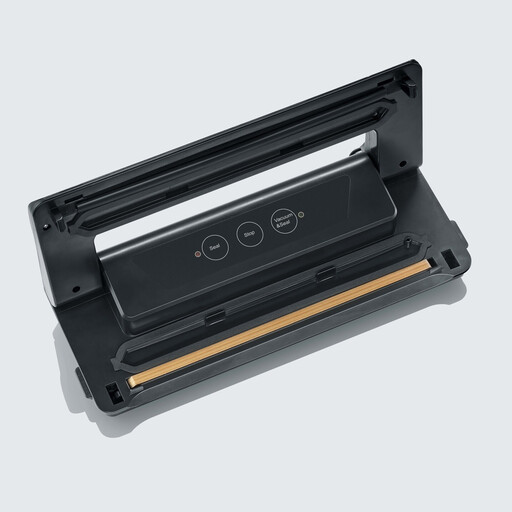
Why this product fits the profile: This model offers an automatic process, a stop button, an integrated cutter and compatibility with bags and rolls up to 28 cm wide.
The stop button allows more controlled suction for delicate foods. The cutter reduces reliance on pre-set bag lengths.
110 W, maximum bag width of 28 cm, 10 vacuum bags in 28 × 35 cm format and integrated cord storage.
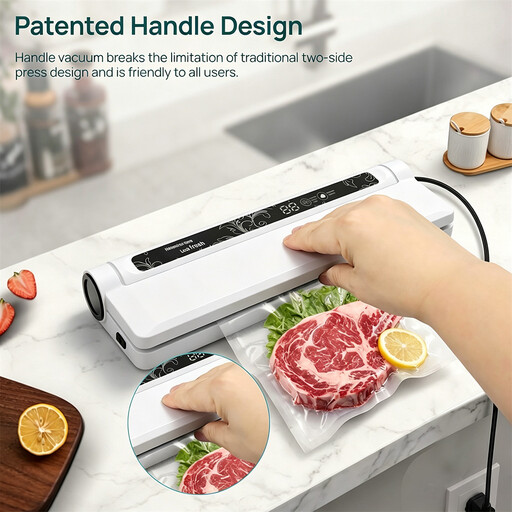
Why this product fits the profile: The compact household design with integrated bag storage is ideal for portioning, stocking up and regularly packing smaller quantities of food.
The 20 included bags make the ongoing need easier to calculate from the start. However, you should still check whether the format and material suit your intended use before buying.
20 integrated bags in 17 × 25 cm format; designed for smaller household portions.
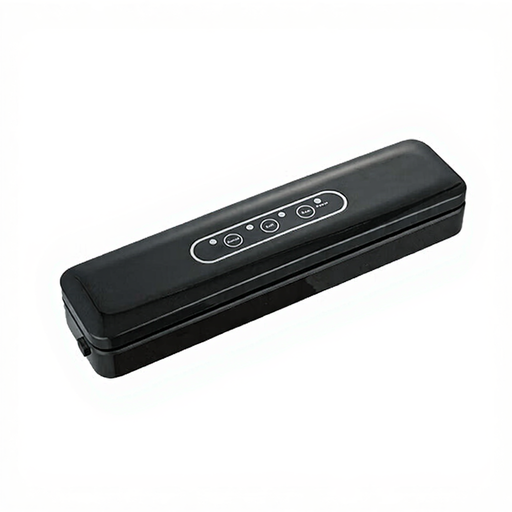
Why this product fits the profile: The compact design and one-button operation are aimed at users who have limited worktop space and want to pack food without complicated settings.
The compact design addresses the common lack of space on kitchen worktops. The bag opening must stay dry for a clean sealing process.
Compact design; automatic operation at the touch of a button according to the product description.
We've put together a complete, regularly updated list of products that fully meet these strict selection criteria and the safety regulations in force in the EU.
The device removes some of the air from a suitable bag and seals the open side with a heat seal. The packaging should then be checked for airtightness. Vacuum sealing does not replace proper refrigeration or hygienic handling.
Not automatically. For sous-vide cooking, the bags and the seal must be suitable for the intended water temperature. Also check whether the bag is explicitly approved for this use. A sous-vide vacuum sealer should enable an even seal; a manual stop button can be helpful with delicate ingredients.
In addition to electricity consumption, the main costs come from bags or rolls. Pre-portioned bags are easy to use but can create more waste with unusual sizes. Rolls can be cut to size as needed, but require a device with an integrated cutting function or a separate cutting tool. For a realistic calculation, consider bag width, material, pack size and how often you use the device.