
Lieferung heute & morgen

Qualitätsgarantie

Willkommens-Angebote freischalten: KOSTENLOSE Lieferung | Bis zu 80 % RABATT | Kostenlose 30-Tage-JoyPlus-Testphase
App herunterladen
A vacuum sealer can help you pack food more efficiently and reduce its exposure to air. For households, families and home cooks, a vacuum sealer is particularly useful if you regularly store meat, vegetables, fruit, dry goods or leftovers. Small catering businesses and food producers can also benefit from structured portioning.
However, your choice shouldn't be based solely on the lowest price or marketing claims like "extra strong". What really matters is the build quality, ease of use, bag compatibility and how it performs in your everyday routine.
An automatic vacuum sealer handles the suction and sealing process depending on the model. However, you still need to position the bag correctly. The opening must not be creased and should stay clean and dry. With moist foods, liquid can reach the pump if the machine doesn't have a suitable setting or collection tray.
Many machines require textured vacuum bags or compatible vacuum rolls to reliably draw air out of the bag. Smooth bags aren't automatically compatible. Before buying, check which bag types, widths and material thicknesses the manufacturer recommends.
Vacuum sealing food doesn't replace refrigeration or hygienic handling. Perishable items still need to go in the fridge or freezer. Vacuum sealing can reduce air contact and make storage more organised, but it doesn't guarantee a specific shelf life. You still need to pay attention to chilling temperature, use-by dates and the condition of the food.
The maximum seal width determines what portions you can pack. For individual cuts of meat or leftovers, a compact sealing area is often sufficient. Families or small businesses may need wider bags for larger portions.
Look out for:
A consistent, fully closed seal is more important than a high suction power claim.
A simple fresh-sealing machine usually works with just a few buttons. For everyday use, programmes like "vacuum and seal", "seal only" or a manually controlled vacuum process can be useful.
Extra care is needed with soups, marinades or very wet ingredients. Liquids should be pre-chilled or slightly frozen if possible. If a machine doesn't explicitly state it's suitable for liquids, you should limit its use accordingly.
A compact vacuum sealer can fit even in kitchens with limited worktop space. Before buying, it's worth checking:
For occasional home use, a compact machine is often enough. If you regularly process larger quantities, you should prioritise workflow and durability.
The following recommendations are based on available product information. Not every model has complete technical data on pump performance, seal width or operating cycles. You should check these details on the relevant product page before buying.
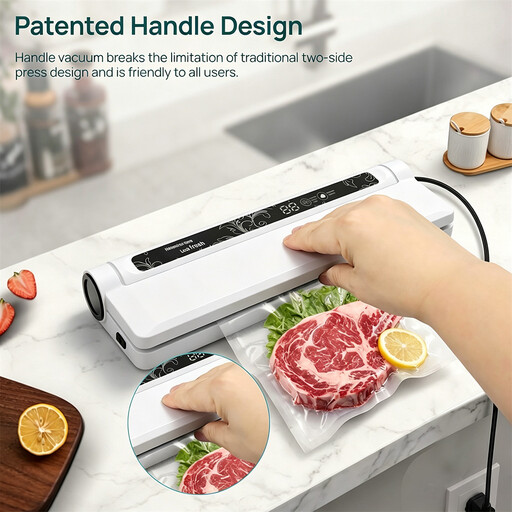
Why it fits the profile: According to the product information, this compact household machine comes with 20 integrated bags in the 17 × 25 cm format. That makes it ideal for users who want to start by vacuuming smaller portions and leftovers.
The included bag set makes it easy to get started. However, you should still check whether replacement bags in your preferred size are available later on.
Compact design and a starter supply of bags; please check the seal width and pump performance on the product page.
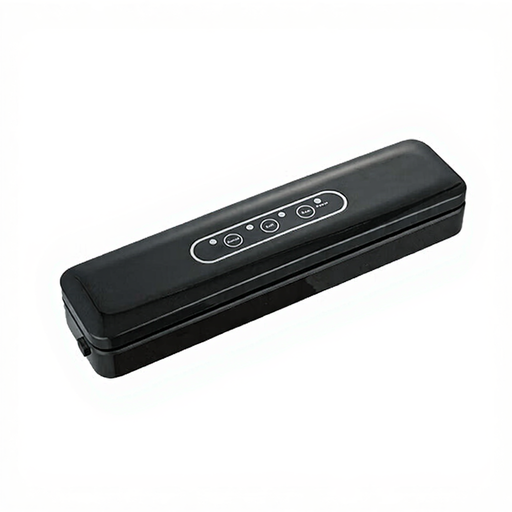
Why it fits the profile: According to the product description, this model is designed for meat, vegetables, fruit and dry foods, and is operated at the touch of a button.
The described automatic sequence reduces individual steps. With moist foods, you should still check whether the specific application is supported by the machine.
Compact build and automated process according to the supplier's description; please verify the specific technical values before ordering.
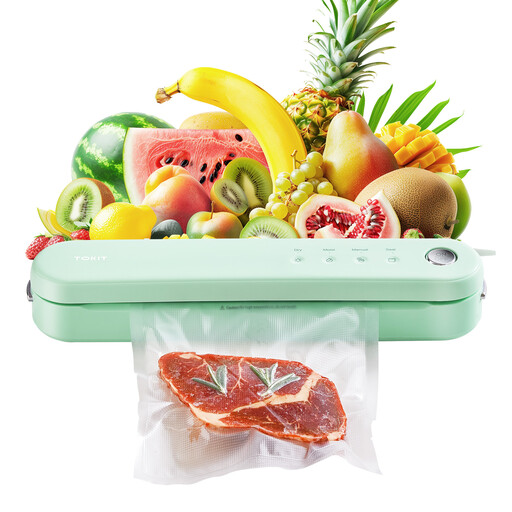
Why it fits the profile: The product name indicates an automatic vacuum sealer for the EU market with 220–240 V and 50 Hz. This can be relevant for regular kitchen routines.
The stated mains specification is generally compatible with UK power supplies. Details on continuous operation, seal quality and bag types should be checked before using it with larger quantities.
Automatic machine operation as per the product name and EU-compatible mains rating; further performance data should be verified before purchase.
Only use bags that are explicitly intended for food purposes. A standard storage bag is not automatically suitable for vacuum sealing, heating or freezing. For pre-packed products, follow the material instructions from the bag manufacturer.
Practical steps:
For additional solutions for sealing opened packaging, you can also browse our selection of closure products.
Our overview features a regularly updated selection of products for sealing and storage solutions. Before buying, always check compatibility, material details and safety instructions.
There's no one-size-fits-all answer to shelf life. It depends on the type of food, its initial freshness, temperature, hygiene and packaging quality. Vacuum-sealed perishable foods still need to be chilled or frozen. If you notice any unusual smell, appearance or a bloated bag, do not use the product.
That depends on the material and what was stored in them. Bags that have held raw meat, fish or very fatty foods should generally not be reused for hygiene reasons. For dry, clean foods, reuse may be possible as long as the bag is undamaged and thoroughly cleaned. Always follow the manufacturer's instructions.
Power consumption depends on the motor output, vacuum duration and how often you use it. Since a single vacuum cycle usually only takes a short time, the running costs are mainly determined by the number of uses. Buyers can only assess the exact consumption by checking the technical data or measuring it on the specific model.