Batch preppers
If you’re preparing several portions for future meals at your holiday home, look for suitable bag sizes and a practical workflow. The Federal Centre for Nutrition recommends freezing food in portions and labelling the packaging.


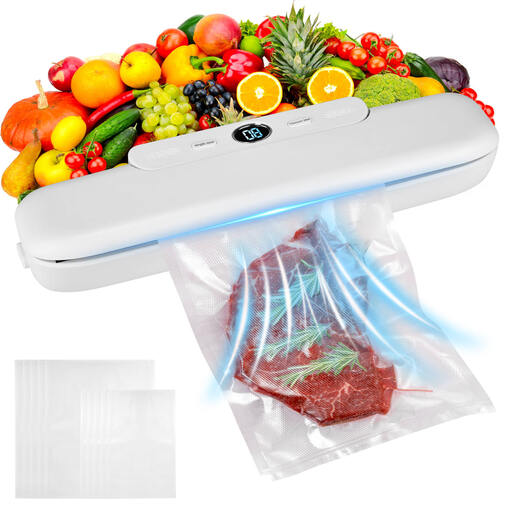
A vacuum sealer with a sealing bar may suit you if you want to pack lots of vegetable portions in heat-seal bags. If space is limited in your holiday-home kitchen and you’re preparing individual portions, a compact hand-pump system could be a better fit. The key considerations are managing residual moisture, choosing suitable packaging that’s safe for freezing, and having enough space for the appliance and accessories. Vacuum sealing doesn’t replace preparing the vegetables or freezing them.
If you’re preparing several portions for future meals at your holiday home, look for suitable bag sizes and a practical workflow. The Federal Centre for Nutrition recommends freezing food in portions and labelling the packaging.
If you have little space for an appliance and accessories and freeze individual portions, a cordless pump system with compatible bags or containers may be worth considering. Also think about how much space the containers will take up in your freezer.
Residual moisture can make vacuuming or sealing more difficult when packing blanched, cooled vegetables. Check whether the specific model has a suitable moist-food setting, or whether a compatible container would better suit your needs.
First decide whether you’ll mostly use heat-seal bags in different sizes, or pack individual portions in compatible system bags or containers.
A good fit if: you regularly pack several portions and want to cut bags to size.
Things to consider: The appliance needs worktop space, and the film or bags must be compatible with the model. Take extra care to keep moisture away from the edge of the bag.
A good fit if: you have limited worktop space and mainly want to pack individual portions.
Things to consider: The bags, valve and pump need to be compatible. Containers take up space in the freezer, and you can’t use the system to seal cut-to-size rolls of film.
A good fit if: you only freeze small amounts occasionally and don’t need another appliance.
Things to consider: Use suitable packaging and try to minimise air pockets. You don’t necessarily need a vacuum sealer.
| What matters | What to check before buying | Who will find this especially important? |
|---|---|---|
| Portion sizes and packaging | Check that the appliance works with the bags or rolls you plan to use, and that you can choose the right bag length. | When I prepare portions in different sizes, I want to use suitable bags and label the contents. Around 36% of consumers put portioning first. |
| Space in the holiday-home kitchen | Compare the appliance’s dimensions, storage space for accessories and the space any containers will take up in the freezer. | In a small kitchen, I want to be able to put the appliance and accessories away after use. Around 29% of consumers say saving space is their main priority. |
| Residual moisture and delicate vegetables | Allow prepared vegetables to cool and drain. For the specific model, check for moist-food settings, manual stop controls and a removable, cleanable drip tray, if included. | When packing cooled vegetables that are still moist or delicate, I want to be able to control the vacuuming process. Around 21% of consumers prioritise handling moisture and delicate pieces. |
| Compatible accessories | Check what’s included, compatibility, and whether the bags and containers are suitable for freezing and food contact. | If I need to buy more bags or rolls, I want to know which accessories fit the appliance and are designed for freezing. Around 14% of consumers prioritise compatible packaging materials. |
Vacuum sealing doesn’t replace preparing the vegetables appropriately, using suitable freezer packaging or freezing the food itself.
Choose preparation and packaging to suit the type of vegetable and how you plan to freeze it. The Federal Centre for Nutrition recommends freezing food in portions and labelling the packaging.
Starter sets with similar names can differ in their materials and the containers included. These differences affect both storage space and ease of use.
Compare the full set name, the material and the bags and containers actually included.
Sealing-bar appliances and hand pumps use different accessory systems. Some appliances only work with bags designed for that specific model.
Before choosing, check which rolls, bags, valves or containers are compatible with the specific model and suitable for the freezer.
The range includes everything from the VRH 790 advanced Pro sealing-bar appliance to the cordless Vacu OneTouch Eco-Set.
The VAC 385 is a sealing-bar appliance for compatible bags and repeated portioning.
Fresh & Save uses a cordless pump with compatible bags and containers.
The PC-VK 1080 is a sealing-bar appliance with adjustable vacuum strength.
The Vacu Power 300 is a sealing-bar vacuum sealer with a Pulse function for controlled vacuuming.
The products below include handheld appliances and sealing-bar vacuum sealers for packing vegetable portions. Check whether the bags and containers for each product are suitable for the freezer and food contact.
 No image available
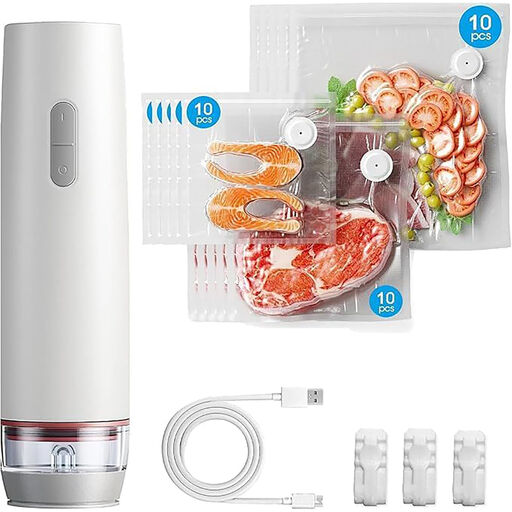
This model may suit you if you’re looking for a compact system for your holiday-home kitchen.
The product name specifies 60 kPa and 30 reusable bags. Check that they’re suitable for the freezer and food contact.
 No image available
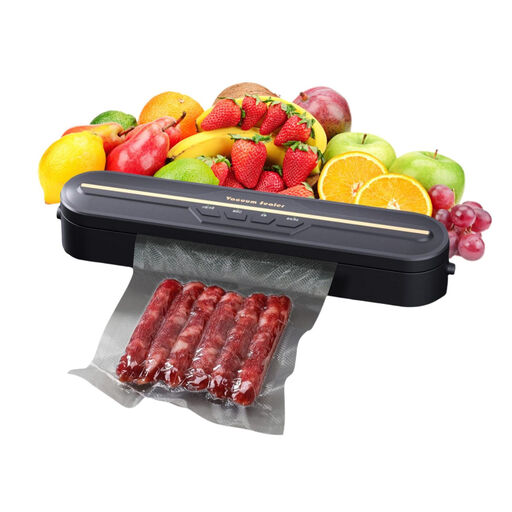
For portions in heat-seal bags, provided the stated sealing width suits the bags you plan to use.
The product name specifies 120 W, a 28 cm sealing width, wet and dry modes, and ten vacuum bags. Check that the bags are suitable for the freezer.
 No image available
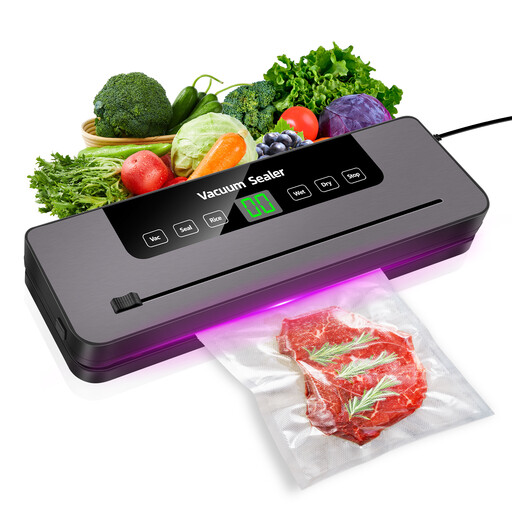
For vegetable portions, if you want to prepare bags to suit the sealing width.
The product name specifies ten bags, a built-in cutter, and wet and dry functions. Before use, check that the bags are designed for freezing.
 No image available
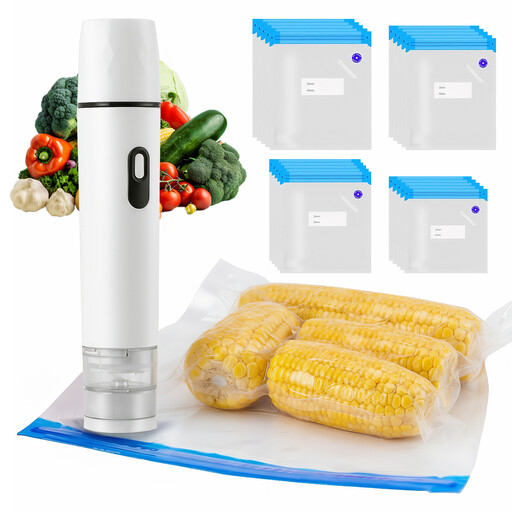
This portable handheld appliance may suit a kitchen with limited storage space.
The product name specifies 60 kPa and 20 reusable bags. Check which bags are compatible with the appliance and suitable for the freezer.
 No image available
If you want to pack vegetables in bags, pay particular attention to this model’s accessory requirements.
The product name specifies ten vacuum bags. According to the product details, only compatible bags designed for the appliance should be used. Also check that they’re suitable for the freezer.
Different vegetables need different preparation. The Federal Centre for Nutrition describes briefly blanching vegetables as one way to deactivate enzymes and preserve quality during freezing; they’re then cooled in iced water. Check the right preparation for the type of vegetable and how you plan to use it. Vacuum sealing doesn’t replace freezing.
Pack measured portions separately and label each pack with the contents, quantity and date it was frozen. The Federal Centre for Nutrition also recommends minimising the amount of air trapped in the packaging. You don’t necessarily need a vacuum sealer to do this.
No. Suitability depends on the appliance and whether the bags are designed for food contact. According to the manufacturer, the ProfiCook PC-VK 1080 is designed for embossed film and bags up to 30 cm wide; the ZWILLING Fresh & Save set uses compatible valve bags. Also check the accessories’ guidance on freezer suitability.
Drain cooled vegetables as much as possible and follow the instructions for the specific model. According to the manufacturer, the CASO VRH 790 advanced Pro has a removable drip tray, while the Rommelsbacher VAC 385 is described as having a removable vacuum chamber insert. These features aren’t necessarily available on other appliances.
Check which bags or rolls fit the appliance and whether you’ll need extra containers or a hose. According to the manufacturer, containers and a hose for the Leifheit Vacu Power 300 are sold separately. Also check the food-contact and freezer-suitability information for bags and containers.
Food contact materials placed on the EU market must meet the requirements of Regulation (EC) No 1935/2004. Plastics may also be subject to additional specific EU rules. The European Commission explains these requirements. They don’t replace the need to check separately whether a bag or container is suitable for freezing.