
Lieferung heute & morgen

Qualitätsgarantie

Willkommens-Angebote freischalten: KOSTENLOSE Lieferung | Bis zu 80 % RABATT | Kostenlose 30-Tage-JoyPlus-Testphase
App herunterladen
By the Joybuy Product Recommendation Officer, July 22, 2026
Limited storage is a common problem in many households. Seasonal clothing, bulky duvets, and extra pillows take up valuable space in wardrobes and closets. Vacuum storage bags offer a practical solution for reducing the volume of textiles. These vacuum-seal storage bags can shrink textiles by up to 80%, while also protecting the contents from dust, moisture, and odours.
This article provides an overview of the different types of vacuum bags for clothes and other textiles. It will help you understand how they work and make an informed choice for your specific needs, whether for home storage, travel, or moving.
To find the right product, you should consider a few key features. The following points can help you make your decision.
The durability and reusability of a vacuum bag depend heavily on its material. A common and robust combination is Polyamide (PA) and Polyethylene (PE). This blend offers a good balance of flexibility and tear resistance. The seal is a critical feature for airtightness. Models with a double zipper (Double-Zip Seal) offer greater security against air leakage. An included slider clip can make it easier to seal the bag correctly.
Air can be removed from the bags in several ways:
Space-saver bags come in different shapes optimised for various purposes:
Here, we present a selection of vacuum storage bags that stand out for their specific features and are suited for different use cases.
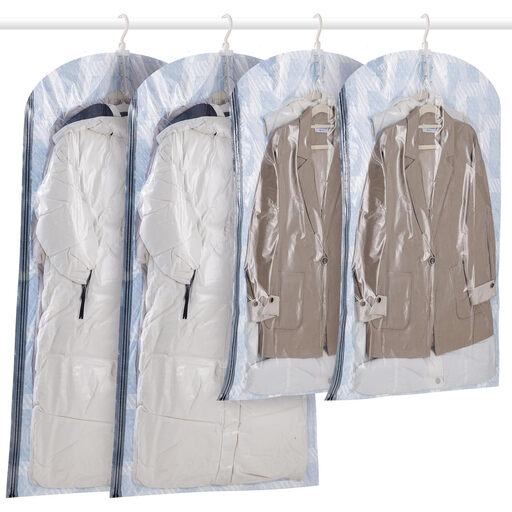
What makes these bags stand out: This set is specifically designed for space-saving storage of hanging clothes. The integrated five-ring hook allows you to hang multiple garments in an organised fashion, making efficient use of wardrobe space.
Pros:
Best for: Individuals who want to store long garments like coats, dresses, or suits directly in the wardrobe with minimal wrinkling and maximum space-saving.
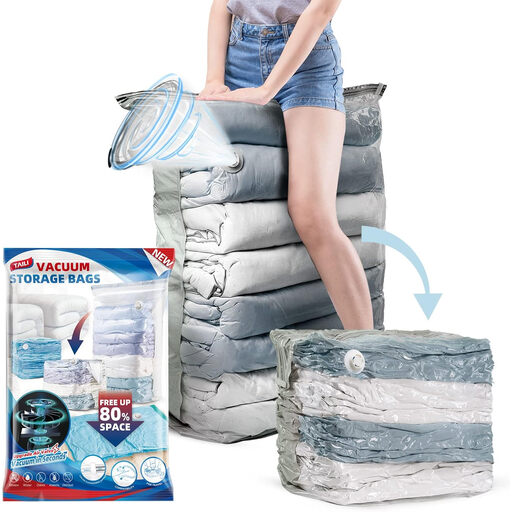
What makes these bags stand out: The cubic shape with a stable base makes these bags especially practical for storing very bulky textiles. After compression, they form compact, stackable blocks, which simplifies organisation in closets or on shelves.
Pros:
Best for: Households that need to store large quantities of bedding, winter duvets, pillows, or seasonal clothing in an efficient, stackable way.
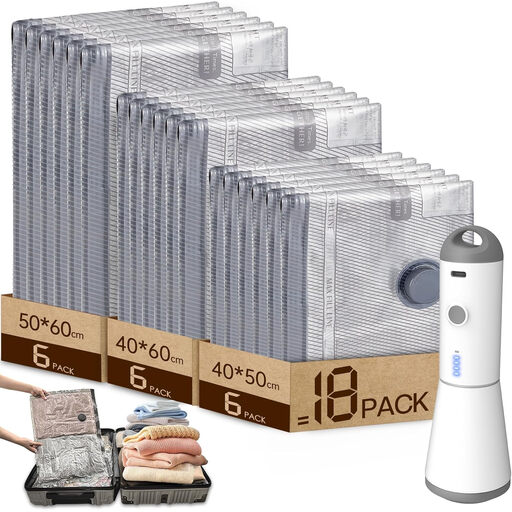
What makes this set stand out: This set includes a cordless, rechargeable vacuum pump. This makes it a complete solution that works independently of a vacuum cleaner, making it suitable for travel or for use in basements without a power outlet.
Pros:
Best for: Users looking for an all-in-one solution, those who don't own a vacuum cleaner, or anyone wanting to use the bags flexibly in different locations (e.g., for travel, moving).
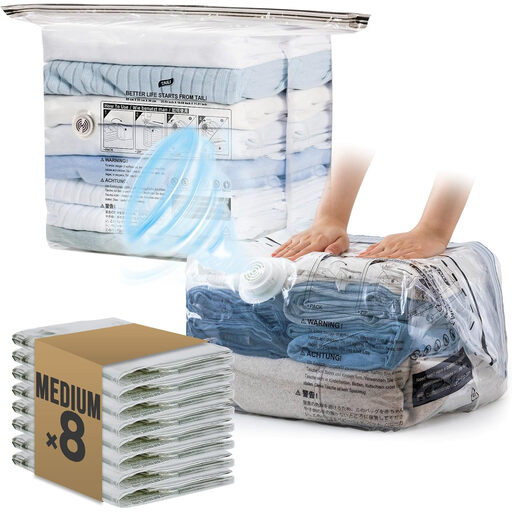
What makes these bags stand out: These bags require no pump or vacuum cleaner. Air is expelled from the patented valve by simply pressing down by hand. This makes them an excellent choice for travel, especially for carry-on luggage.
Pros:
Best for: Travellers who want to maximise space in their suitcase or backpack without relying on a pump or vacuum cleaner. Ideal for vacuum-sealing clothes while travelling.
If our selection doesn't include the perfect model for your specific needs, you can find a wider range of products in our reusable vacuum storage bags for clothes category.
How long a vacuum bag remains airtight depends on the quality of the material, valve, and seal. With proper use and an undamaged bag, the vacuum can be maintained for several months. It is recommended to check the seal carefully and ensure it is completely closed.
For most common textiles like cotton, wool, and synthetic fabrics, vacuum-sealing clothes is safe. Caution is advised for very delicate materials such as leather, fur, or down jackets with sharp quills. To avoid heavy wrinkling, garments should be folded neatly before sealing.
No, not necessarily. While many models are designed for use with a vacuum cleaner, there are alternatives. Some sets come with a hand pump or an electric pump. For travel, there are also special roll-up or compression bags where the air is removed manually by pressing or rolling.