
Lieferung heute & morgen

Qualitätsgarantie

Willkommens-Angebote freischalten: KOSTENLOSE Lieferung | Bis zu 80 % RABATT | Kostenlose 30-Tage-JoyPlus-Testphase
App herunterladen
Limited storage space is a common problem, especially when seasonal clothing, duvets, or guest bedding need to be stored safely and cleanly. Wardrobes overflow and basements become cluttered. Vacuum storage bags offer a practical solution, significantly reducing the volume of textiles while protecting them from dust, moisture, and moths.
This article serves as a guide. It explains the key features of storage bags and introduces various models to help you choose the right solution for your home, travel, or move.
Choosing the right product depends on your specific needs. Three criteria are particularly important: material, size, and compression method.
The durability and seal of a vacuum bag are largely determined by the material used. A common and robust combination is Polyamide (PA) and Polyethylene (PE). This multi-layer film offers high tear resistance and a reliable barrier against air and moisture. The closure is an equally important aspect. Models with a double zipper (dual-zip closure) provide increased security against air leaks and ensure that the vacuum is maintained for a long time.
Vacuum bags for clothing are often flat and ideal for sweaters, trousers, or T-shirts. For bulky items like vacuum bags for duvets, pillows, or winter coats, cubic bags (Cube Bags) are an excellent choice. Thanks to their three-dimensional, box-like structure, they can be easily stacked after filling and compression, similar to cardboard boxes. This allows for particularly efficient use of space in a wardrobe, basement, or under-bed storage container. For travel, there are special travel vacuum bags that are smaller and can often be compressed without a vacuum cleaner.
The most common method of compression is using a standard household vacuum cleaner. The bag's valve is placed on the vacuum hose to quickly and effectively remove the air. This results in the maximum possible volume reduction. Alternatively, there are compression bags that are deflated manually by rolling or pressing them. These are particularly handy for travel when a vacuum cleaner is not available, but they generally do not achieve the same level of compression.
Based on functionality and use cases, we have compiled a selection of different storage solutions.
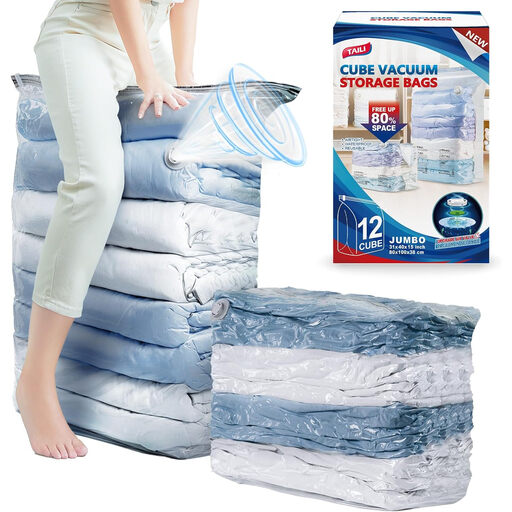
Why This Product Stands Out These bags are designed for storing large and bulky textiles. The cubic shape, measuring 31 x 40 x 15 inches (approx. 78 x 101 x 38 cm), allows for easy filling and creates a stable, stackable form after compression. According to the manufacturer, a single bag can hold three to five duvets. The PA+PE material construction ensures the necessary durability and a tight seal.
Advantages
Who Is It For? For households looking for a space-saving solution for large quantities of bedding or seasonal clothing and aiming for maximum volume reduction.

Why This Product Stands Out These storage bags are an alternative for those who don't need compression but are looking for a simple and accessible organizational solution. With dimensions of 42 x 18 x 6 inches (approx. 106 x 45 x 15 cm), they fit perfectly under most beds. The integrated handles make them easy to pull out and transport, while the clear window provides a quick overview of the contents.
Advantages
Who Is It For? For individuals who need a straightforward organizational solution for blankets, clothes, or bedding and want to efficiently use the space under the bed without needing volume reduction.
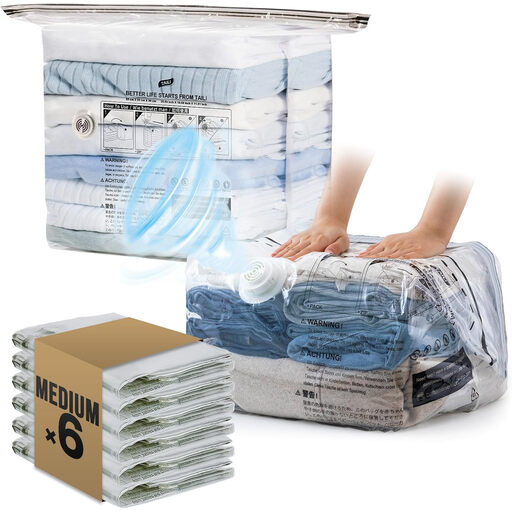
Why This Product Stands Out These compression bags are specifically designed for on-the-go use. Their standout feature is the patented valve that allows for compression by hand pressure—no vacuum cleaner or pump required. Measuring 25 x 19 x 11 inches (approx. 63 x 48 x 28 cm), they fit well in suitcases or backpacks and help significantly reduce luggage volume.
Advantages
Who Is It For? For travellers, campers, and backpackers who want to maximise space in their luggage and are looking for a simple, tool-free solution for the road.
The products featured here cover a range of needs but represent only a fraction of the available options. Depending on your requirements, there are numerous other sizes, shapes, and sets that can help you get organised and reclaim valuable space.
Explore our full range of zippered blanket storage bags and find the perfect solution for your needs.
When used correctly, vacuum bags are safe for most textiles. However, for natural fibres like down, feathers, or wool, it is recommended not to remove all the air. Compressing to about 50% of the original volume is usually sufficient to protect the structure of the fibres. Synthetic materials are less sensitive in this regard.
How long a vacuum bag holds its seal depends on the quality of the material, valve, and closure. High-quality bags can maintain the vacuum for several months up to a year. It is advisable to check the condition of the vacuum-sealed items every six to twelve months and re-vacuum the bags if necessary.
In most cases, no special vacuum cleaner is required. The valves on most vacuum bags are designed to be compatible with the round hose attachments of standard household vacuums. If the connection doesn't fit perfectly, some sets include an adapter. Alternatively, as shown, there are models that can be compressed manually.