
Lieferung heute & morgen

Qualitätsgarantie

Willkommens-Angebote freischalten: KOSTENLOSE Lieferung | Bis zu 80 % RABATT | Kostenlose 30-Tage-JoyPlus-Testphase
App herunterladen
Written by: Joybuy Product Recommendation Officer Date: July 29, 2026
Space in wardrobes, basements, and under the bed is often limited. Seasonal clothing, bulky duvets, and guest bedding take up valuable storage space. Vacuum storage bags, also known as compression bags, promise a simple solution for reducing volume. However, not all products deliver on their promise. Many users find that the bags start to leak air or the material tears after a short time. This guide highlights the most common weaknesses and explains which technical features you should look for to find a functional and durable solution for space-saving storage.
Before you invest in a set of vacuum storage bags, you should be aware of the typical problems that occur with low-quality products and lead to frustration.
To avoid the problems mentioned above, you should check three key technical parameters before buying. These are crucial in determining the functionality and durability of the vacuum storage bags.
A robust vacuum bag is made of a composite material, typically consisting of Polyamide (PA) and Polyethylene (PE).
Products made only from PE tend to tear quickly. Therefore, look for the PA+PE specification in the product description as an indicator of higher material quality.
The reliability of a vacuum bag depends critically on its sealing mechanism.
Choosing the right shape optimises space utilisation.
Based on the quality criteria mentioned, we have compiled a selection of products suitable for different needs and user profiles.
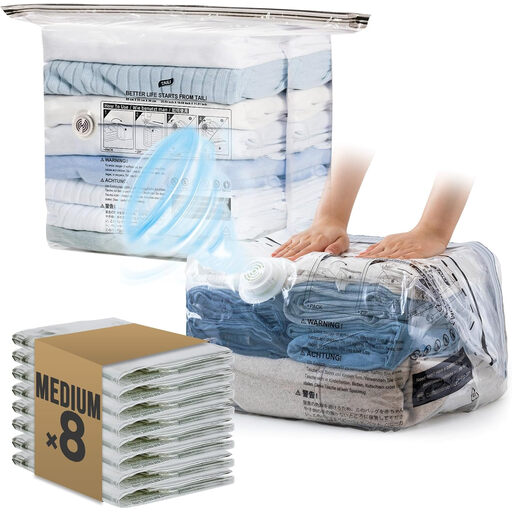
Why it's a match: This set is designed for use without a pump or vacuum cleaner. The air is expelled from the valve by simply pressing and rolling the bag. The medium size is ideal for reducing the volume of clothes in your carry-on luggage or backpack for a trip.
Sidesteps the "impractical pump" problem, as no external pump is needed for these travel vacuum bags. The patented valve allows for manual compression.
Pump-free design for maximum portability. The robust PA+PE material ensures reusability over multiple trips.
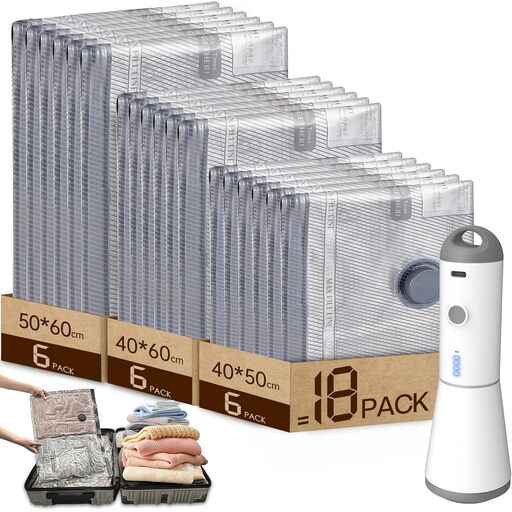
Why it's a match: This comprehensive vacuum bag set is an all-in-one solution for the home. It includes bags in three different sizes for clothes and bedding, plus a battery-powered, cordless pump that makes air removal quick and easy without needing a vacuum cleaner.
Solves the "impractical pump" issue with a fast, electric vacuum pump. The double-zip seal and special valve counteract the "leaky seals" problem.
The cordless pump compresses contents in about 30 seconds, according to the manufacturer. The 18-bag set offers great flexibility for various storage needs.
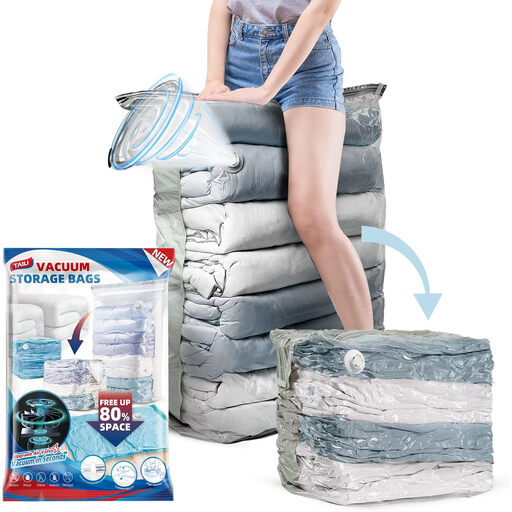
Why it's a match: Anyone needing to save maximum volume with bulky items will benefit from these jumbo bags. The cube shape with a wide base is specially designed to hold multiple duvets, pillows, or thick winter jackets, allowing for stable, space-saving stacking in a wardrobe or basement.
The robust PA+PE material blend prevents the "poor material strength" problem. The valve is compatible with any standard vacuum cleaner, which bypasses the "incompatible pump" trap.
Very large capacity and a self-standing, cubic structure that simplifies filling and subsequent storage. Ideal for organising large textiles.
We have compiled a complete, up-to-date list of products that fully meet these strict selection criteria and applicable safety regulations.
How long a vacuum bag remains airtight depends on the quality of the material (PA+PE blend), the valve, and the seal. High-quality bags can hold a vacuum for an entire season (several months). It is advisable to check the condition of the stored bags every few months, especially for long-term storage.
Most valves are designed to be compatible with the standard hoses of most vacuum cleaners sold in the UK and Europe. However, there is no universal standard. Check the product description for compatibility notes. Some sets include adapters or a hand pump as an alternative.
Excessive compression can damage the structure of natural fibres like down or wool, permanently reducing their loft. It is recommended not to remove all the air from such materials, but to leave about 10–20% residual air in the bag. Storing leather or fur items in vacuum bags is generally not recommended.