
Lieferung heute & morgen

Qualitätsgarantie

Willkommens-Angebote freischalten: KOSTENLOSE Lieferung | Bis zu 80 % RABATT | Kostenlose 30-Tage-JoyPlus-Testphase
App herunterladen
When the seasons change, many households face the same question: where to store the bulky winter duvets, seasonal clothing, and extra pillows? Especially in homes with limited storage, finding a space-saving solution becomes a real challenge. Vacuum storage bags for clothes and bedding promise an easy fix, but not all products live up to their claims. Before you make a purchase, it's crucial to understand the common weaknesses that can quickly turn a practical aid into a bad buy.
The market is flooded with storage solutions, but their flaws often only become apparent after a few weeks or months of use. Pay close attention to these three critical points to avoid unsuitable products:
To avoid these problems, you should base your decision on objective criteria. Three technical features are decisive for durability and functionality.
A robust vacuum storage bag is not made of simple plastic. Look for a material composition of Polyamide (PA) and Polyethylene (PE).
A good vacuum bag features a double-zip closure. This provides two layers of sealing and significantly minimizes the risk of air leakage. An included slider clip makes it easier to close the bag correctly and completely. The valve should be universally compatible with most common vacuum cleaner models and feature a screw cap or a tight-fitting plug to secure the seal after suction.
While an XXL vacuum bag set can be useful for single, very large items like a mattress topper, cube-shaped vacuum bags offer significant advantages for storing duvets and clothing. Thanks to their three-dimensional structure with a flat bottom, they are easier to fill and form a stable, rectangular block after vacuuming. These blocks are much easier to stack and organize in a closet, on a basement shelf, or in an under-bed storage container.
Depending on your specific needs and application, different storage systems may be more suitable. Here are a few options tailored to specific use cases.
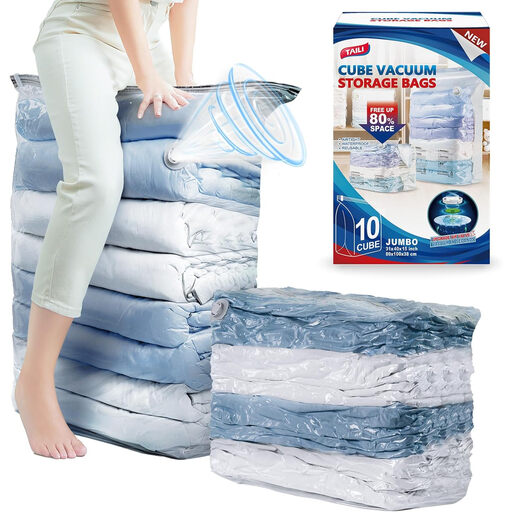
Why This Fits Their Persona: Ideal for families or individuals needing to store multiple large duvets, pillows, and winter coats. This set offers a large volume and a high quantity for comprehensive organization.
The cube design with a stable base solves the problem of unwieldy, misshapen packages. The bags are stackable after vacuuming. The PA + PE material prevents the bags from becoming brittle and tearing.
Large capacity (holds 3-5 duvets per bag, according to the manufacturer). The trapezoidal 3D structure makes filling easier and ensures a stable shape.
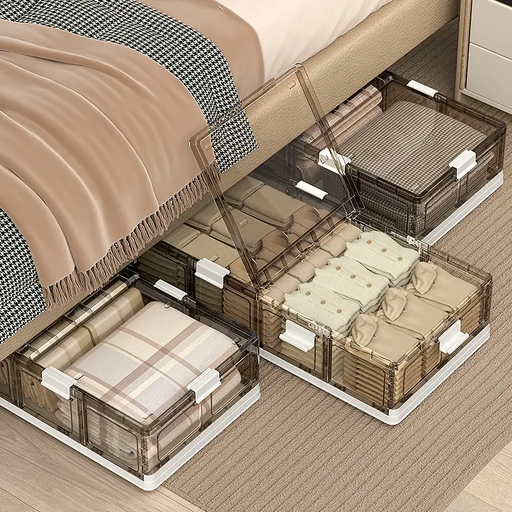
Why This Fits Their Persona: Perfect for anyone looking to systematically organize the often-unused space under the bed. A structured alternative to vacuum bags, ideal for bedding or shoes that need to remain accessible.
Unlike formless bags, this box provides a rigid structure that makes it easy to slide in and out. It bypasses the need for vacuuming, thus eliminating the risk of leaky valves.
The low profile of 18 cm fits under most bed frames. The breathable material protects from dust, while the foldable design allows for space-saving storage when not in use.
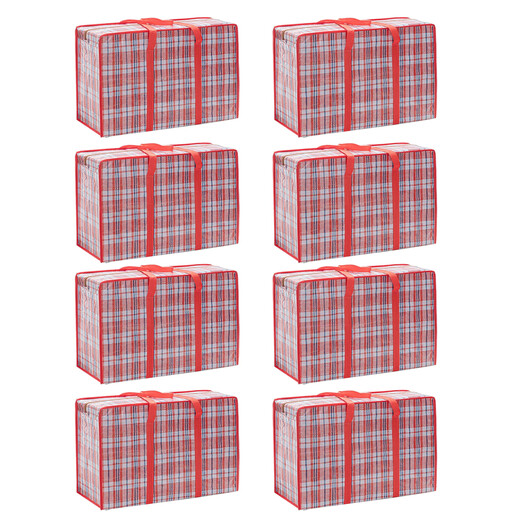
Why This Fits Their Persona: A straightforward and cost-effective solution for anyone looking to get organized without relying on vacuum technology. Well-suited for clothes, blankets, or bedding that just need to be protected from dust.
As a simple storage bag without a vacuum function, it eliminates the common problems of leaky valves and brittle material. A simple but functional solution for basic organization.
The set of six bags offers excellent value for money. The carrying handles and clear window enhance usability. No vacuum cleaner is required.
1. How long does a vacuum bag hold its seal? A high-quality vacuum bag made from PA+PE material with a double-zip closure should hold its vacuum for an entire season (at least 6-12 months). If a bag reinflates after just a few days or weeks, it indicates a problem with the material or the seal.
2. Can you reuse vacuum bags? Yes, good vacuum bags are designed for multiple uses. Handle the bags with care and avoid contact with sharp objects. After emptying, store them flat or folded in a dry place to ensure the longevity of the material and the seal.
3. What is the best material for vacuum bags? The combination of Polyamide (PA) and Polyethylene (PE) is the gold standard for durable and reliable vacuum bags. Pure PE or other simple plastics are often not flexible or tear-resistant enough for long-term use, especially when storing heavy textiles like duvets.