
Lieferung heute & morgen

Qualitätsgarantie

Willkommens-Angebote freischalten: KOSTENLOSE Lieferung | Bis zu 80 % RABATT | Kostenlose 30-Tage-JoyPlus-Testphase
App herunterladen
As a Joybuy Product Recommendation Officer, I see people every day looking for solutions to a common problem: not enough storage space. Bulky winter duvets, seasonal clothing, and unused pillows take up valuable room in closets and basements. Vacuum storage bags promise an easy solution, but not all products live up to that promise. Before you invest, it's crucial to understand the common pitfalls that can quickly turn a smart purchase into a waste of money.
Many users report bags that start letting air back in after just a few weeks, or sets with sizes that are useless for their intended purpose. This guide will show you which technical features truly matter and how to find the right system for your needs.
It's incredibly disappointing when a carefully stored stack of textiles returns to its full volume after a short time. The problem usually comes down to the same three weak points:
To avoid these problems, you should check two key product specifications before making a purchase. These largely determine the functionality and longevity of your vacuum storage bags.
A robust and durable compression bag is more than just a simple plastic sheet. Look for a multi-layer construction of Polyamide (PA) and Polyethylene (PE).
A bag made only of PE might be cheaper, but it is significantly more prone to damage and therefore often not truly reusable.
The valve is the heart of any vacuum bag. There are different systems, and their suitability depends on the intended use:
Based on these objective criteria, we have compiled a selection of products suitable for different user profiles and requirements.
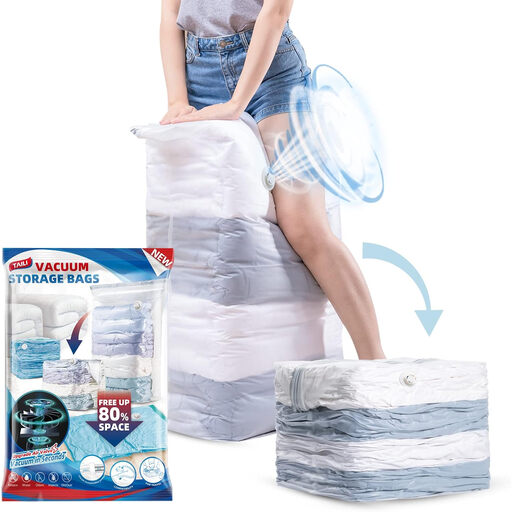
Why it's a great fit: The cube shape is specifically designed for bulky items like duvets, pillows, and thick winter coats. After compression, the bags can be stacked like boxes, making optimal use of storage space in closets or under the bed.
The stable, self-standing cube shape solves the problem of using impractical flat bags for voluminous textiles. The PA+PE material ensures the necessary durability.
Maximum space utilisation for bulky items. The capless valve is compatible with any standard vacuum cleaner and speeds up the suction process.
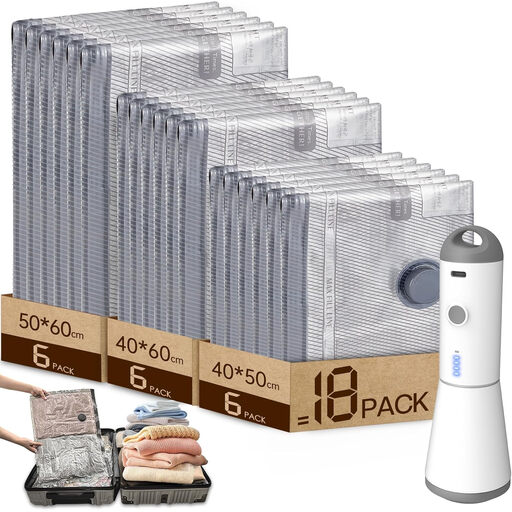
Why it's a great fit: This set is an all-in-one solution. It includes 18 bags in three different sizes for various use cases and a cordless, battery-powered pump. Ideal for anyone who can't or doesn't want to use a vacuum cleaner.
The included electric pump ensures fast and reliable air removal. The double-zip seal and specialised valves directly address the weak point of leaky closures.
Freedom from a vacuum cleaner thanks to the compact, wireless pump. The set offers high flexibility with its variety of bag sizes.
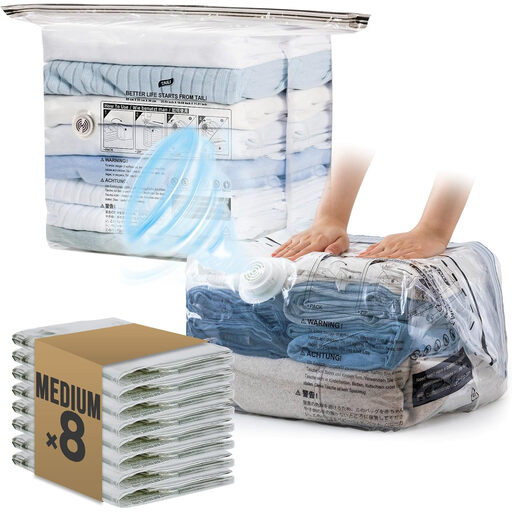
Why it's a great fit: These bags require no pump or vacuum cleaner. The air is simply pressed out of the patented valve by hand. Their size is designed to fit perfectly into carry-on luggage or backpacks.
The pumpless design eliminates a potential point of failure and makes the bags extremely travel-friendly. The robust PA+PE laminate protects the contents even with frequent packing and unpacking.
Maximum compression on the go, without any extra tools. The cube shape also uses space in a suitcase more efficiently than flat, roll-up bags.
We've curated a complete, up-to-date list of products that meet these strict selection criteria and comply with current regulations.
How long does the vacuum last in a good vacuum bag? A high-quality bag with an intact double-zip seal and a functional valve should hold its vacuum for several months, which is typically sufficient for seasonal storage. If a bag noticeably loses its vacuum after just a few days or weeks, it indicates a leak in the seal or a material defect.
Can vacuum bags damage clothes or duvets? When used correctly, vacuum bags are safe for most textiles. However, for delicate natural fibres like down or wool, you should not compress them to the maximum and limit the storage time to six months so the fibres can regain their loft. Leather or fur should not be vacuum-sealed. It is crucial that all textiles are completely dry before packing to prevent mould growth.
Are all vacuum bags truly reusable? Most products are advertised as reusable. However, the actual lifespan heavily depends on the material quality (ideally a PA+PE blend) and the construction of the seal and valve. Very cheap models can wear out after the first or second use, while more robust versions can be used for many seasons with careful handling.